

U3620 on 2020-2022 Chevrolet Bolt EV: Software Glitch or Battery Failure?
Code U3620 on a 2020-2022 Bolt EV almost always triggers a 'Reduced Propulsion Power' message and limits charging to 30-40%. The most common cause is a software glitch in the powertrain control module, fixed by a free dealer update as outlined in GM service bulletins. In some cases, particularly when accompanied by symptom byte '17', it can indicate a genuine battery fault requiring module or full pack replacement under warranty.
- U3620 on a Bolt EV is a serious code that will disable normal vehicle use by reducing power and limiting charge.
- Do not panic. The most likely cause is a known software glitch that the dealer can fix for free with an update per official service bulletins.
- You cannot fix this yourself. The vehicle must go to an EV-certified Chevrolet dealer for diagnosis and software updates.
- The repair, whether it's a software update (TSB N242443490) or a full battery replacement, should be covered entirely under warranty or service campaigns.
- Check your VIN on the GM recall website, but even if no recall is listed, the dealer will address the issue based on active service bulletins.
What's Unique About the 2020-2022 Chevrolet BOLT EV
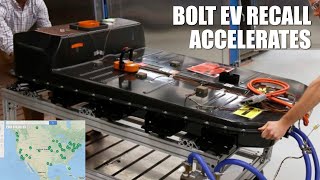
This code is deeply intertwined with the history of the Bolt's major battery recall. The diagnostic software that sets U3620 was GM's remedy for 2020-2022 models to monitor the high-voltage battery for defects instead of replacing it outright. 🎬 See why GM shifted from battery replacements to software monitoring Unfortunately, early versions of this software were too aggressive, leading to many false positives. As a result, GM has issued several service updates, like TSB N242437530 and N242443490, specifically to correct software that could lead to 'Unnecessary Battery Pack Replacement 🎬 Watch: How the diagnostic software update affects your recall status'. This makes understanding the TSBs critical to diagnosing the U3620 code correctly.
Diagnostic Flowchart
Tap your situation to follow the diagnostic path that matches what you're seeing on this vehicle.
Generation note: The 2020-2022 model years include the original first-generation Bolt EV and the refreshed 2022 Bolt EV and new Bolt EUV models. The TSBs and owner reports confirm this issue affects both the pre-refresh and post-refresh designs sharing the BEV2 platform.
Symptoms You May Notice
- "Propulsion Power is Reduced" message on the driver information center. 🎬 Watch: One owner's experience when their Bolt broke down
- "Service Vehicle Soon" warning light.
- Check Engine Light (Malfunction Indicator Lamp) illuminated.
- Battery charging is limited, typically to 30% or 40% state of charge.
- Air Conditioning may not blow cold, as the A/C system is linked to battery thermal management.
- Audible gurgling or pumping sounds from the battery coolant system for extended periods after the car is off.
- Replacing the 12V battery. While a failing 12V battery can cause many strange electrical issues in an EV, the U3620 code is specifically related to the high-voltage system diagnostics. Some owners have reported being told a bad 12V battery was the cause, only for the U3620 code to return shortly after, indicating the high-voltage system was the true culprit.
Most Likely Causes
- Powertrain Control Module Software Anomaly 🔴 High Probability → Shop Engine Control Module (ECM) As part of the battery recall, GM installed advanced diagnostic software that was overly sensitive and prone to flagging false positives. GM has released multiple software updates to 'fix the fix'.
How to confirm: A GM dealer must check the vehicle's service history against active service bulletins (e.g., N242437530, N242443490). The code often appears with symptom byte '09', which specifically points to a software issue. However, even without a specific symptom byte, if the VIN is covered by a service update, a reprogram is the first step.
Typical fix: Reprogramming the Hybrid/EV Powertrain Control Module 2 (HPCM2) with updated software. This is performed by an EV-certified dealer using the SPS2 programming system and is typically covered under the service campaign or warranty.
Est. part cost: $0 - High-Voltage Battery Cell or Module Failure ⚪ Low Probability → Shop Vehicle Battery The underlying reason for the original recall was a manufacturing defect in some LG battery cells that could lead to failure, which the diagnostic software is designed to detect.
How to confirm: If a software update does not fix the code, or if diagnostics point to a hardware issue (often associated with symptom byte '17'), the dealer will follow GM's specific test procedures for the high-voltage battery. This is a process managed by the dealer in communication with GM's Technical Assistance Center (TAC).
Typical fix: Replacement of one or more high-voltage battery modules or the entire battery pack. This is a complex repair covered under the vehicle's 8-year/100,000-mile EV component warranty.
Est. part cost: $0 (under warranty)
Diagnosis Steps
- Read the Diagnostic Trouble Code (DTC) with an OBD-II scanner to confirm U3620 is present.
- Check for other related codes, such as P1E00 or others in the U362x/U363x range.
- Schedule an appointment with an EV-certified Chevrolet dealer. Inform them of the code and symptoms.
- The dealer will connect the GM GDS2 scan tool to read the full code, including the critical 'symptom byte' (e.g., '09' or '17').
- The dealer will check the vehicle's VIN in the GM Global Warranty Management system for open Service Updates or Recalls (like N242437530 or N242443490).
- If TSB N242443490 is applicable, the dealer will reprogram the Hybrid/EV Powertrain Control Module 2 (HPCM2).
- If TSB N242437530 is applicable and the code is already set with symptom '17', the dealer will follow standard diagnostics which may lead to battery replacement. If the code is not set, they may apply a preventative software update.
- If the code returns after an update or if diagnostics confirm a hardware fault, the dealer will begin the battery module/pack replacement process under the EV warranty.
Parts You'll Likely Need
- High-Voltage Battery Pack
(OEM #24042761)— In cases where the code is not a software false alarm (symptom '17'), it indicates a genuine, non-serviceable fault within the battery pack, requiring full replacement under warranty.
Trusted brands: ACDelco (OEM)
OEM price range: $0 (under warranty)
Aftermarket price range: Not Applicable
Related Codes That Often Appear With This One
- P1E00 — P1E00 is a generic code that simply means the powertrain control module has requested the Malfunction Indicator Lamp (Check Engine Light) to be turned on. It almost always accompanies a more specific code like U3620 that identifies the actual fault.
- U362C / U3636 — These codes are part of the same family of diagnostic checks as U3620 and are often listed together in the same service bulletins. They all relate to the battery monitoring software, trigger the same symptoms (Reduced Propulsion Power), and follow an identical diagnostic path based on the symptom byte.
Technical Service Bulletins (TSBs) & Recalls
- N242437530 / N242437530-01: Service Update for a condition where DTCs U3620-U362E or U3630-U3636 (symptom 17) are triggered. It instructs dealers to follow standard diagnostics if the code is already set, which may lead to battery replacement. This bulletin is explicitly intended to prevent 'Unnecessary Battery Pack Replacement'. The update expires in April 2026.
- N242443490: Service Update for a condition where a false DTC (including the U3620 range with symptom '09' or '17') may be set. The correction is to reprogram the Hybrid Powertrain Control Module 2 (HPCM2). This is a preventative update if the code is not set, or a corrective action if it is.
Platform-Specific Known Issues
- This code is a direct consequence of GM's software-based solution for the 2020-2022 Bolt battery recall.
- GM has issued multiple service bulletins to address false positives from this software, indicating the problem is widespread. Bulletin N242437530 is titled 'DTC Causing Unnecessary Battery Pack Replacement'.
- Some owners report frustration with dealers attempting to charge diagnostic fees for what should be a no-cost TSB or warranty repair. It is important for owners to cite the specific TSB number.
Mechanic-Grade Diagnostic Values
- Battery Cell Voltage Difference — expected: ≤ 0.08 Volts. Failure: A difference greater than 0.08V between the 'average battery cell voltage' and 'minimum cell voltage' parameters indicates a potential battery hardware fault.
Hidden / Shadow Codes Worth Checking
- Symptom Byte 09: Indicates a false DTC trigger, which is typically resolved by a software update to the HPCM2 module. (see via GM GDS2 Dealer Scan Tool)
- Symptom Byte 17: Indicates the diagnostic software has detected a potential hardware fault within the high-voltage battery, often leading to battery module or pack replacement after further diagnosis. (see via GM GDS2 Dealer Scan Tool)
Scan Tool Commands That Help
- GDS2: HPCM2 > Voltage Data Screen — To view the 'average battery cell voltage' and 'minimum cell voltage' parameters needed to check for cell deviation, a key step in diagnosing a hardware fault.
- GDS2: HPCM2 > Control Functions > High Voltage Disable Procedure — This is a required safety procedure to de-energize the high-voltage system before performing any physical repairs on or near the battery pack.
- GDS2: HPCM2 > Control Functions > Clear Secured High Voltage DTCs — Used to re-enable the high-voltage system after service is complete. A standard DTC clear will not work for these secured codes.
- GDS2: HPCM2 > Control Functions > Hybrid/EV Battery Contactor Open Reasons Reset — After diagnostics and repair are complete, this function is used to clear the historical log of events that caused the high-voltage contactors to open.
- SPS2 (Service Programming System): K114B HPCM2, K16 BECM, K9 BCM Programming — This is the function used to perform the software update fix. Service bulletins often require reprogramming the HPCM2, Battery Energy Control Module (BECM), and Body Control Module (BCM) together.
Wiring & Ground Locations
- K114B Hybrid/EV Powertrain Control Module 2 (HPCM2) — Located inside the vehicle's cabin.. This is the control module that sets code U3620 and is the target for the software reprogramming fix. Knowing its general location helps understand it is separate from the battery pack itself.
Real Owner Repair Stories
- Reddit r/BoltEV user (2020 Chevrolet Bolt EV, 25k miles) — "Reduced propulsion, service vehicle soon" message on dash. Code U3620 confirmed by OnStar.
❌ Tried (didn't work) Initial diagnosis at dealer.
✅ What actually fixed it After 24 hours of diagnosis, the dealer determined the high-voltage battery needed to be replaced. The replacement battery took 7-10 days to arrive. - Reddit r/BoltEV user (2020 Chevrolet Bolt EV) — DTC U3620, "Propulsion Power is Reduced" message, charging limited to 30%, and audible gurgling/pumping sounds from the coolant system after the car is off.
❌ Tried (didn't work) The vehicle had previously received the recall software update intended to prevent battery failure.
✅ What actually fixed it The dealer confirmed the high-voltage battery was faulty and performed a full battery replacement under warranty.
Model Year Variations Within This Range
- 2022: The 2022 Bolt EV and EUV models had the newer battery diagnostic software installed from the factory, whereas 2020-2021 models received it as part of a recall service. Additionally, some software update bulletins specify slightly different procedures or applicable modules for 2022 models versus earlier years (e.g., not reprogramming the BCM).
Helpful Videos


We Have This Part in Stock


The information in this article is provided for general reference and educational purposes only. Vehicle specifications, procedures, and part compatibility can vary by production date, trim level, and region. Always consult your vehicle's factory service manual and verify part numbers before purchasing or performing repairs. Safety-critical components such as airbags, seat belts, and braking systems should be installed by a qualified professional.
- Chevrolet BOLT EV:
- 🧭 Diagnostic Flowchart
- 🎬 Helpful Videos
- 🛍️ Shop This Part
- What's Unique About the 2020-2022 Chevrolet BOLT EV
- Symptoms You May Notice
- Most Likely Causes
- Diagnosis Steps
- Parts You'll Likely Need
- Related Codes That Often Appear With This One
- Technical Service Bulletins (TSBs) & Recalls
- Platform-Specific Known Issues
- Mechanic-Grade Diagnostic Values
- Hidden / Shadow Codes Worth Checking
- Scan Tool Commands That Help
- Wiring & Ground Locations
- Real Owner Repair Stories
- Model Year Variations Within This Range
- 🎟️ Get 5% Off