

OBD-II Code U3630: System Communication/Voltage Instability
What U3630 means, why it triggers, and how to fix it
- Code U3630 indicates a 12-volt electrical system failure, not a complex computer issue, in 90% of cases.
- Test the 12-volt battery first; a resting voltage below 12.4V or a cranking voltage below 10.0V is the primary trigger for this code.
- Verify alternator output remains between 13.7V and 14.7V while running before replacing any expensive control modules.
- Check for Technical Service Bulletins (TSBs); Chevy Bolt and 2018-2020 Honda Accord models frequently resolve this code with a free dealer software update.
- Use an advanced scan tool to read manufacturer-specific 'symptom bytes' (like GM's symptom '09') to differentiate between a software bug and a hardware failure.
What Does U3630 Mean?
U3630 is a network communication code indicating a control module detected unstable voltage or an unexpected signal from another computer. Your car's modules communicate over the CAN bus, and this code triggers when one reports an unreliable power supply or confusing messages. This almost always points to a failing 12-volt electrical system, the nervous system for all onboard electronics.
Technical definition: SAE/ISO standard J2012 defines 'U' codes as Network Communication faults, with U3xxx being manufacturer-specific. U3630 indicates a control module lost communication or received an invalid signal due to an unstable power supply. General Motors, for example, defines it as a high-voltage battery system performance fault on EVs, typically triggered by a 12V electrical issue or software anomaly.
Can I Drive With U3630?
Yes, But With Caution. You can drive, but it is a significant gamble. Expect reduced power ('limp mode'), erratic electrical behavior, and multiple warning lights. The primary risk is stalling in traffic if the alternator fails completely, as the vehicle runs on battery power for less than 30 minutes, disabling safety systems like power steering and ABS. Continuing to drive causes cascading damage; a struggling alternator permanently harms the 12V battery, and unstable voltage damages sensitive control modules, adding hundreds to the repair bill.
Common Causes
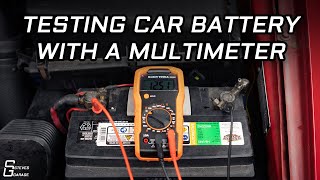
- Failing or weak 12-volt battery (Very Common) — The 12-volt battery is the primary culprit. If it cannot provide a steady 12.4-12.6V when off, modules fail to 🎬 Watch: How to test your battery voltage with a multimeter. communicate and trigger network codes.
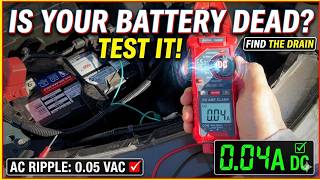
- Failing alternator (Common) — The alternator recharges the battery and powers electronics. If output falls outside the 13.7-14.7V range, 🎬 See how to check if your alternator is charging correctly. unstable voltage causes communication errors.
- Loose or corroded battery terminals and ground straps (Common) — Corrosion or a loose clamp acts as a bottleneck. Even with a healthy battery and alternator, poor connections prevent stable power from reaching the computers.
- Incorrect or incompatible replacement battery (Less Common) — Modern vehicles with start-stop systems require Enhanced Flooded (EFB) or Absorbent Glass Mat (AGM) batteries. Standard lead-acid batteries fail prematurely and cause voltage instability.
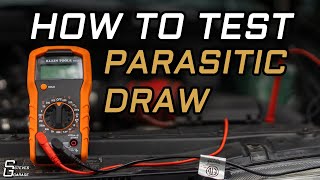
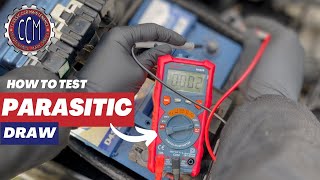
- Parasitic electrical drain (Less Common) — A faulty accessory, stuck relay, or module failing to 'sleep' drains the battery when off. 🎬 Watch: The easiest way to find a parasitic electrical drain. This creates a low-voltage state at startup, triggering communication codes.
- Control module software glitch (Less Common) — Module logic is sometimes overly sensitive or contains bugs. Manufacturers release software updates via Technical Service Bulletins (TSBs) to resolve these false alarms.
- Damaged wiring or CAN bus fault (Rare) — Frayed wires, loose connectors, or harness damage interrupts module communication or causes voltage drops.
- Faulty control module (Rare) — A computer (BCM, PCM, or hybrid controller) fails internally due to moisture or hardware defects, requiring replacement.
Symptoms
- Check Engine Light is on — The Malfunction Indicator Lamp (MIL) illuminates on the dashboard.
- Multiple warning messages on the dash — Messages like "Service Vehicle Soon," "Reduced Propulsion Power," or "Service Hybrid System" appear.
- Erratic electrical problems — Flickering lights, a dead radio, erratic gauges, or inoperative climate control, wipers, and door locks.
- Reduced engine/motor performance — The vehicle enters "limp mode" with limited power to protect itself from damage.
- Difficulty starting or no-start condition — The car cranks slowly, clicks, or fails to start entirely.
- Auto Start-Stop system malfunction — The system disables itself or the engine fails to restart after a stop, displaying a grayed-out indicator light.
Diagnostic Flowchart
Tap your situation to follow the diagnostic path that matches what you're seeing on this code.
Common Fixes & Costs
- Replace 12-volt battery — Parts: $150-$350, Labor: $0-$100, ~0.5 hr book time (DIY)
- Clean or tighten battery terminals and ground straps — Parts: $5-$15, Labor: $0-$50, ~0.2 hr book time (DIY)
- Replace alternator — Parts: $250-$600, Labor: $150-$400, ~2 hr book time (Intermediate)
- Control module software update — Parts: $0, Labor: $125-$250, ~1 hr book time (Professional)
- Repair wiring or CAN bus harness — Parts: $10-$100, Labor: $200-$800, ~4 hr book time (Professional)
- Replace a faulty control module (BCM/PCM) — Parts: $500-$1500, Labor: $150-$500, ~2.5 hr book time (Professional)
Used vs. New Parts: Buying Guide
When a used part is worth it: A used OEM alternator makes sense for older, out-of-warranty cars where new parts are prohibitive. A 'remanufactured' alternator is a safer middle ground, offering a warranty.
Donor-vehicle mileage cap: roughly under 60000 miles for the part to have meaningful remaining life.
Donor quality checklist:
- Verify the exact OEM part number matches.
- Ask for a warranty, even if it's only 30-90 days.
- Avoid parts with visible corrosion or physical damage.
- Prefer remanufactured units over 'rebuilt' or 'used' ones.
Decision logic:
- If Vehicle is less than 7 years old or you plan to keep it long-term → Buy a new OEM or high-quality remanufactured alternator for maximum reliability and warranty.
- If Vehicle is over 10 years old and budget is the primary concern → A remanufactured alternator offers the best balance of cost and reliability. A used part is a higher-risk alternative.
- If The cost of labor is high relative to the part cost → Buy new to minimize the risk of paying for the same job twice if a used part fails prematurely.
Warranty tradeoff: Used parts often have a 30-90 day warranty or are sold 'as-is'. Remanufactured parts typically carry a 1-year to limited lifetime warranty. New OEM parts carry a 1-year or longer warranty.
Worst-case if a used part fails: $300-900 if a used or cheap part fails, which covers repeat labor costs and potentially a tow bill.
Cost of Not Fixing It
- Immediate: Risk of stalling in traffic, loss of power steering, and other unpredictable electrical behavior. (Added cost: 0)
- 0-1 month: A failing alternator destroys a new 12V battery by repeatedly deep-cycling it, requiring replacement. (Added cost: $150-350)
- 1-6 months: Sustained low voltage or voltage spikes damage sensitive electronics, such as the Body Control Module (BCM) or Powertrain Control Module (PCM). (Added cost: $800-2000+)
Diagnosis Steps
- Test the 12-Volt Battery
Use a multimeter to check battery voltage with the car off. A healthy battery reads 12.4-12.6V. A reading below 12.2V indicates a discharged state causing electronic issues. Have a helper start the car; voltage must not drop below 10.0V during cranking.
Tools: Multimeter (Beginner) - Test the Alternator Output
With the engine running, check voltage at the battery terminals. A healthy alternator outputs 13.7-14.7V. Readings below 13.2V indicate undercharging, while readings above 15.0V indicate a faulty voltage regulator overcharging the system.
Tools: Multimeter (Beginner) - Perform a Visual Inspection
Inspect the 12-volt battery for loose clamps, corrosion, swelling, or leaks. Follow the main negative cable to the chassis and ensure the ground connection is clean and tight.
Tools: Safety glasses, gloves (Beginner) - Check for Technical Service Bulletins (TSBs)
Search your vehicle's year, make, model, and code U3630 for TSBs. Manufacturers frequently issue software updates to fix known false alarms, saving hundreds in diagnostic fees.
Tools: Internet access (Beginner) - Scan with an Advanced Tool for Symptom Bytes
Use a professional scan tool to read manufacturer-specific 'symptom bytes.' On a Chevy Bolt, symptom '09' indicates a software bug, while '17' indicates a hardware issue.
Tools: Advanced OBD-II scanner (Intermediate) - Perform a Parasitic Draw Test
If the battery drains repeatedly, let the vehicle sit for 60 minutes to 'sleep.' Disconnect the negative terminal and connect a multimeter in-line (Amps). Draw exceeding 85mA indicates a component is not shutting off. Pull fuses individually to isolate the circuit.
Tools: Multimeter with 10A capability (Advanced) - Analyze Scan Tool Live Data PIDs
Monitor live data Parameter IDs (PIDs) like 'Control Module Voltage' and 'Alternator Output.' Module voltage must remain steady between 13.7-14.7V while running. Fluctuations pinpoint the instability source.
Tools: Advanced OBD-II scanner (Advanced) - Check CAN Bus Network Integrity
With the battery disconnected, measure resistance between CAN High (Pin 6) and CAN Low (Pin 14) on the OBD-II port. A healthy network reads 60 ohms. 120 ohms indicates an open circuit; 0 ohms indicates a short.
Tools: Multimeter, OBD-II pinout diagram (Advanced)
When This Code Triggers (Freeze-Frame Conditions)
- Control Module Voltage: 9.5V - 11.5V or >15.5V (The code sets during a voltage drop (e.g., engine cranking) or a voltage spike.)
- Vehicle State: Startup or Low RPM (Voltage instability peaks during startup or idle when alternator output is lowest.)
- Time Since Start: 0-30 seconds (Weak battery faults occur immediately after startup when the system stabilizes.)
- Battery State of Charge: < 40% (Indicates a weak battery or charging system fault.)
Related Codes
- P0562 — This code means 'System Voltage Low.' It frequently appears with U3630 because low voltage is a primary cause of network communication failures. P0562 is the direct measurement; U3630 is the consequence.
- U0100 — This code means 'Lost Communication With ECM/PCM.' It indicates a complete communication failure with the main computer, often due to severe voltage drops.
- U0140 — 'Lost Communication With Body Control Module (BCM).' The BCM is highly sensitive to voltage drops and is often the first to report errors during electrical instability.
- P0A0A — 'High Voltage System Interlock Circuit.' Points to a high-voltage system fault, though a failing 12V system sometimes triggers it falsely on EVs.
- U3620 - U3636 — Manufacturer-specific codes pointing to similar high-voltage communication faults, distinguished by symptom bytes.
Climate & Environmental Factors
- Extreme Cold: Cold weather reduces battery capacity and thickens engine oil. Capacity drops 20% at 32°F (0°C) and 50% at -22°F (-30°C). A battery weakened by summer heat fails during the first cold snap.
- Extreme Heat: High heat evaporates battery fluid and corrodes internal plates. Battery life in hot climates is half that of colder regions.
- High Humidity: High humidity promotes moisture intrusion and corrosion on connectors, increasing resistance and causing intermittent short circuits.
How to Clear the Code After You Fix It
- Ensure the new battery/alternator is correctly installed.
- Use an OBD-II scan tool to erase the Diagnostic Trouble Codes (DTCs).
- Perform a complete drive cycle to allow the vehicle's readiness monitors to run their self-tests.
Drive cycle (~20 minutes): After clearing the code, start the engine and let it idle for 2-3 minutes. Then, drive for 15-20 minutes with a mix of city (stop-and-go) and highway (steady speed over 40 mph) driving. This allows the computer to verify the repair and run its internal checks.
Readiness monitors affected: Comprehensive Component Monitor, Misfire Monitor, Fuel System Monitor, EVAP System Monitor
Before emissions retest: drive at least 50 miles to fully set monitors.
Watch out for:
- Disconnecting the battery clears the code but resets all readiness monitors, causing an immediate emissions test failure.
- The code returns immediately if the underlying electrical problem is not fixed.
- Some vehicles require a Battery Management System (BMS) reset with a scan tool after battery replacement.
Will This Fail Emissions / State Inspection?
Yes — this code typically fails an OBD-II emissions inspection.
- California: An illuminated Check Engine Light results in an automatic failure of the smog inspection. After repairs, a full drive cycle must be completed to set all readiness monitors before a re-test is possible.
- New York: A vehicle with an active Check Engine Light automatically fails the emissions portion of the annual state inspection. Clearing the code right before the test results in failure because the readiness monitors will not be set.
- Texas: In the 17 counties requiring emissions testing, an active Check Engine Light is an automatic failure. As of 2025, safety inspections are no longer required for most non-commercial vehicles, but the OBD-II emissions test remains mandatory in these areas.
Most Commonly Affected Vehicles
- Chevrolet Bolt EV / Bolt EUV (2020-2023) — This model has a well-documented issue where U3630 (and related codes like U3636) triggers from a software glitch or a high-voltage battery system fault. TSBs N232421260 and N242437530 address these issues, often requiring only a software update.
- Honda Accord / Insight (2018-2020) — Prone to CAN bus communication errors due to a software mismatch in the Body Control Module (BCM). Honda addressed this with recall 20V-771 (Campaign X95) and TSB 20-039, which involves a free software update at the dealership.
- Subaru Forester / Crosstrek / Impreza / Ascent (2017-2024) — These models, especially those with Auto Start-Stop, are known for premature 12V battery failures that disrupt electronics and trigger communication codes. They require a specific EFB, and a class-action lawsuit resulted in an extended battery warranty for some model years.
- Hyundai / Kia Ioniq 5 / EV6 (2022-2024) — These models are highly sensitive to the state of their 12V battery. A weak 12V battery causes numerous electronic glitches, no-start conditions, and communication faults that mimic serious high-voltage system problems.
- Chrysler Pacifica Hybrid (2017-2024) — Complex hybrid systems are sensitive to voltage fluctuations. Weak 12V batteries cause a host of communication codes. Recalls (like 23V-844000 for PIM software) address communication loss issues causing stalling.
- Jeep Wrangler (4xe & eTorque) / Grand Cherokee (2018-2024) — The mild-hybrid and plug-in hybrid systems add electrical complexity. Faults in the 12V system or the hybrid charging system easily trigger communication codes like U3630.
- Ram 1500 (with eTorque) (2019-2024) — The eTorque mild-hybrid system relies on stable communication between its 48V battery and the rest of the vehicle. A weak 12V battery causes network codes and start-stop system failures.
- Ford F-150 (2015-2024) — Modern F-150s have dozens of interconnected modules. The Battery Management System (BMS) and start-stop feature make them highly sensitive to battery health, causing U-codes when the battery degrades.
Manufacturer-Specific Notes
- General Motors (Chevrolet): On the Bolt EV/EUV, symptom bytes dictate the fix. Symptom '09' is a software bug (TSB N232421260); symptom '17' is a hardware fault (TSB N242437530). Always check for a software fix before replacing the battery.
- Stellantis (Jeep, Ram, Chrysler): These vehicles use a 'Security Gateway Module' (SGW) that complicates diagnostics. Failing batteries cause communication errors frequently misdiagnosed as SGW failures.
- Subaru: Auto Start-Stop systems destroy batteries prematurely. A class-action lawsuit extended the 12V battery warranty for many 2015-2020 models, covering 100% of replacement costs for up to 5 years/60,000 miles.
- Honda: A BCM software flaw on 2018-2020 Accords/Insights triggered recall 20V-771 (Campaign X95) for a free dealer update. This is the primary fix for electrical issues on these models.
Frequently Asked Questions
Can a bad 12V battery really cause this complex code?
Yes. Modern cars require perfectly stable voltage for module communication. A weak battery creates electrical noise and voltage drops, triggering U3630.
Why did the dealer say I might need a new high-voltage battery pack for this code?
U3630 triggers from high-voltage faults, but it is frequently a software glitch causing false alarms. GM issued TSBs to reprogram the module, preventing unnecessary battery replacements.
I replaced the 12V battery but the code came back. What now?
Test the alternator to ensure it outputs 13.7-14.7 volts. If the charging system is healthy, check for manufacturer software updates (TSBs) before testing for parasitic drains.
What is a 'parasitic drain' and could it cause U3630?
A parasitic drain occurs when an electrical component draws power after the vehicle turns off. This drains the battery, causing low voltage at startup and triggering communication codes. Normal draw is under 85mA.
Is U3630 a serious problem?
The severity is moderate. The vehicle is usually drivable, but a failing battery or alternator leaves you stranded without warning.
Why does my electric car (EV) have a 12-volt battery?
The 12-volt battery boots the computers, closes high-voltage contactors, and runs standard accessories. Its failure is a primary cause of EV communication codes and no-start conditions.
What is a 'symptom byte' and why is it important?
A symptom byte provides specific fault data attached to a DTC. For example, GM symptom '09' means 'software anomaly,' requiring an advanced scanner to read and preventing misdiagnosis.
How much will it cost to diagnose the U3630 code?
Repair shops charge a diagnostic fee ranging from $90 to $180. This covers reading codes, testing the battery and charging system, and determining next steps.
Key Takeaways
- Code U3630 indicates a 12-volt electrical system failure, not a complex computer issue, in 90% of cases.
- Test the 12-volt battery first; a resting voltage below 12.4V or a cranking voltage below 10.0V is the primary trigger for this code.
- Verify alternator output remains between 13.7V and 14.7V while running before replacing any expensive control modules.
- Check for Technical Service Bulletins (TSBs); Chevy Bolt and 2018-2020 Honda Accord models frequently resolve this code with a free dealer software update.
- Use an advanced scan tool to read manufacturer-specific 'symptom bytes' (like GM's symptom '09') to differentiate between a software bug and a hardware failure.
Helpful Videos





Shop the Parts Behind U3630
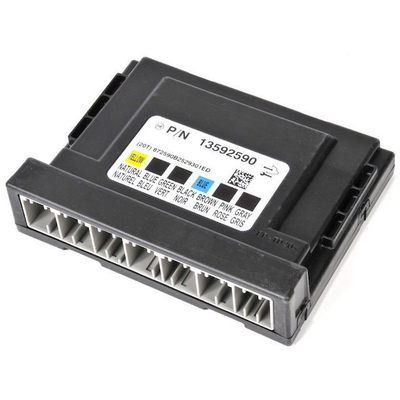
Below are the parts most often responsible for code U3630, ranked by how frequently each one is the actual culprit (per the diagnosis above). Tap any to see what we have for your vehicle.



The information in this article is provided for general reference and educational purposes only. Vehicle specifications, procedures, and part compatibility can vary by production date, trim level, and region. Always consult your vehicle's factory service manual and verify part numbers before purchasing or performing repairs. Safety-critical components such as airbags, seat belts, and braking systems should be installed by a qualified professional.
- 🧭 Diagnostic Flowchart
- 🎬 Helpful Videos
- 🛍️ Shop This Part
- What Does U3630 Mean?
- Can I Drive With U3630?
- Common Causes
- Symptoms
- Common Fixes & Costs
- Used vs. New Parts: Buying Guide
- Cost of Not Fixing It
- Diagnosis Steps
- When This Code Triggers (Freeze-Frame Conditions)
- Related Codes
- Climate & Environmental Factors
- How to Clear the Code After You Fix It
- Will This Fail Emissions / State Inspection?
- Most Commonly Affected Vehicles
- Manufacturer-Specific Notes
- Frequently Asked Questions
- Can a bad 12V battery really cause this complex code?
- Why did the dealer say I might need a new high-voltage battery pack for this code?
- I replaced the 12V battery but the code came back. What now?
- What is a 'parasitic drain' and could it cause U3630?
- Is U3630 a serious problem?
- Why does my electric car (EV) have a 12-volt battery?
- What is a 'symptom byte' and why is it important?
- How much will it cost to diagnose the U3630 code?
- Key Takeaways
- 🎟️ Get 5% Off