

OBD-II Code U3636: High-Voltage Battery System Communication Fault
The Definitive Guide to U3636: What it means, why it triggers, and how to fix it for good.
- Code U3636 on a Chevy Bolt is a false alarm caused by a software glitch (symptom '09') in the vast majority of cases, not a failed high-voltage battery.
- You must use a professional scan tool to read the two-digit 'symptom byte' (e.g., '09' or '17') to determine if the fix is a software update or hardware repair.
- The symptom '09' software update takes one hour at a Chevrolet dealer and costs $0 to $250, depending on warranty status and active service campaigns.
- The vehicle enters a protective limp mode capping battery charge at 30% and severely limiting acceleration, requiring a tow for any trip over 10 miles.
What Does U3636 Mean?
U3636 is a manufacturer-specific diagnostic trouble code found on General Motors (GM) electric vehicles like the Chevrolet Bolt. It signifies the primary control modules detected a communication failure or unexpected performance drop within the high-voltage battery system. The code's true meaning relies entirely on a secondary 'symptom byte' (e.g., 09 or 17) read by a professional scanner.
Technical definition: U3636 is a manufacturer-specific network communication code set primarily by the Hybrid Powertrain Control Module 2 (HPCM2). It indicates a fault in the high-voltage battery system's performance or module communication. The specific fault is identified by a mandatory two-digit hexadecimal symptom byte (e.g., '09' for a software anomaly, '17' for a hardware fault) that dictates the exact diagnostic path.
Can I Drive With U3636?
Yes, But With Caution. You can drive, but the vehicle enters a protective 'limp mode' limiting charging to 30% and severely restricting acceleration ('Reduced Propulsion Power'). Long-distance travel is unsafe and impractical; a 2-hour highway trip will take over 10 hours due to charging limits. The primary risk is the safety hazard of operating an underpowered vehicle in traffic. Tow the vehicle to a certified EV dealer.
Common Causes
- HPCM2 Software Anomaly (Symptom '09') (Very Common) — The primary cause is overly sensitive diagnostic software within the HPCM2, often installed during a previous battery recall. GM acknowledges this false alarm causes unnecessary battery replacements.
- High-Voltage System Hardware Fault (Symptom '17') (Common) — This indicates a hardware failure within the high-voltage system. Technicians must perform a full diagnostic routine per TSB N242437530 to locate a failing battery cell, loss of high-voltage isolation, or damaged wiring.
- Low 12-Volt Battery Voltage or Poor Connection (Less Common) — EV electronics are highly sensitive to 12V battery health. A weak 12V battery or corroded terminals causes unpredictable communication errors between modules, triggering network faults like U3636.
- Cold Soak at Low State of Charge (Less Common) — Leaving the vehicle unplugged with a low state of charge in temperatures below 14°F (-10°C) causes temporary voltage drops. The battery management system registers these drops as a hard fault.
- Recurring Fault After Initial Software Update (Rare) — The U3636 code sometimes returns months after a software update. This means the initial update was superseded by a newer version, or an intermittent hardware issue (symptom '17') was previously masked.
- Simultaneous Symptom '09' and '17' Fault (Rare) — Scan tools occasionally report both symptom bytes '09' and '17' simultaneously. This requires performing the '09' software update first, clearing codes, and proceeding with hardware diagnostics if the fault persists.
- CAN Bus Network Wiring Issue (Rare) — A damaged wire, loose connector pin, or corrosion on the Controller Area Network (CAN bus) interrupts module communication. This triggers symptom '17' and requires advanced electrical diagnostics.
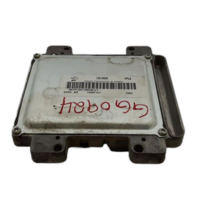
- Faulty Hybrid Powertrain Control Module 2 (HPCM2) (Very Rare) — The control module itself rarely fails electronically. This prevents correct communication and requires module replacement and programming. Rule out software and wiring issues before replacing the module.
Symptoms
- Reduced Propulsion Power Message — A message on the driver's information center states 'Reduced Propulsion Power'. The car feels sluggish and acceleration is severely limited.
- Check Engine Light / Service Vehicle Soon Message — The Malfunction Indicator Lamp illuminates and a 'Service Vehicle Soon' message appears on the dashboard.
- Extremely Slow Charging Speed — Even at a DC fast charger, the charging rate drops to 4-5 kW, making range addition a time-consuming process.
- Charging Limited to ~30% State of Charge (SoC) (also visible on scanner) — The high-voltage battery stops accepting a charge once it reaches approximately 30% SoC, regardless of the charger type.
- Inaccurate State of Charge (SoC) Display (also visible on scanner) — The displayed SoC appears inaccurate compared to the energy accepted by a charging station just before the fault occurs.
Diagnostic Flowchart
Tap your situation to follow the diagnostic path that matches what you're seeing on this code.
Common Fixes & Costs
- HPCM2 Software Reprogramming — Parts: $0, Labor: $0 - $250, ~1 hr book time (Professional)
- Replace 12-Volt AGM Battery
— Parts: $180 - $250, Labor: $50 - $100, ~0.5 hr book time
(DIY)
: OEM
: OEM - High-Voltage Battery Replacement
— Parts: $12000 - $16000, Labor: $1200 - $2500, ~8 hr book time
(Professional)
: OEM - Repair CAN Bus Wiring Harness — Parts: $10 - $50, Labor: $300 - $800, ~4 hr book time (Advanced)
- Replace Hybrid Powertrain Control Module 2 (HPCM2)
— Parts: $200 - $400, Labor: $200 - $300, ~2 hr book time
(Professional)
: OEM
: OEM
DIY vs Professional
- HPCM2 Software Reprogramming 🟢 Beginner
Tools: GM GDS2 Scan Tool, Service Programming System (SPS2), vehicle power supply. - Replace 12-Volt AGM Battery 🟢 Beginner
Tools: 10mm socket/wrench, terminal cleaning brush. - High-Voltage Battery Replacement 🟢 Beginner
Tools: Vehicle lift, high-voltage battery lifting table, insulated tools, Class 0 1000V safety gloves, face shield, professional scan tool. - Repair CAN Bus Wiring Harness 🟢 Beginner
Tools: Digital multimeter, wiring diagrams, pin-out boxes, wire repair tools. - Replace Hybrid Powertrain Control Module 2 (HPCM2) 🟢 Beginner
Tools: Socket set, trim removal tools, GM GDS2 Scan Tool for programming.
Used vs. New Parts: Buying Guide
When a used part is worth it: Buying a used HPCM2 is extremely risky and not recommended. It is a last resort for professionals with advanced tools if new parts are on backorder.
Donor-vehicle mileage cap: roughly under 50000 miles for the part to have meaningful remaining life.
Donor quality checklist:
- Verify the part number matches exactly.
- A used module is 'VIN-locked' and will not work without being 'virginized' and reprogrammed.
- Ask the seller if the module has been reset to a factory state.
Decision logic:
- If The fix is confirmed to be a software update (symptom '09') → Do not buy any parts. The existing module just needs to be reprogrammed by a dealer.
- If The module itself is confirmed faulty and you are not a programming expert → Buy a new OEM module from the dealer. The cost of a used module plus the high chance of programming failure makes it a poor value.
- If You have tools to 'virginize' and clone modules → A used module is a viable option, but this is an advanced-level repair.
Warranty tradeoff: Used modules have a 30-day warranty and do not cover programming labor. A new OEM module installed by a dealer is warrantied for parts and labor.
Worst-case if a used part fails: $500 - $1000. If the used module fails programming, you lose the part cost and pay for labor twice before buying a new module.
What Happens If You Wait — Timeline
- Immediate (First 1 Hour): Check Engine Light illuminates, 'Reduced Propulsion Power' and 'Service Vehicle Soon' messages appear. Vehicle enters 'limp mode' with sluggish acceleration and a 30% charging cap. (Added cost: $150 - $300 (Tow to the dealer).)
- 1 - 7 Days: The vehicle remains in reduced power and limited charging. Daily commuting is unsafe. Long-distance travel is impossible. (Added cost: $350 - $800 (Tow plus one week of a rental car).)
- 1 - 4 Weeks: No additional physical damage occurs. The primary impact is the complete loss of vehicle utility and mounting alternative transportation costs. (Added cost: $950 - $2,500+ (One month rental car plus $150-$250 initial dealer diagnostic fee).)
- 1+ Month: Continued non-use. Delaying the repair does not cause further powertrain harm but prolongs zero utility and high rental expenses. (Added cost: Costs from Stage 3 accumulate weekly. The final repair cost for the software fix is $0-$250.)
Cost of Not Fixing It
- Immediate: Vehicle enters 'limp mode' with severely reduced power and a 30% charging limit. Long-distance travel is impossible, and local driving is a safety risk. (Added cost: $150 - $300 for a tow to the dealership.)
- 1-7 Days: Complete loss of vehicle utility. The car is unusable for daily life due to extreme performance and charging limitations. (Added cost: $200 - $500 for a rental car or alternative transportation.)
- 1+ Week: No further component damage occurs. The primary cost is the continued inability to use the vehicle and the eventual diagnostic fee. (Added cost: $150 - $250 for initial dealer diagnosis.)
Diagnosis Steps
- Read and Verify the Symptom Byte
Use a professional-grade OBD-II scanner to read the two-digit symptom byte (e.g., '09' or '17') following U3636. If symptom '09' is present, the cause is a software glitch requiring HPCM2 reprogramming. If symptom '17' is present, the vehicle needs hardware diagnosis. Do not approve a battery replacement for symptom '09'.
Tools: Professional OBD-II Scan Tool (Intermediate) - Check for Open Service Campaigns and TSBs
Contact a Chevrolet dealer with your VIN and the full trouble code. Specific service campaigns (like N232421261 for symptom '09') and TSBs (like N242437530 for '17') provide exact repair instructions and may cover the cost.
Tools: Phone, Vehicle Identification Number (VIN) (Beginner) - Test the 12V Battery System
Before high-voltage work, test the 12V battery. Ensure voltage is at least 12.4V with the car off. Check cold cranking amps (520 CCA for OEM) and inspect terminals for corrosion. A weak 12V system is a common source of network faults.
Tools: Digital Multimeter, Battery Tester, Socket Set (Beginner) - Perform HPCM2 Reprogramming (Professional Only)
If diagnosis points to symptom '09', the only fix is a software update performed by a dealer using the GM Service Programming System (SPS2). A stable voltage must be maintained using a dedicated power supply during programming.
Tools: GM Diagnostic Equipment, Vehicle Power Supply (Professional) - Analyze Battery Live Data (Advanced)
Access HPCM2 live data. Monitor the 'Battery Cell Voltage Deviation' PID. A value greater than 0.08V between the average cell voltage and any individual cell indicates an internal battery problem, aligning with a symptom '17' diagnosis.
Tools: Professional OBD-II Scan Tool (Advanced) - High-Voltage Isolation Test (Professional Only)
For symptom '17', check for voltage leakage from the high-voltage system to the chassis. After depowering, connect an insulation tester between the high-voltage cables and chassis ground. Isolation resistance must be at least 200 kΩ for a 400V system. Lower readings confirm a loss of isolation.
Tools: Insulation Tester (Megohmmeter), CAT III 1000V Safety Gloves (Professional) - Inspect High-Voltage Wiring (Professional Only)
For symptom '17', depower the system and visually inspect all accessible high-voltage wiring harnesses and connectors between the battery pack and HPCM2. Look for rodent damage, chafing, corrosion, or improperly seated connectors.
Tools: Insulated Tools, Flashlight, Inspection Mirror (Professional) - CAN Bus Integrity Check (Advanced)
For symptom '17', check the high-speed CAN network integrity. With the 12V battery disconnected, measure resistance between Pin 6 and Pin 14 at the OBD-II port. A reading of 60 Ω indicates an intact network. 120 Ω suggests an open circuit; 0 Ω indicates a short.
Tools: Digital Multimeter, OBD-II Pinout Diagram (Advanced) - Post-Repair System Verification (Professional Only)
After repair, use the 'Clear Secured High Voltage DTCs' function in the GDS2 software to erase the code. If cooling system work was done, perform a drive cycle including slalom maneuvers to purge air from the battery cooling plates.
Tools: GM GDS2 Scan Tool (Professional)
When This Code Triggers (Freeze-Frame Conditions)
- Vehicle State: Parked or Driving (Code sets during operation or upon startup after being parked.)
- Battery State of Charge (SoC): < 40% (Reported when the vehicle is parked with a lower state of charge.)
- Ambient Temperature: < 14°F / -10°C (Linked to a 'cold soak' in freezing temperatures.)
- Module Status: Communication Lost (The HPCM2 logs a loss of valid communication or an unexpected performance reading from the battery management system.)
Related Codes
- P1E00 — This generic 'Service Vehicle Soon' code is set alongside U3636 to illuminate the check engine light. It confirms a powertrain fault but provides no specific diagnostic value.
- U3620 — TSB N242437530 groups this code with U3636 symptom '17', indicating a hardware issue. U3620 sometimes appears first before escalating to U3636.
- U3620-U362E & U3630-U3635 — This range of codes groups with U3636 symptom '17'. Their presence confirms a complex hardware or isolation fault, not the '09' software glitch.
- P0BBD — This code for 'Battery Pack Coolant Temperature Sensor Circuit Performance' points to a specific battery sensor problem, distinct from the U3636 communication fault.
Climate & Environmental Factors
- Cold Temperatures: Leaving the vehicle unplugged with a low state of charge in temperatures below 14°F (-10°C) causes temporary voltage drops. The Battery Management System registers this as a communication fault.
How to Talk to a Mechanic About This Code
Say this: "I have a Chevrolet Bolt with a U3636 code. I need to schedule a diagnostic appointment. It is critical that the technician reads the two-digit symptom byte to determine if it's a '09' or '17' fault. Please note this on the work order."
This signals to the service advisor that you are an informed owner. It directs the technician to the single most important diagnostic step and prevents them from ordering an unnecessary battery replacement for a software issue.
Avoid saying:
- 'My check engine light is on, can you look at it?'
- 'My electric car is acting weird and won't charge right.'
- 'Just fix whatever is wrong, I don't care what it is.'
Questions to ask before authorizing the repair:
- Can you provide me with the full code, including the two-digit symptom byte, from the scan tool report?
- If the symptom is '09', can you confirm this will be a software update as described in TSB 23-NA-157?
- If you recommend a high-voltage battery replacement, can you show me the diagnostic data that proves an internal battery failure?
- Is this repair covered under my vehicle's 8-year/100,000-mile EV component warranty or an active service campaign?
Where to Take It: Dealer vs Independent vs Chain
- Dealer:
Best and Only Fit. The fix for the most common cause of U3636 requires a dealer's proprietary GM software. An independent shop cannot perform the repair.
Best for: This specific code (U3636)., Any vehicle still under the 8-year/100,000-mile EV component warranty., Repairs requiring proprietary software updates.
Downsides: Higher labor rates if the repair is not covered by warranty or a service campaign., Appointment availability for certified EV technicians is sometimes limited. (Typical cost: +50% vs. baseline) - Independent Shop:
Not Recommended. Unless they are a specialized EV shop with OEM-level GM diagnostic software, they cannot resolve this code.
Best for: Out-of-warranty repairs on common gasoline vehicles., Basic maintenance like tires and brakes.
Downsides: Lacks the GM-specific software (GDS2/SPS2) required to diagnose the symptom byte and perform the software update., May not have technicians certified for high-voltage system work. (Typical cost: +0% vs. baseline) - Chain Shop:
AVOID. These shops are not equipped for high-voltage EV diagnostics or software programming.
Best for: Simple consumable replacements like tires or 12V batteries.
Downsides: Completely unequipped to handle high-voltage EV powertrain faults., High risk of misdiagnosis, leading to wasted time and money. (Typical cost: -10% vs. baseline)
When to Walk Away From the Repair
Walking away only makes sense if the vehicle is out of all warranties and has a confirmed hardware fault requiring a full battery replacement. The most common fix is low-cost ($0-$250), and the most expensive fix is almost always covered by the 8-year/100,000-mile EV component warranty.
- Car worth $15000, fix is $250: Fix it. This is the common software update scenario and is highly cost-effective.
- Car worth $15000, fix is $0: Fix it. The repair is covered under a service campaign or the 8-year/100,000-mile warranty.
- Car worth $9000, fix is $15000: Walk away. This is the rare worst-case scenario: an older Bolt out of all warranties that needs a full battery pack at owner expense. The repair cost exceeds the vehicle's value.
What Scan Tool You Need for This Code
Minimum: A scanner that reads manufacturer-specific codes and symptom bytes for General Motors vehicles.
A basic $20-$50 OBD-II code reader only shows 'U3636'. It cannot see the critical '09' or '17' symptom byte that tells you if it's a software glitch or a hardware problem. Without the symptom byte, you cannot diagnose this code.
Budget: Not Recommended (~$N/A) — Scanners in this price range are generic code readers that cannot read the required GM symptom bytes. Buying one for this specific problem is a waste of money.
Mid-range: OBDLink MX+ or Foxwell NT510 Elite (with GM software) (~$140-180) — These scanners support reading manufacturer-specific codes and access the SW-CAN bus used by GM vehicles. They read the crucial symptom byte, allowing for a correct initial diagnosis.
Professional: Autel MaxiCOM MK808 / Foxwell NT809 (~$450-600) — Provides full-system, OE-level diagnostics for GM vehicles. Reads all symptom bytes, accesses live data from all modules, and offers bidirectional controls for deeper diagnosis of symptom '17' faults.
Rent vs buy: Do not rent. Free rental scanners at auto parts stores are basic readers that will not work for this code. For a one-time diagnosis, paying the dealer's diagnostic fee ($150-$250) is more effective than buying a mid-range scanner.
How to Clear the Code After You Fix It
- Perform required software update or hardware repair.
- Use a professional scan tool with GM-specific functions.
- Select 'Clear Secured High Voltage DTCs' from the HPCM2 control menu and follow on-screen prompts.
- Perform a standard 'Clear All DTCs' command.
- Power cycle the vehicle and verify the Check Engine Light is off and the vehicle charges normally.
Drive cycle (~30 minutes): Drive normally to verify the fix, including city driving and steady highway speeds. If battery cooling components were serviced, perform side-to-side 'slalom' maneuvers to purge air from the system.
Readiness monitors affected: Not applicable. EVs do not have emissions readiness monitors.
Before emissions retest: drive at least 50 miles to fully set monitors.
Watch out for:
- A basic OBD-II scanner cannot clear this 'secured' DTC.
- Disconnecting the 12V battery does not clear the fault from the HPCM2's memory.
- The code returns immediately if the root cause is not fixed before clearing.
Will This Fail Emissions / State Inspection?
Yes — this code typically fails an OBD-II emissions inspection.
- California: EVs are exempt from smog inspections, but an illuminated Check Engine Light is a red flag during pre-purchase inspections or salvage vehicle registration.
- New York: EVs must pass an annual safety inspection. An illuminated Malfunction Indicator Lamp fails the safety inspection and prevents registration renewal.
- Texas: In the 17 counties requiring emissions testing, an illuminated Check Engine Light is an automatic failure. A Bolt with U3636 cannot be legally registered in these areas until repaired.
Most Commonly Affected Vehicles
- Chevrolet Bolt EV (2020-2023) — These models are the primary subject of GM TSBs for falsely triggering U3636-09 due to overly sensitive diagnostic software.
- Chevrolet Bolt EUV (2022-2023) — Shares the BEV2 platform and HPCM2 module with the Bolt EV, making it equally prone to the false U3636-09 code.
- Cadillac Lyriq (2023-2025) — A U3636 code on this Ultium platform vehicle requires the same symptom-byte-based diagnosis to differentiate software from hardware.
- GMC Hummer EV (2022-2025) — Shares electronic architecture with other modern GM EVs. U3636 requires dealer-level diagnosis starting with the symptom byte.
- Chevrolet Silverado EV (2024-2025) — Uses the GM Ultium platform. Technicians must check symptom bytes for manufacturer-specific codes like U3636.
- Jaguar I-Pace (2019-2024) — On JLR vehicles, U3636 indicates 'Lost Communication With Infotainment Slave Control Module', which is not a powertrain fault.
- Ford Mustang Mach-E (2021-2024) — Ford 'U' codes denote network communication failures. A similar fault requires checking for TSBs and software updates first.
Manufacturer-Specific Notes
- General Motors (Chevrolet): GM officially acknowledges via service campaigns (N232421261, 23-NA-157) that U3636 symptom '09' is a false alarm caused by its own overly sensitive software.
- General Motors (Chevrolet): During service campaign N232421261, dealers provide the customer with a free NACS (Tesla) charging adapter (part 85778137) as a goodwill gesture.
- General Motors (Chevrolet): U3636 is a 'secured' DTC. It cannot be cleared with a standard command and requires the 'Clear Secured High Voltage DTCs' function in the GDS2 software.
- General Motors (Chevrolet): Service update N23432430 addresses an issue where powertrain reprogramming incorrectly resets the mileage counter and limits charging to 80%.
- Jaguar / Land Rover: JLR uses U3636 to indicate a 'Lost Communication With Infotainment Slave Control Module', highlighting the importance of brand-specific code interpretation.
Real Owner Stories
2022 Chevy Bolt EUV stranded on a road trip
While 130 miles from home, the 'Reduced Propulsion Power' message appeared. The battery would not charge past 30% and charging speed was limited to 4-5 kW.
Outcome: A 2-hour drive turned into an 11-hour ordeal. A dealer visit confirmed the issue was resolved with a software update. The fault was triggered by leaving the car with a low charge in cold weather.
Lesson: Extreme charging limitations make long-distance travel impossible. Tow the vehicle. Cold soaking a Bolt with a low battery triggers this fault.
2022 Chevy Bolt EV with four battery replacements
An owner experienced recurring U3636 symptom '17' faults. The dealer replaced the high-voltage battery four times under warranty, but the code returned.
Outcome: The owner discovered GM service bulletin N242437530, which fixes this exact symptom via a software update. Their VIN was excluded from the campaign, leaving them in a diagnostic loop.
Lesson: Persistent U3636 codes are not always a battery hardware failure. Multiple battery replacements without a fix point to a vehicle-side software or module issue.
2021 Chevy Bolt with a post-recall software glitch
Months after a main battery replacement, the car displayed 'Reduced Propulsion Power' and would not charge past 80%. An OBD reader showed codes P1E00 and U3636.
Outcome: The dealer confirmed the symptom '09' software glitch, reprogrammed the module per the TSB, and fixed the car the same day at no charge.
Lesson: If U3636 appears after a battery recall, it is the known symptom '09' software bug. Mentioning the specific TSB speeds up diagnosis and prevents unnecessary battery orders.
2020 Chevy Bolt LT with an out-of-warranty software fix
The U3636 code put the car in limp mode. The owner took it to the dealer for the software update per TSB 23-NA-157.
Outcome: The software update fixed the issue. Because the vehicle was out of warranty, the owner paid $240 for labor.
Lesson: If your vehicle is out of warranty and not part of a free service campaign, expect a labor charge of $200-$250 for the reprogramming.
How to Prevent This Code From Triggering
- Keep vehicle software updated (Annually / When notified) — The primary cause of U3636-09 is a software bug. Performing official dealer software updates prevents the false alarm.
- Maintain the 12V AGM battery (Every 6 months) — A weak 12V battery causes random communication faults across the vehicle's network. Check terminals and test battery health to prevent secondary electrical issues.
- Avoid 'cold soaking' at a low state of charge (During winter months) — Leaving the Bolt unplugged with a low battery in freezing temperatures causes voltage sags that trigger faults. Keep the battery above 40% or leave it plugged in.
- Precondition the battery before driving in winter (Daily habit in cold weather) — Preconditioning warms the high-voltage battery using grid power. This reduces strain on the system at startup, preventing fault registration.
- Ensure battery coolant is serviced (Per manufacturer schedule (5 years / 150,000 miles)) — Degraded coolant leads to poor thermal management, causing the Battery Management System to detect performance anomalies that trigger U3636-17.
Frequently Asked Questions
Does U3636 mean I need a new battery?
Almost certainly not. The primary cause is a software glitch (symptom '09') that triggers a false alarm. Replacing the battery without confirming a symptom '17' hardware fault is a major diagnostic mistake.
Can I fix code U3636 myself?
No. The most common fix is a proprietary software update performed by a Chevrolet dealer. Diagnosing high-voltage EV systems is extremely dangerous and requires specialized training and tools.
What is a 'symptom byte' and why does it matter?
A symptom byte is a two-digit hexadecimal number (like '09' or '17') attached to the main U3636 code. It tells the technician exactly whether the fault is a software bug or a hardware failure. Basic code readers cannot see this critical information.
My code reader doesn't show a symptom byte. What should I do?
Take the vehicle to a GM dealer or qualified EV repair shop with a professional-grade scan tool. Attempting to diagnose U3636 without the symptom byte leads to guessing and unnecessary repairs.
The dealer updated the software, but the code came back. Now what?
Return to the dealer immediately. A newer software update may have been released, or an intermittent hardware problem (symptom '17') is the true root cause. The dealer must perform deeper hardware diagnostics per TSB N242437530.
Will the U3636 repair be covered by warranty?
Yes, in most cases. GM covers the software update under specific service campaigns, and hardware repairs fall under the 8-year/100,000-mile federal EV component warranty. Out-of-warranty software updates cost approximately $250.
My car is stuck at 30% charge far from home. What is the safest option?
Tow the vehicle to a certified dealer. Driving with severely reduced power is a safety hazard, and the 4-5 kW charging limit turns short trips into all-day ordeals. Roadside assistance often covers this tow if the vehicle is under warranty.
Key Takeaways
- Code U3636 on a Chevy Bolt is a false alarm caused by a software glitch (symptom '09') in the vast majority of cases, not a failed high-voltage battery.
- You must use a professional scan tool to read the two-digit 'symptom byte' (e.g., '09' or '17') to determine if the fix is a software update or hardware repair.
- The symptom '09' software update takes one hour at a Chevrolet dealer and costs $0 to $250, depending on warranty status and active service campaigns.
- The vehicle enters a protective limp mode capping battery charge at 30% and severely limiting acceleration, requiring a tow for any trip over 10 miles.
Shop the Parts Behind U3636
Below are the parts most often responsible for code U3636, ranked by how frequently each one is the actual culprit (per the diagnosis above). Tap any to see what we have for your vehicle.


The information in this article is provided for general reference and educational purposes only. Vehicle specifications, procedures, and part compatibility can vary by production date, trim level, and region. Always consult your vehicle's factory service manual and verify part numbers before purchasing or performing repairs. Safety-critical components such as airbags, seat belts, and braking systems should be installed by a qualified professional.
- 🧭 Diagnostic Flowchart
- 🛍️ Shop This Part
- What Does U3636 Mean?
- Can I Drive With U3636?
- Common Causes
- Symptoms
- Common Fixes & Costs
- DIY vs Professional
- Used vs. New Parts: Buying Guide
- What Happens If You Wait — Timeline
- Cost of Not Fixing It
- Diagnosis Steps
- When This Code Triggers (Freeze-Frame Conditions)
- Related Codes
- Climate & Environmental Factors
- How to Talk to a Mechanic About This Code
- Where to Take It: Dealer vs Independent vs Chain
- When to Walk Away From the Repair
- What Scan Tool You Need for This Code
- How to Clear the Code After You Fix It
- Will This Fail Emissions / State Inspection?
- Most Commonly Affected Vehicles
- Manufacturer-Specific Notes
- Real Owner Stories
- 2022 Chevy Bolt EUV stranded on a road trip
- 2022 Chevy Bolt EV with four battery replacements
- 2021 Chevy Bolt with a post-recall software glitch
- 2020 Chevy Bolt LT with an out-of-warranty software fix
- How to Prevent This Code From Triggering
- Frequently Asked Questions
- Does U3636 mean I need a new battery?
- Can I fix code U3636 myself?
- What is a 'symptom byte' and why does it matter?
- My code reader doesn't show a symptom byte. What should I do?
- The dealer updated the software, but the code came back. Now what?
- Will the U3636 repair be covered by warranty?
- My car is stuck at 30% charge far from home. What is the safest option?
- Key Takeaways
- 🎟️ Get 5% Off