

Buyer's Guide to Oxygen Sensors for Audi R8, S5 & Lamborghini Gallardo (2008-2015)
Diagnose a bad O2 sensor in your R8, S5, or Gallardo and learn how to choose the right replacement for your V8 or V10 engine.
- The biggest compatibility trap is the difference between sensors for the 4.2L V8 and 5.2L V10 engines; always verify your engine and part number.
- Common failure symptoms include a Check Engine Light, poor fuel economy, rough idle, and failed emissions tests.
- On the Audi S5 4.2L V8, misfire codes and O2 sensor issues are often caused by carbon buildup on the intake valves, a well-known issue with this engine.
- A used OEM sensor is often a better choice than a cheap new aftermarket part for these sensitive, high-performance engines.
Symptoms of a Bad Oxygen Sensor
A failing oxygen sensor can cause a range of noticeable problems. While a Check Engine Light is the most common indicator, other symptoms can appear first. Ignoring them can lead to more expensive repairs down the road, such as premature failure of the catalytic converters.
- Check Engine Light (CEL): This is the most definite sign. The ECU will store diagnostic trouble codes (DTCs) related to the sensor's performance or its heater circuit. Common codes include P0136, P0156 (downstream circuit malfunction), P2096, and P2098 (post-catalyst fuel trim too lean).
- Poor Fuel Economy: A bad sensor can cause the engine to run rich, meaning too much fuel is being used. This leads to a noticeable drop in gas mileage.
- Rough Idle and Misfires: An incorrect air-fuel mixture disrupts smooth engine operation, leading to a shaky idle, hesitation, or engine misfires.
- Reduced Engine Performance: You may experience sluggish acceleration, a general loss of power, or jerking during driving.
- Rotten Egg Smell or Black Smoke: Excess fuel in the exhaust can create a sulfur-like smell or visible black smoke from the tailpipe.
- Failed Emissions Test: A malfunctioning O2 sensor is a common reason for failing a state-mandated emissions inspection.
Vehicle-Specific Information and Known Issues
While these three vehicles share parts, their different engine configurations and layouts create unique considerations for oxygen sensor diagnosis and replacement.
Audi R8 (2008-2015) & Lamborghini Gallardo (2009-2014)
The R8 was available with a 4.2L V8 or a 5.2L V10, while the later Gallardo models covered here primarily use the 5.2L V10, which is shared with the R8. It is critical to identify the engine before ordering parts, as the sensors are not always interchangeable between the V8 and V10.
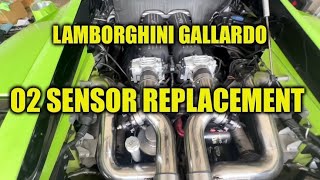
🎬 See this Lamborghini Gallardo O2 sensor replacement walkthrough- Engine Differences: The V8 and V10 engines may use different part numbers for their oxygen sensors. Always verify the number on the original part before purchasing a replacement.
- Replacement Access: On these mid-engine supercars, accessing the oxygen sensors can be challenging. The upstream (pre-catalyst) sensors are often reachable from the top of the engine bay after removing various trim panels and heat shields. The downstream (post-catalyst) sensors may require removing the rear wheels and wheel arch liners for access. 🎬 Watch: How to change an Audi R8 O2 sensor
- TSBs: Audi has issued Technical Service Bulletin (TSB) 2046611/5 for lean condition codes (P2096, P2098), which advises that contamination of the *rear* oxygen sensor can be the cause. The fix is to replace only the affected rear sensor, not the front one.
Audi S5 (2008-2012)
This guide applies to the B8 generation S5 equipped with the 4.2L V8 engine. This engine is well-known for issues that can be misdiagnosed as O2 sensor failure.
- Carbon Buildup: The 4.2L FSI V8 is notorious for heavy carbon buildup on the intake valves. This restricts airflow and can cause misfires (e.g., P0308) and lean/rich running conditions, which can trigger O2 sensor-related codes. If you have misfire codes alongside O2 sensor codes, investigate carbon buildup as a primary cause before replacing sensors.
- Replacement Access: As a front-engine car, access is different from the R8 and Gallardo. The sensors are located on the exhaust manifolds and downpipes. Access from underneath the vehicle is typically required, and it can be tight.
- Related Failures: A P0430 code (Catalyst Efficiency Below Threshold) is common on the S5. While this can mean a failed catalytic converter, it can also be caused by a failing downstream O2 sensor or an exhaust leak. It is wise to replace the less expensive O2 sensor first when diagnosing this code.
Compatibility Warning: The most critical factor is ensuring you purchase the correct sensor for your specific engine (4.2L V8 vs. 5.2L V10) and position (upstream vs. downstream). The sensors are physically and electronically different. Using the wrong part will not work and may cause further issues.
Buying a Used Oxygen Sensor
Purchasing a used OEM oxygen sensor can be a cost-effective option, especially compared to high dealer prices. However, since they are wear items, careful inspection is key.
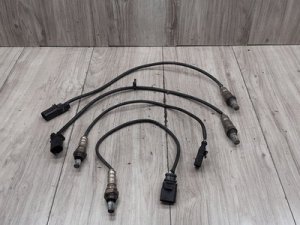
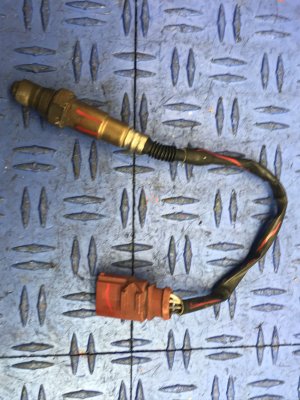
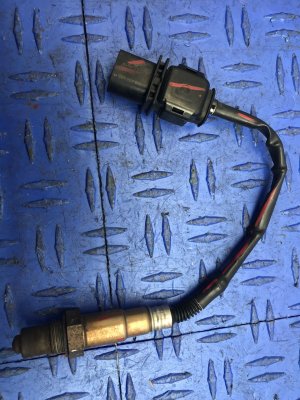
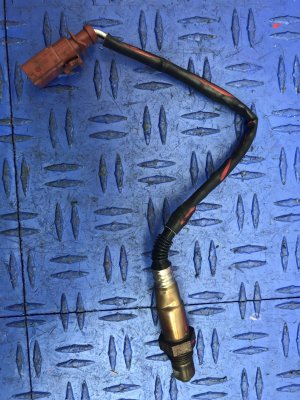
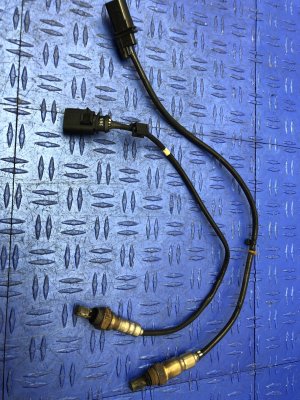
- Physical Inspection: Before buying, check the sensor for any physical damage. Look for cracks in the ceramic insulator, damage to the protective metal shield, and bent or stripped threads. Most importantly, inspect the electrical connector and wiring. If the connector is cracked or the wires are cut or frayed, do not buy the part.
- Check the Tip: The color of the sensor's tip can tell a story. A light gray or tan color is normal. A white, chalky coating could indicate silicone contamination from improper sealant use. A black, sooty coating suggests the engine was running rich. A green or brown appearance could point to coolant contamination.
- Verify Part Numbers: Cross-reference the part number from the used sensor with the one you removed from your vehicle or with a dealer's part catalog. The numbers stamped on the sensor body are the most reliable way to ensure a match.
- Mileage and Source: Ask for the mileage of the donor vehicle if possible. A sensor from a low-mileage car is preferable. Buying from a reputable recycler that offers a warranty provides a safety net if the part is faulty.
- Why Used OEM vs. New Aftermarket: For these high-performance engines, a used OEM sensor is often a better choice than a cheap, new aftermarket one. OEM sensors (often made by Bosch or NGK/NTK) are built to the exact specifications required by the ECU for response time and heating. Some universal or budget aftermarket sensors can cause persistent check engine lights or performance issues.
Cost Comparison
Prices can vary significantly based on brand, position, and vehicle. Downstream sensors are often less expensive than upstream (Air/Fuel Ratio) sensors.
| Part Type | Estimated Cost (per sensor) |
|---|---|
| New OEM (Dealer) | $390 - $620 |
| New Aftermarket (Bosch, NTK, Denso) | $110 - $270 |
| Used OEM | $30 - $90 |
| Shop Labor | $170 - $250 (per sensor, may vary by location) |
Replacement Overview
Replacing an oxygen sensor is a feasible DIY job for those with mechanical experience, but can be challenging due to tight access.
- Difficulty: 3/5. The main challenge is accessing the sensors, especially on the mid-engine R8 and Gallardo.
- Tools Needed: You will need a special oxygen sensor socket (typically 22mm or 7/8") which has a slot for the wire, a ratchet with extensions, and potentially penetrating oil for stubborn sensors. A torque wrench is recommended for proper installation.
- Procedure: The engine should be cool. Disconnect the electrical connector first. Use the O2 sensor socket to break the sensor loose. If it's seized, apply penetrating oil and let it soak. Before installing the new sensor, apply a small amount of anti-seize compound to the threads, being careful not to get any on the sensor tip. Thread it in by hand to avoid cross-threading, then tighten to the manufacturer's specification (a common torque spec is around 37 Nm or 27 ft-lbs, but verify for your specific model). Reconnect the electrical plug.
- Post-Installation: After replacement, it's necessary to clear the trouble codes from the ECU using a scan tool.
Pro Tip: For the Audi S5 4.2L V8, Bank 1 is the passenger side and Bank 2 is the driver's side. Sensor 1 is the upstream (pre-cat) sensor, and Sensor 2 is the downstream (post-cat) sensor.
🎬 Watch: Understanding O2 sensor locations and bank numbersFrequently Asked Questions
How many oxygen sensors do these cars have?
All V8 and V10 versions of the Audi R8, Lamborghini Gallardo, and Audi S5 have four oxygen sensors: one upstream and one downstream sensor for each engine bank.
Can I replace just one faulty oxygen sensor?
Yes, you can replace only the sensor that has failed. However, oxygen sensors on the opposite bank and in the same position are of similar age and have been subjected to the same conditions. It is often recommended to replace them in pairs (e.g., both upstream sensors) to ensure balanced engine performance, but it is not strictly necessary.
What is the difference between an upstream and downstream sensor?
The upstream sensor (Sensor 1) is located before the catalytic converter and is a wideband air-fuel ratio sensor. It provides fast, precise feedback for controlling the engine's air-fuel mixture. The downstream sensor (Sensor 2) is located after the catalytic converter and is typically a less complex narrowband sensor. Its main job is to monitor the efficiency of the catalytic converter by comparing its reading to the upstream sensor.
Will an aftermarket oxygen sensor work for my R8/Gallardo/S5?
While some high-quality aftermarket sensors from OEM suppliers like Bosch, NTK, or Denso will work correctly, these finely-tuned engines can be sensitive to sensor response times. To guarantee compatibility and avoid potential issues, using an OEM sensor (either new or a quality used part) is the safest choice. Avoid universal sensors that require splicing wires.
Helpful Videos


Technical Specifications
OEM Part Numbers: 059906262 06F906265 079906262 07L906262 07L906262H 07L906262J 07L906262L 07L906262N 07L906262R 07L906262S 1K0998262E
Thread Size: M18x1.5 Socket Size: 22mm (7/8 inch) Number of Wires: Typically 4 or 5, depending on position (upstream/downstream)
We Have This Part in Stock

The information in this article is provided for general reference and educational purposes only. Vehicle specifications, procedures, and part compatibility can vary by production date, trim level, and region. Always consult your vehicle's factory service manual and verify part numbers before purchasing or performing repairs. Safety-critical components such as airbags, seat belts, and braking systems should be installed by a qualified professional.
- Audi R8:
- Lamborghini Gallardo:
- Audi S5: