

Hyundai Sonata & Kia Optima Brake Booster Failure (2006-2019): The Hard Pedal & Hissing Noise Guide
Diagnose a hard brake pedal or hissing noise and learn how to find the exact right used OEM power brake booster for your 2006-2019 Sonata or 2011-2019 Optima.
- The most common failure symptoms are a very hard brake pedal and a hissing sound from the pedal area.
- Compatibility is complex; you MUST match the part to your vehicle's generation, engine (2.4L, 2.0T, 1.6T), and parking brake type (Electric vs. Manual).
- Hybrid models use a different, non-vacuum brake system and these parts are not compatible.
- You can often replace the booster without disconnecting the master cylinder's hydraulic lines, which avoids the need to bleed the brakes.
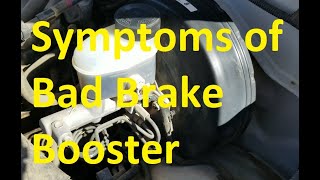
Symptoms of a Failing Power Brake Booster


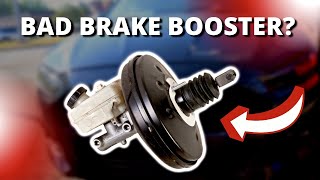
A bad brake booster gives clear warning signs. The most common issues are a change in brake pedal feel and new, unusual noises. Ignoring these symptoms is dangerous, as it can dramatically increase your stopping distance.
1. Hard Brake Pedal
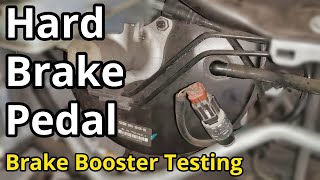
This is the most common symptom of booster failure. The pedal feels stiff and requires much more leg strength to press down. This happens because the vacuum assist is gone, and you are now pushing against the hydraulic brake system with only manual force. The sensation is often described as trying to press a solid block. You can test this easily: with the engine off, pump the brake pedal 4-5 times to use up any stored vacuum. The pedal should become firm. Now, hold the pedal down and start the engine. If the booster is working, the pedal will sink down an inch or two as vacuum builds. If the pedal stays hard and high, the booster has likely failed.
🎬 Watch: Step-by-step guided instructions for testing a faulty brake booster.2. Hissing Noise From the Pedal Area
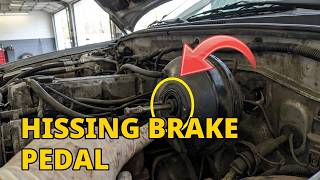
A distinct hissing or "whooshing" sound that occurs when you press or release the brake pedal is a classic sign of a leak. This sound is air being sucked through a tear in the booster's internal rubber diaphragm or a bad seal. The noise is usually heard inside the car, coming from under the dashboard near the brake pedal. A hissing noise from under the hood could be a simpler issue like a cracked vacuum hose running to the booster, but a hiss inside the cabin almost always points to an internal booster failure.
🎬 See what a leaking vacuum booster diaphragm sounds like.3. Increased Stopping Distance
Because the booster multiplies your braking force, its failure means the car won't stop as quickly for a given amount of pedal pressure. You'll find yourself needing to press the pedal much harder and earlier to stop safely. This can be especially dangerous in a panic stop situation.
4. Engine Stalling or Stumbling When Braking
A large vacuum leak in the booster diaphragm can allow unmetered air into the engine's intake manifold. This disrupts the engine's air-fuel mixture, which can cause the engine RPM to drop, stumble, or even stall completely when you apply the brakes.
Compatibility Guide: Finding the Correct Booster

Finding the right power brake booster for your Sonata or Optima is critical, as there are several variations depending on the vehicle's generation, engine, and options. Hybrid models use a completely different and more complex hydraulic unit and are not covered by this guide. Using the wrong booster can lead to improper brake function.
Warning: These parts are NOT interchangeable between generations or option packages. Always verify the part number and vehicle specifications before ordering.
Generation 1: 2006-2010 Hyundai Sonata (NF)
For the earliest models in this range, the boosters are specific to this generation.
- Part Numbers: 59110-3K200, 59110-3K201
- Fits: 2006-2010 Hyundai Sonata
- Notes: The initial prompt mentioned a split based on Electronic Stability Control (ESC), but most models in this era were equipped with it. Verify compatibility by part number.
Generation 2: 2011-2014 Hyundai Sonata (YF) & 2011-2015 Kia Optima (TF)
For this generation, the primary difference is the engine.
- Part Number (2.0L Turbo): 59110-3Q500
- Fits: 2011-2014 Sonata & 2011-2015 Optima with the 2.0L Turbo engine.
- Part Number (2.4L Non-Turbo): 59110-2T200
- Fits: 2011-2014 Sonata & 2011-2015 Optima with the 2.4L engine.
Generation 3: 2015-2019 Hyundai Sonata (LF) & 2016-2019 Kia Optima (JF)
This generation is the most complex. Compatibility depends on both the engine and whether the vehicle has an Electric Parking Brake (EPB).
- Part Number (2.4L Engine, NO Electric Parking Brake): 59110-C1300
- Fits: Models with the 2.4L engine and a conventional foot-pedal or hand-lever parking brake.
- Part Number (1.6T/2.0T Engines, NO Electric Parking Brake): 59110-C1400
- Fits: Models with the 1.6L Turbo or 2.0L Turbo engine and a conventional parking brake.
- Part Number (1.6T/2.0T Engines, WITH Electric Parking Brake): 59110-C1450
- Fits: Models with the 1.6L Turbo or 2.0L Turbo engine and the button-operated Electric Parking Brake (EPB).
Known Issues, Recalls, and Technical Service Bulletins (TSBs)
While there are no widespread recalls specifically for the power brake booster on these models, there are related brake system issues to be aware of:
- NHTSA Recall 15V-759 (2011-2012 Sonata): This recall was for a deteriorating brake pedal stopper pad. This small plastic pad can break apart, causing the brake lights to stay on or preventing the vehicle from being shifted out of Park. This is not a booster failure, but it involves the brake pedal assembly.
- NHTSA Recall 14V-434 (2011 Sonata): Some early YF Sonatas were recalled for leaking brake lines between the master cylinder and the ABS/ESC unit (HECU). This could cause a loss of brake fluid and increased pedal travel, which might be confused with other brake issues.
Buying a Used Power Brake Booster
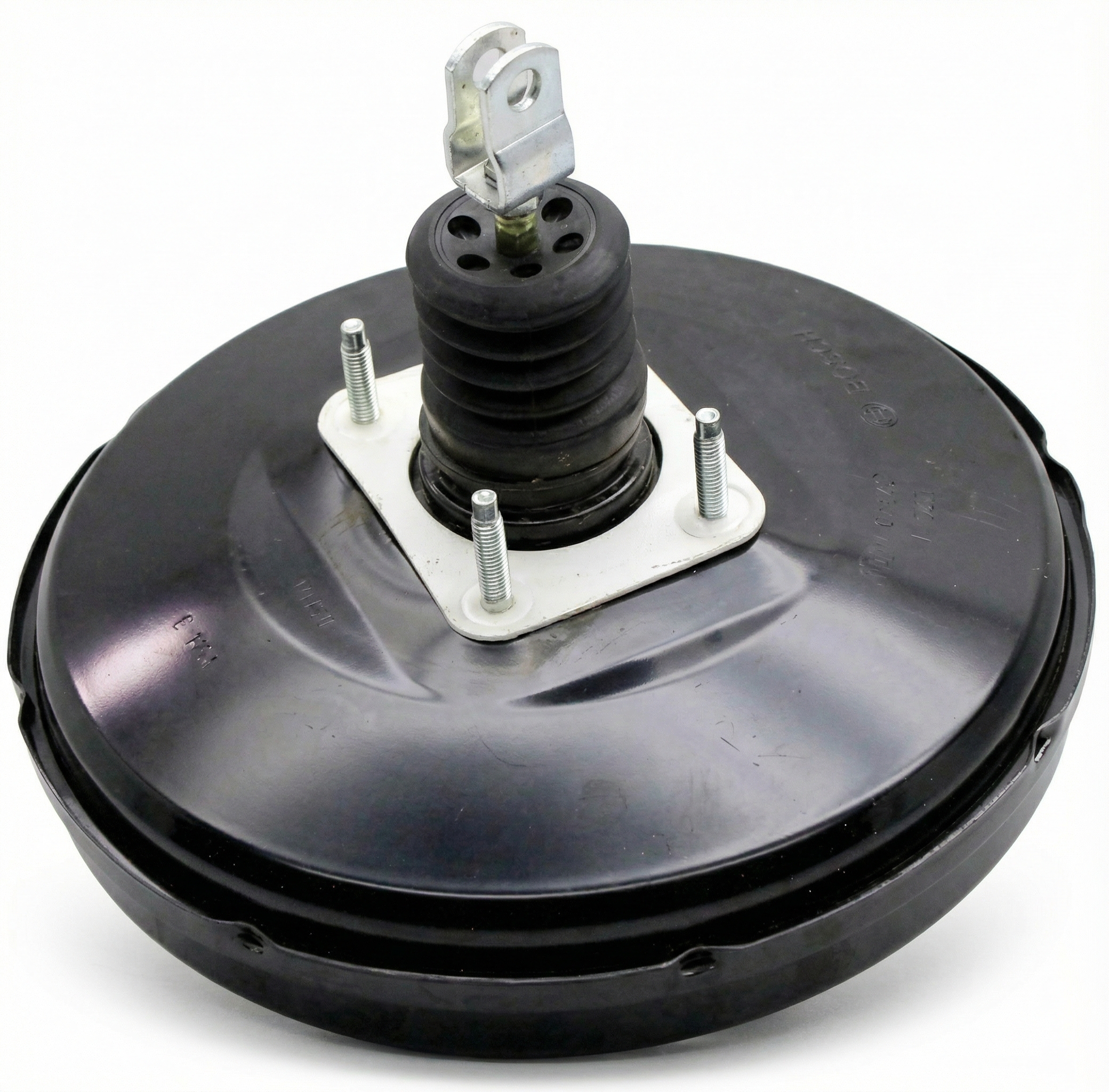
A used OEM brake booster is often a reliable and cost-effective alternative to expensive new parts. Since these are not high-wear items, a low-mileage used unit can provide years of service. Here’s what to look for:
- Verify Compatibility: This is the most important step. Use the guide above to match the OEM part number from the donor vehicle to the one required for your car.
- Physical Inspection: Check the metal canister for significant rust, dents, or damage. Ensure the mounting studs where the master cylinder bolts on are straight and have clean threads.
- Check the Seals: Look at the area where the master cylinder mounts. There should be no signs of brake fluid leakage, which would appear as stained or peeling paint. Fluid from a leaking master cylinder can be sucked into the booster and destroy its internal diaphragm.
- Vacuum Port: Inspect the plastic check valve and the port it plugs into on the booster. Make sure there are no cracks or damage. While the check valve itself is a small, replaceable part, damage to the booster housing is non-repairable.
- Mileage vs. Age: While lower mileage is generally better, the age and environment of the donor car also matter. A booster from a 10-year-old car in a dry climate may be in better shape than one from a 5-year-old car in a harsh, salty environment. The rubber diaphragm can become brittle over time.
Cost Comparison
Prices can vary based on the specific part number and supplier. The figures below are estimates to help you understand the value of a used OEM part.
| Part Type | Estimated Cost |
|---|---|
| New OEM | $380 - $750 |
| New Aftermarket | $150 - $300 |
| Used OEM | $75 - $200 |
| Shop Labor | $150 - $400 |
Replacement Overview & Torque Specs

Replacing the brake booster is a moderately difficult job that requires working in two tight spaces: the engine bay and under the driver's side dashboard.
Pro Tip: You do not necessarily need to bleed the brakes to replace the booster. The master cylinder can often be unbolted from the booster and carefully moved aside without disconnecting the hydraulic brake lines. This saves significant time and effort.
- Disconnect the battery.
- Unbolt the master cylinder from the booster and carefully pull it forward just enough to clear the studs. Support it to avoid straining the brake lines.
- Disconnect the vacuum hose from the check valve on the booster.
- Inside the car, locate where the booster's pushrod connects to the brake pedal arm. Remove the retaining clip and pin to disconnect it.
- Remove the four nuts that hold the brake booster to the firewall. These are typically located around the pushrod under the dash.
- Maneuver the old booster out of the engine bay. Installation is the reverse of removal.
Torque Specs:
- Brake Booster to Firewall Nuts: 13-16 Nm (for 2006 Sonata). Specs for later models are similar; the key is to tighten them evenly and securely without over-torquing.
- Master Cylinder to Brake Booster Nuts: 13-16 Nm (for 2006 Sonata).
Frequently Asked Questions (FAQ)
Can I drive with a bad brake booster?
It is not recommended. While the brakes will still function manually, they will require extremely high pedal effort, and your stopping distance will be much longer. This is a significant safety risk, especially in an emergency. The vehicle should be repaired as soon as possible.
Do I have to bleed the brakes after replacing the booster?
Not always. If you can unbolt the master cylinder and move it aside without disconnecting the metal brake lines, you will not introduce air into the hydraulic system and will not need to bleed the brakes. However, if you disconnect the lines from the master cylinder for any reason, you absolutely must bleed the entire brake system afterward.
Is a hissing sound always the brake booster?
Usually, but not always. If the hissing is loud inside the cabin and changes when you press the brake pedal, the booster is the most likely cause. However, a hissing sound could also be from a cracked vacuum hose leading to the booster or another unrelated engine vacuum leak. A simple visual inspection of the hoses is a good first step.
Can I just replace the check valve?
Yes, if only the check valve is faulty. The check valve is a small, one-way valve where the vacuum hose connects to the booster. It's designed to hold vacuum in the booster if the engine stalls. If it fails, it can cause a hard pedal. It can be tested by removing it and trying to blow through it in both directions; it should only allow air to flow one way (out of the booster). If the valve is bad, it's an inexpensive and easy replacement. However, if the hissing is from the diaphragm, replacing the check valve will not fix the problem.
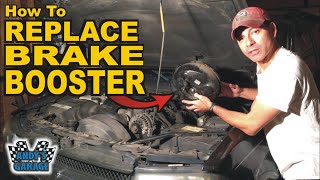
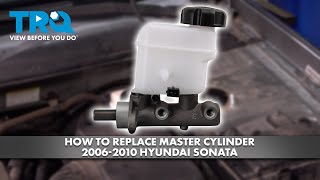
Helpful Videos
Technical Specifications
OEM Part Numbers: 59110-3K200 59110-3K201 59110-2T200 59110-3Q500 59110-C1300 59110-C1400 59110-C1450 58500E6040 591103K200 591103K201 591103Q300 591103Q500 59110C1300 59110C1400 59110C1450
Mounting Nut Torque: Approximately 13-16 Nm (9-12 ft-lbs)
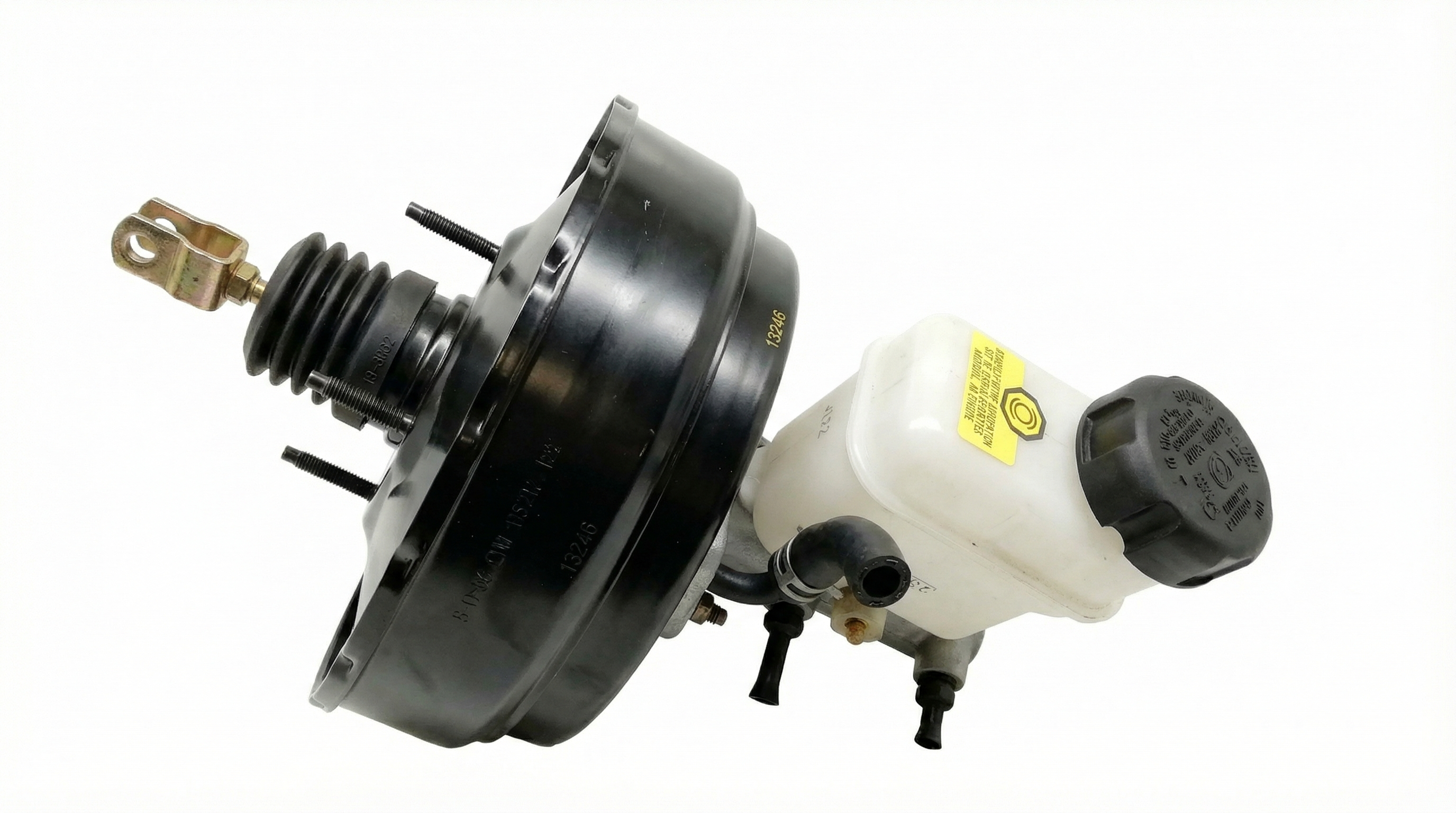
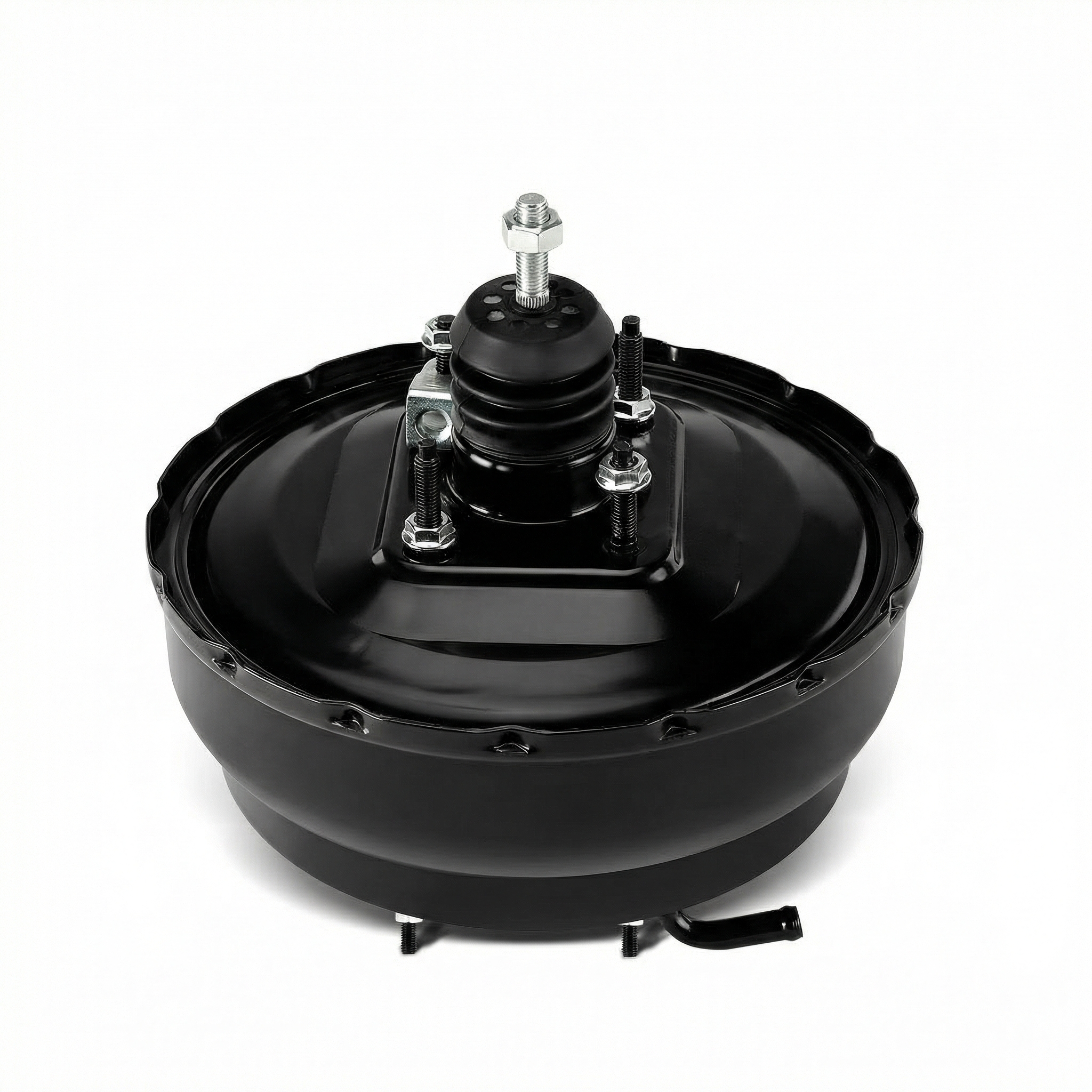
We Have This Part in Stock

The information in this article is provided for general reference and educational purposes only. Vehicle specifications, procedures, and part compatibility can vary by production date, trim level, and region. Always consult your vehicle's factory service manual and verify part numbers before purchasing or performing repairs. Safety-critical components such as airbags, seat belts, and braking systems should be installed by a qualified professional.
- Hyundai Sonata:
- Kia Optima:
- 🎬 Helpful Videos
- 🛍️ Shop This Part
- Symptoms of a Failing Power Brake Booster
- 1. Hard Brake Pedal
- 2. Hissing Noise From the Pedal Area
- 3. Increased Stopping Distance
- 4. Engine Stalling or Stumbling When Braking
- Compatibility Guide: Finding the Correct Booster
- Generation 1: 2006-2010 Hyundai Sonata (NF)
- Generation 2: 2011-2014 Hyundai Sonata (YF) & 2011-2015 Kia Optima (TF)
- Generation 3: 2015-2019 Hyundai Sonata (LF) & 2016-2019 Kia Optima (JF)
- Known Issues, Recalls, and Technical Service Bulletins (TSBs)
- Buying a Used Power Brake Booster
- Cost Comparison
- Replacement Overview & Torque Specs
- Frequently Asked Questions (FAQ)
- 🎟️ Get 5% Off