

2014-2023 Cherokee & 2015-2017 Chrysler 200 Brake Booster: Hissing Noises & Hard Pedal Explained
A complete guide to diagnosing, buying, and replacing the power brake booster for the Jeep Cherokee (KL) and Chrysler 200, including critical compatibility differences.
- Compatibility is critical: Jeep Cherokees require different boosters for single vs. dual-piston front calipers. Chrysler 200s require different boosters for the 2.4L vs. 3.6L engine.
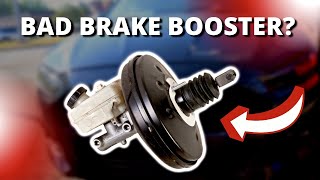
- A hissing sound from the pedal or a suddenly hard pedal are the primary symptoms of failure.
- 2014 Cherokees with the 2.4L engine are subject to a recall (NHTSA 15V-800) where engine oil can destroy the booster.
- Driving with a failed brake booster is extremely dangerous due to increased stopping distances.
Symptoms of a Failing Power Brake Booster
A failing brake booster gives clear warning signs. Ignoring them is dangerous, as it can lead to a sudden loss of braking assistance.
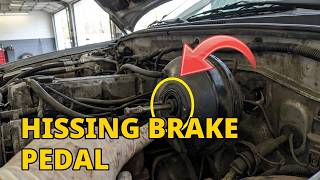
🎬 Watch: A quick guide to common bad brake booster symptoms.- Hissing Noise: The most common symptom is a hissing sound coming from the driver's side footwell. This is often heard when you press or release the brake pedal. The sound is caused by a tear in the booster's internal rubber diaphragm, which creates a vacuum leak.
- Hard Brake Pedal: The pedal feels stiff and is very difficult to push. This is the primary sign that the booster is no longer providing power assist, forcing you to do all the work manually.
- Increased Stopping Distance: Because you can't apply as much force to the master cylinder, the vehicle will take much longer to stop. This is a serious safety hazard.
- Stalling or Stumbling Engine: A large vacuum leak from the booster can disrupt the engine's air-fuel mixture, causing the engine to run rough, stumble, or even stall when you apply the brakes at low speeds.
- Brake Pedal Position Changes: The pedal may not return to its normal position as quickly after being pressed, or it may feel higher than usual before you press it.
Known Issues, Recalls, and Technical Service Bulletins (TSBs)
There are several known issues and a significant recall affecting the brake systems on these vehicles, particularly for the Jeep Cherokee.
Recall R63 / NHTSA 15V-800: Oil Contamination (2.4L Engine)
This is the most critical issue for owners of 2014 Jeep Cherokees equipped with the 2.0L or 2.4L Tigershark engine. It also affected other Chrysler vehicles with this engine, like the Dodge Dart. The problem involves engine oil migrating from the engine's vacuum pump, through the vacuum hose, and into the power brake booster. This oil contaminates and destroys the booster's rubber diaphragm, leading to a sudden loss of brake assist, often accompanied by a 'pop' and a hissing sound.
Under the recall, dealers were instructed to inspect the system for oil. If oil was found, the vacuum pump, vacuum tube, brake booster, and master cylinder were all to be replaced. If you own a 2.4L model and experience a hard pedal, this should be your primary suspicion.
Compatibility: The Most Important Checks Before You Buy
This is not a one-size-fits-all part. Ordering the wrong booster will lead to installation problems or improper brake performance. You must verify your vehicle's specific configuration.
For 2014-2023 Jeep Cherokee (KL) Owners:
The key difference for the Cherokee is the type of front brakes it has. You must identify whether you have single-piston or dual-piston front calipers.
- Dual-Piston Front Calipers (Heavy-Duty Brakes): Many models, especially those with the 3.2L V6, towing packages, or higher trims, are equipped with dual-piston front calipers. You can often identify these calipers by looking through the wheel; the outer housing has a shape resembling a figure-eight where the two pistons are located. These vehicles typically use part numbers from the 68211880 and 68418189 series.
- Single-Piston Front Calipers (Standard / Light-Duty Brakes): Many models, particularly those with the 2.4L engine, use single-piston front calipers. These have a simpler caliper design with one large, circular piston shape. These vehicles often use a different booster, such as those in the 68245355 part number series.
Pro Tip: The easiest way to check is to look at your front brake caliper through the wheel spokes. A dual-piston caliper will have two distinct circular bumps, while a single-piston caliper will have one. If in doubt, providing a VIN to the parts seller is the surest way to get the correct part.
For 2015-2017 Chrysler 200 Owners:
Fitment for the Chrysler 200 is determined by the engine.
- 3.6L V6 Engine ONLY: The Chrysler 200 with the 3.6L V6 engine shares its brake booster with the V6 Jeep Cherokee. It uses part number series 68211880AD.
- 2.4L I4 Engine: The Chrysler 200 with the 2.4L engine uses a different brake booster, part number series 68245355AE.
Warning: Do NOT assume the boosters are interchangeable between engine types on the Chrysler 200. They are different parts and will not fit or function correctly.
Buying a Used Power Brake Booster
A used OEM brake booster from a low-mileage vehicle can be an excellent value, offering the same fit and quality as a new part for a fraction of the price. Aftermarket boosters can have questionable diaphragm quality, leading to premature failure. Given this is a critical safety part, a trusted OEM unit is often the better choice.
Inspection Checklist:
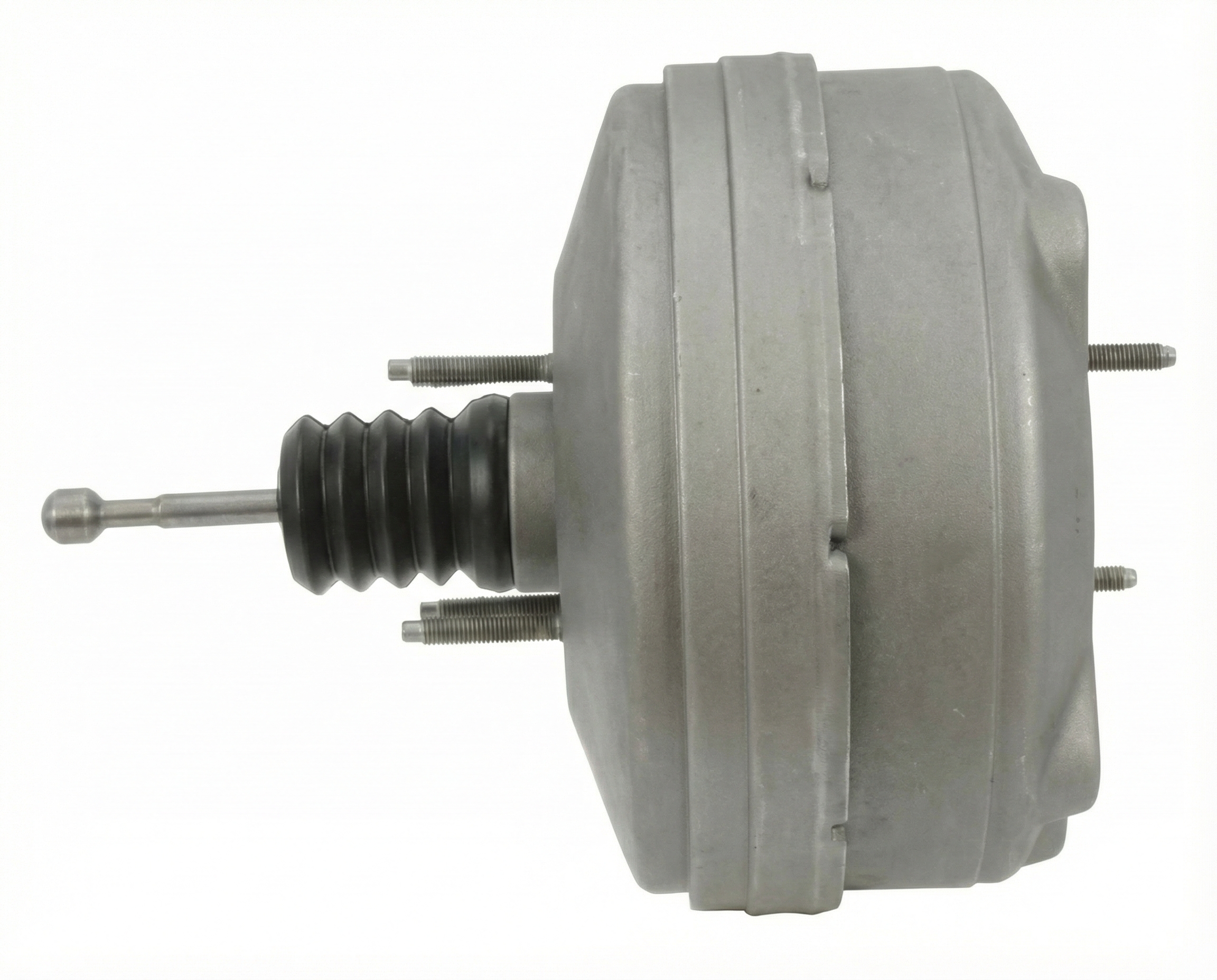
- Check for Rust: The biggest enemy of a brake booster is corrosion. The recall for older Grand Cherokees highlighted how water intrusion can cause the booster shell to rust through, leading to failure. Inspect the entire metal canister, especially the crimped seam running around its circumference. Avoid any booster with significant rust or pitting.
- Inspect the Master Cylinder Seal Area: Look at the front of the booster where the master cylinder mounts. Any sign of wetness, paint bubbling, or staining indicates that the master cylinder was leaking brake fluid. Brake fluid is corrosive and can damage the booster's front seal and internal diaphragm. If you see this, reject the part.
- Check the Vacuum Port: Ensure the plastic vacuum port where the hose connects is not cracked, broken, or brittle. On 2.4L models, this is especially important as this area is subject to the oil contamination issue. 🎬 Watch: How to test your booster and vacuum hose for leaks.
- Mileage vs. Condition: For this part, physical condition and environment are more important than mileage alone. A 50,000-mile booster from a rust-belt state may be in worse shape than a 100,000-mile booster from a dry, southern climate. Prioritize a clean, rust-free part. Failures are not typically tied to a specific mileage but rather to diaphragm tears or corrosion.
Cost of Replacement
Replacing a power brake booster is a moderately labor-intensive job. Here is an estimated cost breakdown:
| Part Type | Estimated Cost |
|---|---|
| New OEM | $250 - $430 |
| New Aftermarket | $150 - $250 |
| Remanufactured | $120 - $190 |
| Used OEM | $75 - $150 |
| Shop Labor | $330 - $500 |
Replacement Overview & Special Procedures
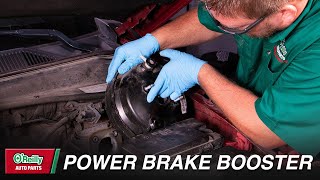
Replacing the booster is a feasible DIY for an experienced mechanic, but it can be challenging due to tight access.
- Difficulty: 4 out of 5
- Estimated Time: 2.5 - 4 hours
The basic steps involve:
- Disconnecting the battery.
- Removing the brake master cylinder from the front of the booster. It's often possible to do this without disconnecting the brake lines, carefully moving it aside to avoid needing to bleed the entire brake system.
- Removing components for access, such as the battery tray, fuse box, or ABS module bracket.
- Working under the dashboard to disconnect the booster's pushrod from the brake pedal. This usually involves removing a small retaining clip.
- Removing the four nuts (typically 13mm) that secure the brake booster to the firewall.
- Installation is the reverse of removal.
Torque Specs & Special Tools
- Master Cylinder to Booster Nuts: A common torque value for these is around 9-11 ft-lbs (12-15 Nm). Overtightening can damage the booster or master cylinder.
- Booster to Firewall Nuts: These are also typically torqued to around 9 ft-lbs (12.7 Nm). Access can be very tight.
- Pushrod Adjustment: The length of the pushrod on the new booster that presses into the master cylinder is critical. While most replacements are pre-adjusted, it's wise to compare it to the old unit. An incorrect length can cause brakes to drag or feel spongy.
- Brake Service Mode (Jeep Cherokee): If you are doing any rear brake work at the same time, the electronic parking brake must be put into 'Brake Service Mode' via the Uconnect infotainment screen to retract the pistons.
Frequently Asked Questions (FAQ)
Can I drive my car with a bad brake booster?
No. While the brakes will still technically function, the amount of pedal force required to stop the car is dangerously high, and stopping distances are significantly increased. It is not safe to drive a vehicle with a failed brake booster.
Is the hissing sound always the brake booster?
Usually, but not always. The hissing sound is a vacuum leak. While the booster diaphragm is the most common cause, the leak could also be from the vacuum hose running to the booster or the check valve located where the hose connects to the booster. Always inspect the hose and valve first, as they are simpler and cheaper to replace.
Do I need to replace the master cylinder with the brake booster?
It is not always required, but it is highly recommended, especially if the old master cylinder was leaking fluid onto the booster. A leaking master cylinder is a common cause of booster failure. Replacing them together ensures the new booster is protected and saves on future labor costs. The recall for the 2.4L engine required replacing both if oil contamination was found.
Why are there so many different part numbers for this booster?
The multiple part numbers (e.g., 68211880AA, AB, AC, AD) represent revisions made by the manufacturer over time. Generally, you should always use the latest superseded part number (like 68211880AD) as it may include improvements to address previous issues. The different base numbers (e.g., 68211880 vs 68245355) represent completely different parts for different vehicle configurations.
Helpful Videos
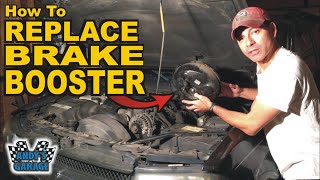
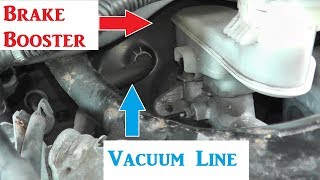
Technical Specifications
OEM Part Numbers: 68211880AA 68211880AB 68211880AC 68211880AD 68418189AA 68418189AB 68245355AA 68245355AB 68245355AC 68245355AD 68245355AE
Master Cylinder to Booster Nut Torque: ~9 ft-lbs (12.5 Nm). Booster to Firewall Nut Torque: ~9 ft-lbs (12.7 Nm).
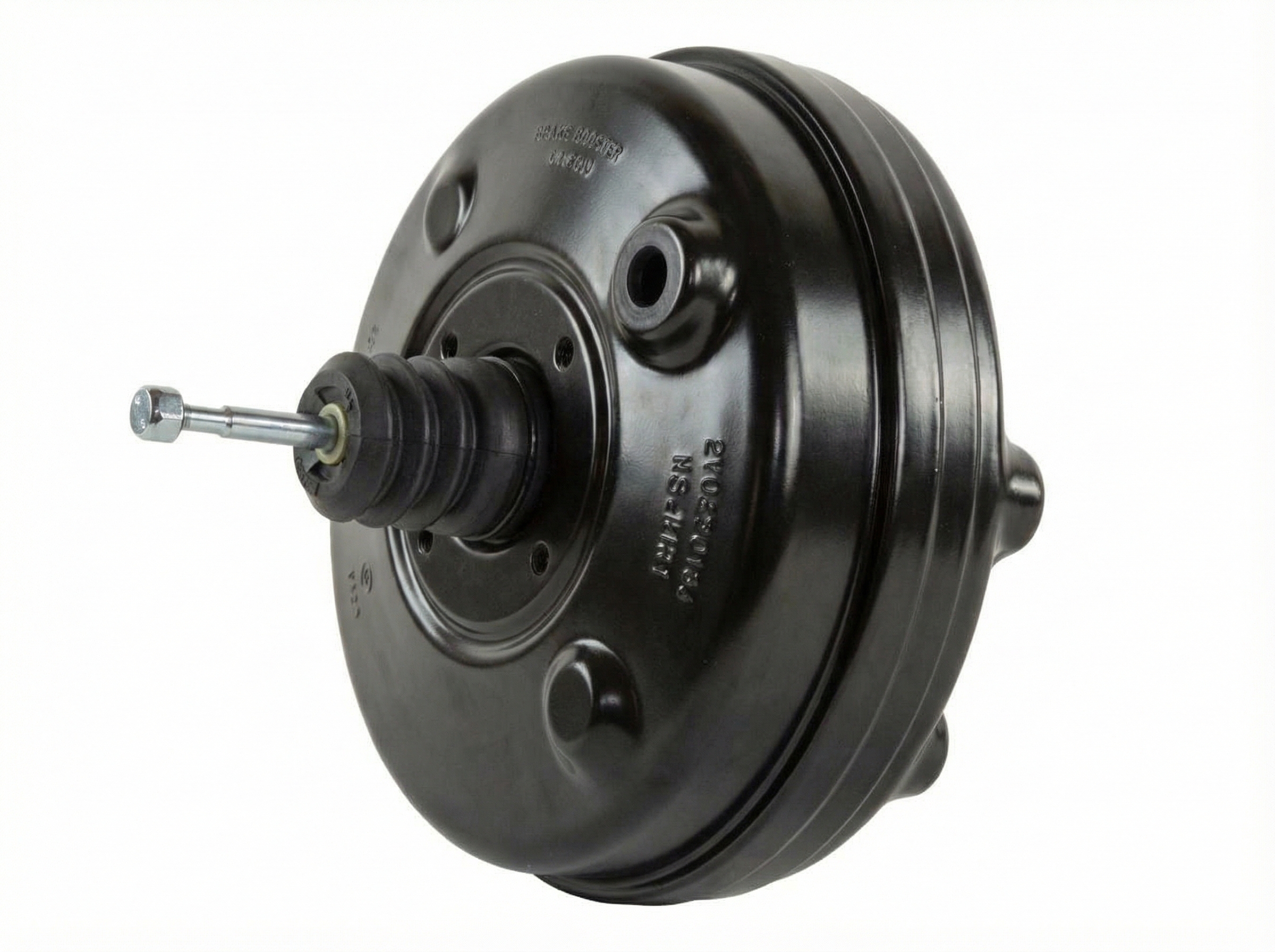
We Have This Part in Stock

The information in this article is provided for general reference and educational purposes only. Vehicle specifications, procedures, and part compatibility can vary by production date, trim level, and region. Always consult your vehicle's factory service manual and verify part numbers before purchasing or performing repairs. Safety-critical components such as airbags, seat belts, and braking systems should be installed by a qualified professional.
- Jeep Cherokee:
- Chrysler 200:
- 🎬 Helpful Videos
- 🛍️ Shop This Part
- Symptoms of a Failing Power Brake Booster
- Known Issues, Recalls, and Technical Service Bulletins (TSBs)
- Recall R63 / NHTSA 15V-800: Oil Contamination (2.4L Engine)
- Compatibility: The Most Important Checks Before You Buy
- For 2014-2023 Jeep Cherokee (KL) Owners:
- For 2015-2017 Chrysler 200 Owners:
- Buying a Used Power Brake Booster
- Inspection Checklist:
- Cost of Replacement
- Replacement Overview & Special Procedures
- Torque Specs & Special Tools
- Frequently Asked Questions (FAQ)
- 🎟️ Get 5% Off