

Hard Brake Pedal in Your 2006-2019 Passat, CC, or Tiguan? Your Power Brake Booster Guide
Diagnosing and replacing the power brake booster in the Volkswagen Passat, CC, and Tiguan, including critical vacuum pump issues and part compatibility.
- A hard brake pedal is the #1 symptom of a failed power brake booster, creating a critical safety issue.
- For 2015-2016 models with 1.8T/2.0T engines, check for recall 23R1, as a vacuum pump failure can mimic a bad booster.
- If the old booster failed due to brake fluid contamination, you MUST replace the master cylinder at the same time.
- Compatibility is complex; part numbers vary based on model, year, engine, and drivetrain (AWD vs. FWD). Always verify the OEM part number.
Symptoms of a Failing Power Brake Booster
A failing brake booster gives clear warning signs. Because it operates on engine vacuum, a failure can affect both your braking and engine performance. Ignoring these symptoms is a serious safety risk.
1. Hard Brake Pedal
This is the most common symptom. The brake pedal will feel stiff and require significantly more effort to press down. You may feel like you have to stand on the pedal to get the car to stop. This indicates a loss of power assist.
2. Hissing Noise
A hissing or whooshing sound when you press or release the brake pedal is a classic sign of a vacuum leak. The sound is air leaking past a ruptured diaphragm inside the booster. The noise may stop once your foot is held firmly on the pedal and return upon release.
3. Increased Stopping Distance
Without the booster's assistance, your vehicle will take longer to stop. This can be subtle at first but becomes a critical safety hazard in emergency braking situations.
4. Engine Problems
A large vacuum leak from the brake booster can disrupt the engine's air-fuel mixture. This can cause a rough idle, engine stumbling, or even stalling when you apply the brakes. It may also trigger the Check Engine Light with lean air/fuel mixture codes like P0171 or P0174.
Known Issues, Recalls, and Technical Service Bulletins (TSBs)
For these specific Volkswagen models, the brake booster itself is generally reliable. However, related components, particularly the vacuum pump on certain engines, are known to cause identical symptoms.
NHTSA Recall 23R1: Vacuum Pump Failure
Critical Warning: Volkswagen issued recall 23R1 for certain 2015-2016 Passat, CC, and Tiguan models with 1.8T and 2.0T gasoline engines. The camshaft lobe that drives the brake vacuum pump can shear off, causing a sudden and complete loss of power brake assist. This results in a hard brake pedal and significantly increased stopping distance. The fix involves an engine control module (ECM) software update. Verify with a VW dealer if this recall applies to your vehicle and if it has been completed.
Brake Booster Pressure Sensor
Some Tiguan models may experience a faulty brake booster pressure sensor. This can trigger a "Brake Booster Faulty" message on the dashboard and illuminate ABS or stability control warning lights, even if the booster itself is mechanically sound.
Step-by-Step Diagnosis
Before buying a new booster, perform these simple tests to confirm it's the source of the problem.
- Engine-Off Test: With the engine off, pump the brake pedal 4-5 times. It should become firm and hard to press as you deplete the stored vacuum.
- Engine-On Test: After the pedal is firm, hold light pressure on it and start the engine. As the engine builds vacuum, you should feel the pedal drop slightly (about an inch) under your foot. If the pedal does not drop, the booster is not getting vacuum or is not holding it.
- Vacuum Reserve Test: Run the engine for a minute, then turn it off. You should be able to get 2-3 power-assisted brake applications before the pedal becomes firm. If it's firm on the first press, the booster's internal check valve may have failed, or there's a leak in the vacuum hose.
- Check the Vacuum Hose: Inspect the thick vacuum hose running from the engine intake manifold (or vacuum pump) to the booster. Look for cracks, splits, or loose connections. A leak here will cause a loss of assist.
Buying a Used Power Brake Booster
A recycled OEM power brake booster is an excellent alternative to an expensive new unit, often providing the same performance and durability for a fraction of the price. Cheap aftermarket boosters can have lower-quality diaphragms that fail prematurely. Here’s what to look for when buying used:
- Physical Inspection: Check the metal housing for significant rust, dents, or damage. Ensure the mounting studs are straight and the threads are in good condition.
- Check for Fluid Leaks: The most important check is the area where the master cylinder mounts. Look for any signs of brake fluid contamination or rust streaks coming from the front seal. A leaking master cylinder will allow brake fluid to be sucked into the booster, destroying its internal diaphragm. If you see evidence of this, do not buy the booster.
- Pushrod Condition: The pushrod on the front should be straight and clean. The rear pushrod (which connects to the brake pedal) should also be straight and its connection point intact.
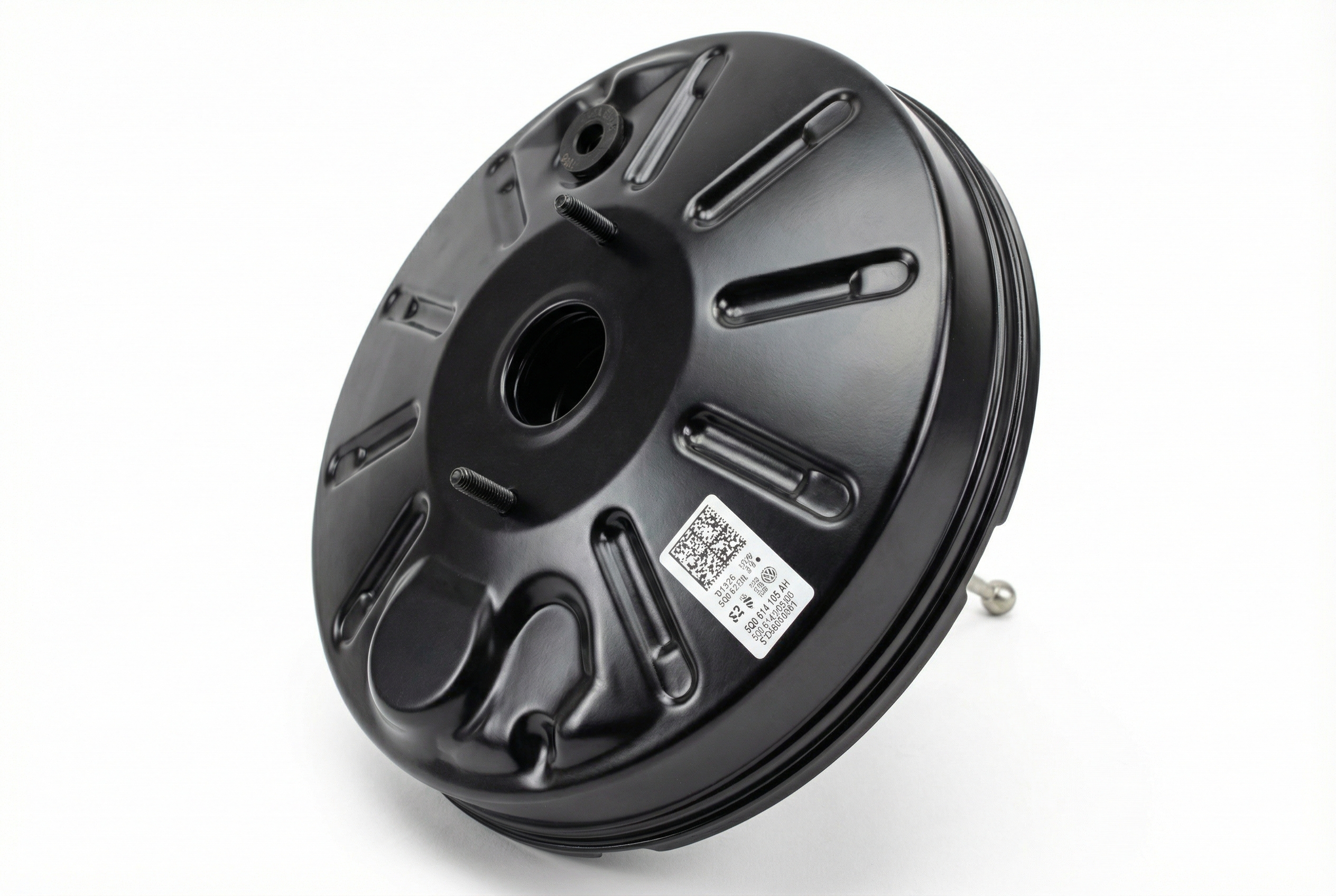
- Verify Part Numbers: Compatibility is crucial. Match the OEM part number from your old booster to the used one. There are many variations based on engine, drivetrain (AWD vs. FWD), and model year. When in doubt, provide your vehicle's VIN to the seller to confirm fitment.
- Mileage and Warranty: Ask about the mileage of the donor vehicle. While boosters can last over 150,000 miles, a lower-mileage part is always preferable. Ensure the seller offers a warranty to protect against a part that fails soon after installation.
Pro Tip: If your old brake booster failed due to brake fluid contamination, you MUST replace the master cylinder at the same time. Installing a good used booster with a leaking master cylinder will cause the new booster to fail quickly.
Replacement Overview
Replacing the brake booster is a moderately difficult job that requires working in both the engine bay and under the dashboard in a tight space. It typically takes 2-4 hours.
Difficulty: 4 out of 5
Estimated Time: 2.5 - 4.0 hours
Tools Required: Socket set, wrenches (including flare nut wrenches for brake lines), pliers, trim removal tools, and potentially a special tool (VW T10159) for the pedal connection.
General Steps:
- Disconnect Battery: Always disconnect the negative battery terminal first.
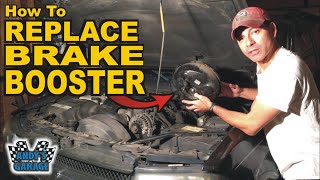
- Access the Booster: On many of these models, you will need to remove the battery and battery tray to get enough clearance to remove the booster. On the Passat B6, removing the plastic cowl cover at the base of the windshield is also necessary. 🎬 See how to replace the booster on a Volkswagen Passat.
- Remove Master Cylinder: Use a flare nut wrench to disconnect the two brake lines from the master cylinder. Have rags ready to catch spilled fluid. Remove the two nuts holding the master cylinder to the booster and carefully set it aside.
- Disconnect Pedal: Inside the car, remove the lower dash panel to access the top of the brake pedal. The booster's pushrod connects to the pedal with a clip. On the Passat B6 and related models, a special tool (T10159) can make releasing this clip much easier.
- Unbolt Booster: Remove the four nuts on the firewall (from inside the cabin) that hold the booster in place.
- Remove and Install: Carefully maneuver the old booster out of the engine bay. Installation is the reverse of removal. 🎬 Watch this step-by-step walkthrough of the entire replacement process.
Special Procedures & Torque Specs
- Pushrod Adjustment: Before installing the master cylinder onto the new booster, you must check the clearance between the booster's pushrod and the master cylinder's internal piston. Too little clearance will cause the brakes to drag; too much will cause a spongy or low pedal. The gap should be very small, around 0.020 inches. A special depth gauge tool is recommended for this.
- Torque Specs: Finding exact torque specs can be difficult. It is highly recommended to consult an official factory service manual for your specific vehicle. As a general guide, the nuts holding the master cylinder to the booster and the booster to the firewall are typically torqued to around 15-20 ft-lbs, but verify this for your application.
- Brake Bleeding: Because the hydraulic system has been opened, you MUST bleed the entire brake system after installation, starting with the wheel furthest from the master cylinder.
Cost of Replacing a Power Brake Booster
The cost can vary significantly between DIY and professional installation, and depending on the parts you choose.
| Part/Service | Estimated Cost |
|---|---|
| New OEM | $450 - $600 |
| New Aftermarket | $150 - $250 |
| Used OEM | $50 - $125 |
| Remanufactured | $150 - $200 |
| Shop Labor | $220 - $480 |
| Total Professional Job | $720 - $960+ |
Compatibility Warnings
This part is highly specific. Pay close attention to your vehicle's details when ordering.
- Engine & Drivetrain: For the Passat and CC, there are different boosters for the 3.6L V6 engine and for All-Wheel Drive (AWD) models versus Front-Wheel Drive (FWD) models. Always verify the part number for your exact configuration.
- Model Year Breaks: The part numbers change across generations. A booster for a 2008 Passat may not fit a 2012 Passat. Ensure the part you are buying covers your vehicle's specific model year.
- Cross-Reference OEM Numbers: The surest way to guarantee fitment is to match the OEM part number on your existing unit to the replacement. Superseded part numbers are common, so cross-referencing is key.
Frequently Asked Questions (FAQ)
Can I still drive my car with a bad brake booster?
No. While the brakes will still function mechanically, the amount of pedal force required to stop the car is dangerously high. You will not be able to stop quickly in an emergency, creating a severe safety risk for yourself and others.
Is a hissing sound always the brake booster?
Most of the time, a hissing noise that occurs when you press the brake pedal is a sign of a ruptured diaphragm in the booster. However, it could also be a leak in the vacuum hose leading to the booster or a bad check valve. Always inspect the hose and valve first as they are simpler and cheaper to replace.
Why did my engine stall when I hit the brakes?
A severe leak in the brake booster allows a large amount of unmetered air into the intake manifold. This leans out the air-fuel mixture, which can cause the engine to run poorly and stall, especially at idle when you apply the brakes.
Do I need to replace my master cylinder with the booster?
You only need to replace the master cylinder if it is leaking. A common failure mode is for the rear seal of the master cylinder to leak brake fluid into the front of the booster. If you find brake fluid inside your old booster, you must replace the master cylinder to prevent damaging the new booster.
Helpful Videos
Technical Specifications
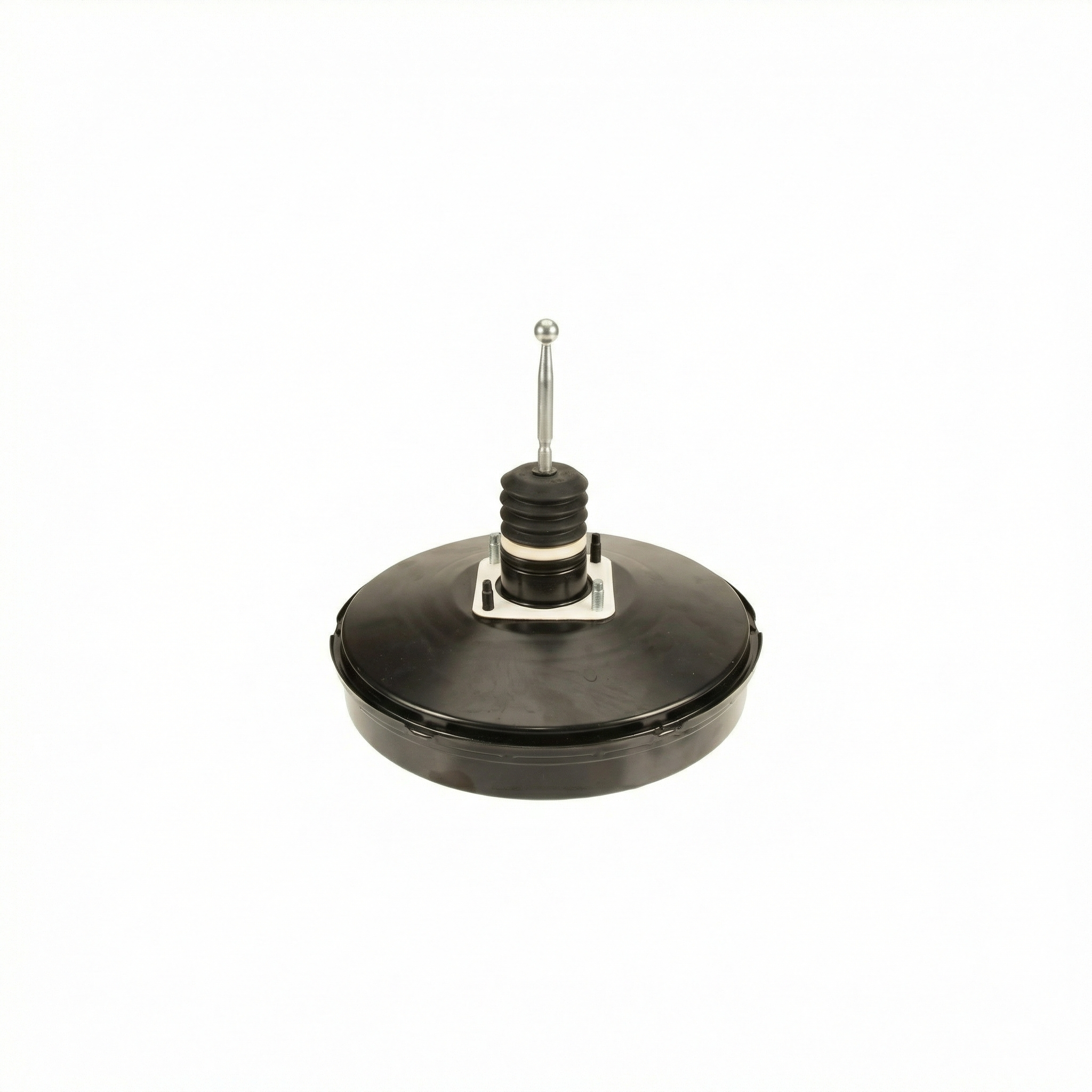
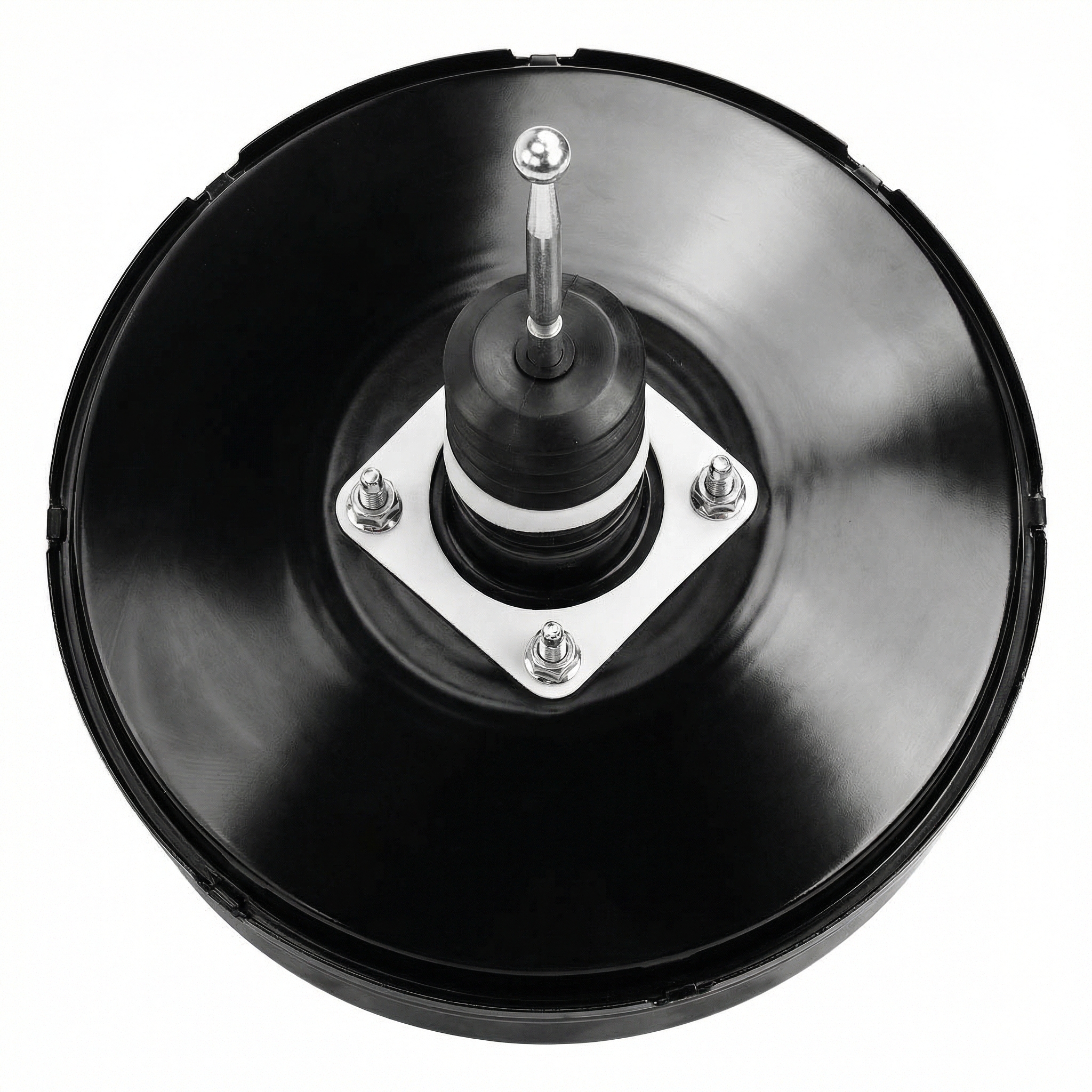
OEM Part Numbers: 3C1614106 3C1614106A 3C1614106D 3C1614106E 3C1614106L 3C1614106M 3C1614106N 3C1614106Q 3C1614106R 561614105F 561614106A 561614106B 561614106C 561614106D 561614106E
Vacuum-assisted single-diaphragm or tandem-diaphragm design.
We Have This Part in Stock
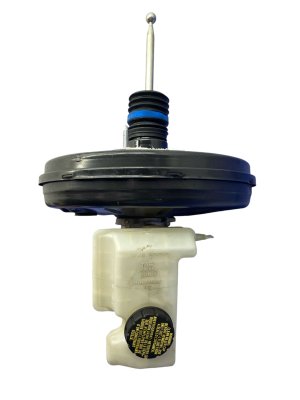

The information in this article is provided for general reference and educational purposes only. Vehicle specifications, procedures, and part compatibility can vary by production date, trim level, and region. Always consult your vehicle's factory service manual and verify part numbers before purchasing or performing repairs. Safety-critical components such as airbags, seat belts, and braking systems should be installed by a qualified professional.
- Volkswagen Passat:
- Volkswagen CC:
- Volkswagen Tiguan:
- 🎬 Helpful Videos
- 🛍️ Shop This Part
- Symptoms of a Failing Power Brake Booster
- 1. Hard Brake Pedal
- 2. Hissing Noise
- 3. Increased Stopping Distance
- 4. Engine Problems
- Known Issues, Recalls, and Technical Service Bulletins (TSBs)
- NHTSA Recall 23R1: Vacuum Pump Failure
- Brake Booster Pressure Sensor
- Step-by-Step Diagnosis
- Buying a Used Power Brake Booster
- Replacement Overview
- General Steps:
- Special Procedures & Torque Specs
- Cost of Replacing a Power Brake Booster
- Compatibility Warnings
- Frequently Asked Questions (FAQ)
- 🎟️ Get 5% Off