

2012-2017 Hyundai Veloster Power Inverter & 115V Outlet Failure Guide
Diagnose and fix a dead 115V power outlet by troubleshooting the fuses and the under-seat inverter module.
- The most common failure symptom is a completely dead 115V outlet; always check the 'Inverter' fuses first.
- If a replacement fuse blows instantly, the power inverter module has an internal short and needs to be replaced.
- This part is located under the driver's seat and was only equipped on Velosters with the optional 115V outlet.
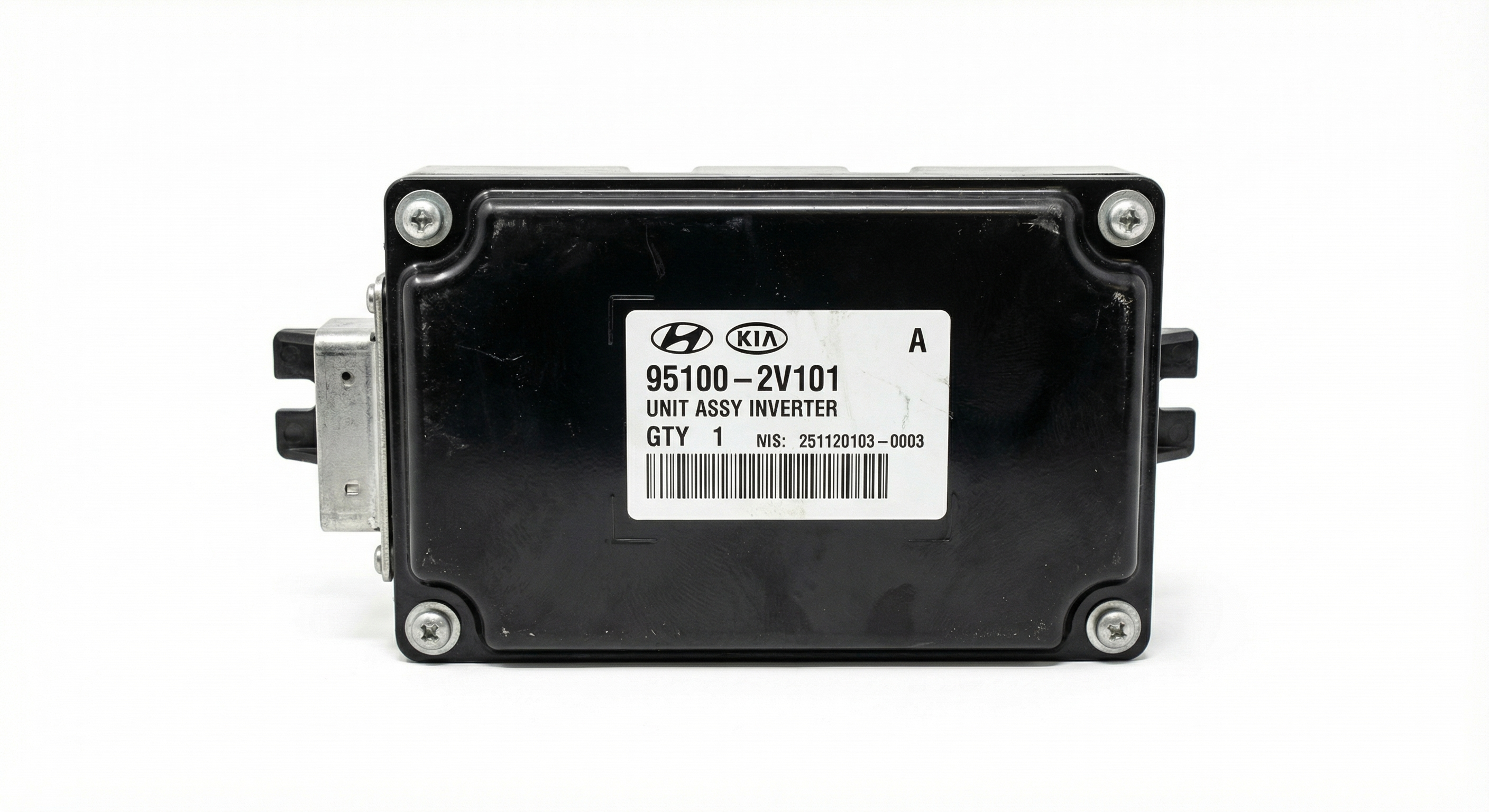
- When buying used, verify the OEM part number (95100-2V100 or 95100-2V101) and inspect for corrosion or damage.
Understanding the 115V Power Inverter in Your Veloster

The 115V power outlet was an optional feature on the 2012-2017 Hyundai Veloster, often included as part of a 'Technology Package' which could also include features like rear parking sensors. This guide focuses on the heart of that system: the power inverter module. This small box, located under the driver's seat, is responsible for converting your car's 12V DC power into usable 115V AC power for the outlet. When the outlet stops working, this module or its related fuses are the most common culprits.
Compatibility Warning: This power inverter module only fits Veloster models originally equipped with the optional 115V power outlet from the factory. It is not a simple plug-and-play upgrade for vehicles that did not come with this feature, as the body wiring harness is different.
Symptoms of a Failing Power Converter

Failure of the Veloster's power inverter is usually straightforward. Here are the most common signs:
- Completely Dead Outlet: The most frequent symptom is a total lack of power at the 115V outlet. The indicator light on the activation button may or may not illuminate, but no power is delivered to any device you plug in.
- Fuse Blows Immediately: In cases of an internal short circuit within the inverter, the corresponding fuse will blow the instant it is installed. Forum users have specifically identified a 25-amp fuse labeled "Inverter 2" in the interior fuse panel as the one that blows when the module fails.
- Audible Buzzing or Humming: A failing or overloaded inverter can sometimes produce a buzzing or humming sound. This indicates an internal electronic component is struggling or has failed.
- Burning Smell or Smoke: In a critical failure, you might notice a distinct smell of burnt electronics or even see smoke from the module under the seat. This indicates a severe internal short and is a fire risk. Disconnect the battery immediately if this occurs.
Step-by-Step Diagnosis

Before assuming the inverter has failed, follow these diagnostic steps to rule out simpler issues.
- Check the Fuses: The Veloster has two fuse boxes: one in the engine bay near the battery and one inside the car on the driver's side of the dashboard. 🎬 Watch: How to find and access your Veloster's fuse boxes Check the owner's manual for your specific year to identify the fuses labeled for the 'Power Outlet' or 'Inverter'. Based on owner experiences, there are at least two fuses, often labeled "Inverter 1" and "Inverter 2". If a fuse is blown, replace it with one of the same amperage.
- Test the Fuse Replacement: If the new fuse blows immediately, this strongly suggests a short circuit in the inverter module itself. Do not attempt to use a higher-amperage fuse, as this creates a serious fire hazard.
- Inspect the Module: If the fuses are good but the outlet is still dead, the next step is to visually inspect the inverter module. You will need to look under the driver's seat. Check for any loose connectors, signs of corrosion from water intrusion, or physical damage to the module or its wiring.
Pro Tip: A simple way to test an outlet is with a known-good, low-power device like a phone charger. If the charger's indicator light doesn't turn on, and you've already checked the fuses, the inverter module is the most likely cause of the failure.
Buying a Used 2012-2017 Veloster Power Converter

Since new aftermarket versions of this specific module are generally not available, a quality used OEM part is often the most cost-effective solution. Here’s what to look for:
- Verify the Part Number: This is the most critical step. There are two primary OEM part numbers: 95100-2V100 and 95100-2V101. Part number 95100-2V100 appears to be for earlier models (approx. 2012-2014), while 95100-2V101 was used on later models (approx. 2013-2017) and likely supersedes the older part. Always match the part number from your original unit or confirm compatibility with the seller using your vehicle's VIN.
- Physical Inspection: When buying in person or looking at photos online, check the electrical connector pins. They should be straight and free of any green or white corrosion. Inspect the case for any signs of melting, burn marks, or physical cracks.
- Source Vehicle Information: If possible, get the mileage from the donor vehicle. For an electronic module like this, lower mileage is generally better, but the part's condition is more important than the mileage itself. Ensure the part came from a 2012-2017 Hyundai Veloster.
- Why Used OEM is a Good Choice: For a specific electronic module like this, a used OEM part that has been tested and comes with a warranty is a reliable choice. It was designed specifically for your vehicle's electrical system, ensuring proper fit and function without the risks associated with non-existent or poor-quality aftermarket electronics.
Cost of Replacement
The cost to fix a failed power inverter can vary significantly depending on whether you do the work yourself and the part you choose.
| Part or Service | Estimated Cost |
|---|---|
| New OEM Inverter | $275 - $385 |
| Used OEM Inverter | $75 - $125 |
| New Aftermarket | Not Available |
| Shop Labor | $100 - $180 |
Replacement Overview (Difficulty: 3/5)
Replacing the power inverter is a manageable DIY job for someone with basic mechanical skills. The main challenge is accessing the module under the driver's seat.
- Estimated Time: 1-1.5 hours
- Tools Needed: Socket set, trim removal tools.
- Procedure:
- Disconnect the battery. This is a mandatory safety step before working on any electrical component.
- Remove the Driver's Seat. While it may be possible to access the module without full removal, it is often easier to unbolt the four bolts holding the driver's seat to the floor. 🎬 See this walkthrough for removing the seat and interior panels Tilt the seat back to gain access. Be extremely careful with the yellow airbag connector under the seat; it must be disconnected before fully removing the seat.
- Locate and Unplug the Inverter. The inverter is a small black or silver box bolted to the floor. Disconnect the electrical harness connected to it.
- Unbolt the Old Module. Remove the bolts or nuts holding the inverter to the floor bracket.
- Install the New Module. Bolt the replacement inverter in place, reconnect the electrical harness, and reinstall the driver's seat (don't forget to reconnect the airbag sensor!). Reconnect the battery and test the outlet.
Related Recalls and Technical Service Bulletins (TSBs)
While there are no specific recalls or TSBs for the power inverter module itself, several related electrical issues for the 2012-2017 Veloster are worth noting:
- NHTSA Recall 23V-132 (Hyundai #242): Affects 2012-2014 models. The Reverse Park Aid Sensor (RPAS) can allow water entry, leading to an electrical short and increasing fire risk. This is relevant as the RPAS was often part of the same option package as the 115V outlet.
- NHTSA Recall 23V-651 (Hyundai #251): Affects 2012-2015 models. The Anti-Lock Brake System (ABS) module can leak brake fluid internally, causing an electrical short and potential for an engine compartment fire, even when parked. Owners are advised to park outside until this recall is performed.
Frequently Asked Questions (FAQ)
Where is the fuse for the 115V power outlet?
There are typically at least two fuses. Check the interior fuse panel on the driver's side of the dash and the main fuse box under the hood. Look for fuses labeled 'Inverter' or 'Power Outlet'. A 25A fuse in the interior panel is commonly associated with this system.
Can I install a 115V outlet in my Veloster if it didn't have one?
This is not recommended. The vehicle's wiring harness is different for models with and without the factory 115V outlet. It would require extensive and complex wiring modifications. A simpler solution would be to use a high-quality plug-in inverter that goes into a standard 12V cigarette lighter-style outlet.
What's the difference between part number 95100-2V100 and 95100-2V101?
Part number 95100-2V101 appears to be a newer version that supersedes 95100-2V100. The older part is listed for 2012-2014 models, while the newer one covers up to 2017. For a replacement, the newer 95100-2V101 is the preferred choice if your vehicle falls in the compatible year range.
My new fuse blew instantly. Is the inverter bad?
Almost certainly, yes. A fuse that blows immediately upon contact indicates a direct and severe short circuit. With nothing plugged into the outlet, the most likely source of that short is the internal electronics of the power inverter module itself.
Helpful Videos


Technical Specifications
OEM Part Numbers: 951002V100 951002V101
Converts 12V DC to 115V AC. Located under the driver's seat.
We Have This Part in Stock

The information in this article is provided for general reference and educational purposes only. Vehicle specifications, procedures, and part compatibility can vary by production date, trim level, and region. Always consult your vehicle's factory service manual and verify part numbers before purchasing or performing repairs. Safety-critical components such as airbags, seat belts, and braking systems should be installed by a qualified professional.
- Hyundai Veloster:
- 🎬 Helpful Videos
- 🛍️ Shop This Part
- Understanding the 115V Power Inverter in Your Veloster
- Symptoms of a Failing Power Converter
- Step-by-Step Diagnosis
- Buying a Used 2012-2017 Veloster Power Converter
- Cost of Replacement
- Replacement Overview (Difficulty: 3/5)
- Related Recalls and Technical Service Bulletins (TSBs)
- Frequently Asked Questions (FAQ)
- 🎟️ Get 5% Off