

2023-2025 Subaru Solterra & Toyota bZ4X: The DC-to-DC Converter and the Real Story Behind Dead 12V Batteries
Explaining the widespread 12-volt battery charging failure that can strand your Solterra or bZ4X, and the role of the expensive DC-to-DC converter in this system.
- The most common issue is a dead 12V battery that renders the vehicle inoperable, even with a full high-voltage battery.
- This is a systemic charging issue, likely due to software or parasitic drain, not always a failed DC-to-DC converter.
- There is no official recall for this problem, but class-action lawsuits are ongoing against both Toyota and Subaru.
- The DC-to-DC converter is extremely expensive new (over $5,000), making a verified used part a cost-effective option for a confirmed hardware failure.
The Core Problem: A Dead 12-Volt Battery
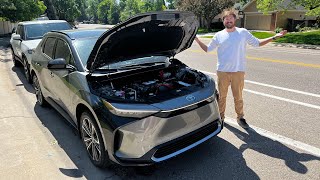
The most significant and widely reported issue for the 2023-2024 Subaru Solterra and 2023-2025 Toyota bZ4X is not a direct failure of the DC-to-DC converter itself, but a systemic problem with the 12-volt charging system that leaves the battery dead. Owners report leaving their vehicle parked for a few hours or days, only to return to a car that is completely unresponsive, even with a fully charged high-voltage traction battery. 🎬 Watch: An owner explains how this battery failure happens. This issue is so prevalent that it has led to class-action lawsuits against both Toyota and Subaru, alleging the manufacturers sold vehicles with a known defective electrical system.
Why a Dead 12V Battery Disables the Entire Vehicle
An EV cannot start without a functional 12V battery. This small battery is required to power up the vehicle's electronic control units (ECUs), close the high-voltage contactors (large relays), and essentially 'boot up' the car's operating system. When the 12V battery is drained, there is no power to perform these initial steps, so the immense energy stored in the main traction battery cannot be accessed. This is why a jump-start to the 12V battery is often the only way to get the vehicle running again.
🎬 See this quick guide on jump-starting your bZ4X.Symptoms of a Failing 12V Charging System
The primary symptom is a completely dead vehicle that will not power on. Other signs that point to a problem with the 12V system, potentially involving the DC-to-DC converter's charging logic, include:
- Vehicle is completely unresponsive: The key fob does not work, doors won't unlock, and there are no lights on the dashboard.
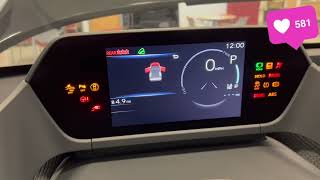
- Multiple, random warning lights: If the vehicle does power on, you may see a cascade of unrelated error messages, such as 'Parking Brake Unavailable'.
- Repeatedly dead 12V battery: The vehicle may require jump-starting frequently, and even a brand new 12V battery may drain again within weeks or days. This indicates the battery is not being recharged properly.
- Failure after sitting idle: The problem most often occurs after the vehicle has been parked for a period, from overnight to a couple of weeks.
- Accessory mode drains the battery quickly: Sitting in the car with the radio or climate control on (but not in 'READY' mode) can rapidly deplete the 12V battery, as the DC-to-DC converter may not be active to recharge it.
Pro Tip: Some owners and dealers have suggested that the vehicle's telematics unit constantly 'pinging' a server, or the associated smartphone app, creates a parasitic draw that drains the battery. Some have found temporary relief by disabling data-sharing features within the app's settings.
Known Issues, TSBs, and Recalls
As of early 2026, there is no official recall or Technical Service Bulletin (TSB) from Toyota or Subaru specifically addressing the 12-volt battery draining issue. This lack of a formal fix is a central complaint in the ongoing class-action lawsuits. 🎬 Watch: Details on the lawsuit targeting these battery failures. Dealers have typically been replacing the 12-volt batteries under warranty, but this often fails to solve the underlying problem, leading to repeat failures. While these vehicles have had other recalls for issues like wheel hub bolts and HVAC software, the 12V charging system has not been formally addressed.
Buying a Used DC-to-DC Converter
Given the extremely high cost of a new OEM DC-to-DC converter, a used unit can offer significant savings. However, it's critical to understand what you are buying.
- The Part May Not Be the Problem: The widespread issue with these vehicles appears to be related to the vehicle's software and charging logic, not necessarily a hardware failure in the converter itself. Replacing the converter may not solve the 12V battery draining issue. A used converter is a better option for a vehicle with a confirmed, physically failed unit (e.g., from damage or a diagnosed internal short).
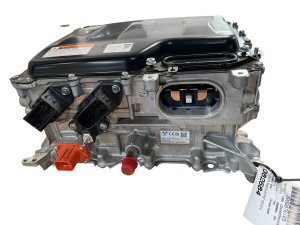
- Physical Inspection: Before purchasing, carefully inspect all photos of the used converter. Look for any signs of damage to the aluminum casing, bent cooling fins, or corrosion. Most importantly, check the electrical connectors for any bent, broken, or pushed-in pins. A damaged connector can make the part unusable.
- Verify Part Numbers: Ensure the part number on the used unit matches the one required for your vehicle. There have been several revisions of this part in a short time, so matching the number is critical.
- Mileage and Source: A part from a low-mileage, collision-damaged vehicle is an ideal source for a used converter. It has a known history and has not been run to failure.
Cost of Replacement
The DC-to-DC converter is a very expensive component. A used OEM part can provide substantial savings over a new one, but it's important to factor in labor costs for installation by a qualified technician.
| Part Type | Estimated Cost |
|---|---|
| New OEM | $5,100 - $7,626 |
| New Aftermarket | Not commonly available |
| Used OEM | $400 - $900 |
| Remanufactured | Not commonly available |
| Shop Labor | $300 - $500 |
Diagnosis and Replacement
Diagnosing a faulty DC-to-DC converter involves a simple voltage test. A technician will measure the 12V battery voltage with the vehicle turned completely off (should be ~12.6V). Then, they will turn the vehicle on to 'READY' mode. If the DC-to-DC converter is working, the voltage should rise to between 13.5V and 14.5V as it charges the battery. If the voltage stays at ~12V or begins to drop, the converter is not charging.
Warning: The DC-to-DC converter is a high-voltage component. Replacement should only be performed by qualified technicians who are trained to work on EV high-voltage systems. Improper handling can result in severe injury or death.
Frequently Asked Questions (FAQ)
Will replacing the DC-to-DC converter fix the dead battery problem on my Solterra or bZ4X?
Not necessarily. The widespread issue is believed to be a flaw in the vehicle's charging logic or a parasitic drain, which a new converter may not solve. A replacement is only recommended if the original unit has been professionally diagnosed as having an internal hardware failure.
Is there a recall for the 12V battery draining issue?
No. As of early 2026, neither Subaru nor Toyota has issued a recall for this specific problem, though class-action lawsuits are in progress.
Can I just keep jump-starting the car?
While jump-starting will get the car running, it is not a long-term solution. Repeatedly deep-discharging a standard 12V lead-acid battery will permanently damage it and reduce its ability to hold a charge, making the problem worse over time.
What are the correct part numbers for the DC-to-DC converter?
The actual DC-to-DC converter part numbers include G97A0-42111, G97A0-42161, and others, often described as 'Converter, Unit Assembly Electric'. The part numbers G9082-42021 and G9082-42020 refer to the charging port cable assembly, not the converter.
Technical Details & Part Numbers
It is crucial to distinguish between the DC-to-DC Converter and the charging port components, as they have similar-looking part numbers.
| Part Name | OEM Part Numbers | Notes |
|---|---|---|
| DC-to-DC Converter | G97A0-42111, G97A0-42030, G97A0-42080, G97A0-42161, G97A0-42160 | This is the correct part. Also called 'Unit Assembly Electric'. |
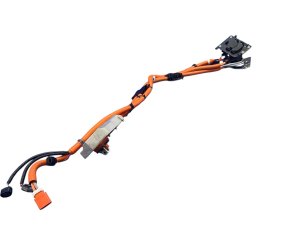
| Charging Port Cable Assembly | G9082-42021 (Toyota), G908242021 (Subaru), G9082-42020 | This is the charge inlet and cable, NOT the converter. |
Helpful Videos

Technical Specifications
OEM Part Numbers: G97A0-42111 (DC Converter) G97A0-42030 (DC Converter) G97A0-42080 (DC Converter) G97A0-42161 (DC Converter) G97A0-42160 (DC Converter) G9082-42021 (Charging Port Cable) G908242021 (Charging Port Cable) G9082-42020 (Charging Port Cable)
Converts high voltage from the main traction battery to ~14V DC to charge the 12V auxiliary battery and power vehicle electronics.
We Have This Part in Stock

The information in this article is provided for general reference and educational purposes only. Vehicle specifications, procedures, and part compatibility can vary by production date, trim level, and region. Always consult your vehicle's factory service manual and verify part numbers before purchasing or performing repairs. Safety-critical components such as airbags, seat belts, and braking systems should be installed by a qualified professional.
- Subaru Solterra:
- Toyota bZ4X:
- 🎬 Helpful Videos
- 🛍️ Shop This Part
- The Core Problem: A Dead 12-Volt Battery
- Why a Dead 12V Battery Disables the Entire Vehicle
- Symptoms of a Failing 12V Charging System
- Known Issues, TSBs, and Recalls
- Buying a Used DC-to-DC Converter
- Cost of Replacement
- Diagnosis and Replacement
- Frequently Asked Questions (FAQ)
- Technical Details & Part Numbers
- 🎟️ Get 5% Off