

Ignition Coil Guide for the 1950-1959 Buick Roadmaster
Keep your classic Roadmaster running strong by understanding and choosing the right ignition coil for its specific needs.
- Confirm your Roadmaster's year: 1950-1952 models use a 6-volt coil, while 1953-1959 models use a 12-volt coil.
- Symptoms like misfiring, hard starting, and stalling can point to a bad coil, but can also mimic fuel system problems.
- Replacing the coil is a simple DIY job that takes less than 30 minutes.
- For reliability, choose a premium aftermarket brand like Standard Ignition or NGK.
The Heart of Your Roadmaster's Ignition
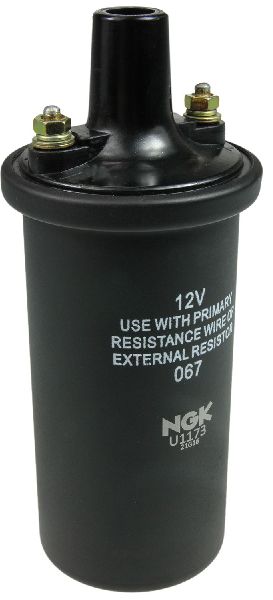
The ignition coil is the component that generates the high-voltage spark needed to run your engine. In the 1950-1959 Buick Roadmaster, this is a classic, oil-filled canister-style coil. It works together with the distributor's points and condenser to create a timed spark. Over time, heat and vibration can cause the coil's internal windings to break down, leading to a weak spark or no spark at all. This can leave you stranded or with an engine that runs poorly.
Critical Pre-Purchase Check: 6-Volt vs. 12-Volt Systems
Buick switched its electrical systems from 6-volt to 12-volt in 1953. It is absolutely essential to buy the correct coil for your year. A 6-volt coil on a 12-volt system will quickly burn out. A 12-volt coil on a 6-volt system will produce a very weak spark, making the car hard to start and run poorly.
- 1950-1952 Roadmaster: Requires a 6-volt ignition coil.
- 1953-1959 Roadmaster: Requires a 12-volt ignition coil.
Symptoms of a Failing Ignition Coil
A failing ignition coil can cause a variety of problems that might seem like a carburetor or fuel issue. If you experience any of the following, your coil might be the culprit:
- Hard Starting: The engine cranks but struggles to fire up, or won't start at all. This can be worse when the engine is hot.
- Engine Misfires: The engine stumbles or hesitates during acceleration, feeling like it's losing power for a moment.
- Rough Idle: The engine shakes or runs unevenly when stopped.
- Backfiring: Loud popping sounds from the exhaust can occur when unburned fuel ignites in the hot exhaust pipes.
- Stalling: The engine may stall unexpectedly, especially after it has warmed up.
- Weak or No Spark: A simple test of holding the coil wire near a ground while cranking shows a weak, yellow spark instead of a bright blue one, or no spark at all.
Choosing the Right Aftermarket Ignition Coil
For a vehicle of this vintage, original OEM parts are no longer manufactured. Aftermarket parts are the only option for a new coil. The technology is simple, so a quality aftermarket part is more than sufficient. The key is choosing a brand with a reputation for good materials and quality control.
Brand Quality Tiers
Here’s a breakdown of the available brands to help you choose:
Tier 1: Premium Quality
- Standard Ignition (Standard Motor Products): A long-standing company known for producing reliable, OE-quality replacement parts. Many professional mechanics trust this brand for its durability and performance that often meets or exceeds original specifications.
- NGK: While famous for spark plugs, NGK also produces high-quality ignition coils known for reliability and consistent performance. They are a top choice for many import and domestic applications.
Tier 2: Performance-Focused
- Accel: Accel is a well-known performance brand that often provides a hotter spark than stock coils. While potentially overkill for a stock Roadmaster, they are a popular upgrade for classic cars to improve starting and throttle response. Some users report quality has varied over the years.
Tier 3: Standard & Value
- Spectra: Spectra offers a wide range of parts and is often priced competitively. User reviews are mixed, with some reporting success while others experience premature failures.
- DriveWire / Global Parts: These are typically value-oriented brands. For a simple component like a canister coil, they can be a budget-friendly option, but may not have the same long-term reliability as premium brands.
| Part Type | Estimated Cost | Notes |
|---|---|---|
| New Aftermarket | $23 - $52 | This is the most common and recommended option. Price varies by brand quality. |
| New OEM | Not Available | Original GM/Delco parts for this era are no longer in production. |
| Used OEM (NOS/Swap Meet) | Varies | "New Old Stock" can be found but may be expensive. Used parts are a gamble due to age. |
| Shop Labor for Installation | $75 - $150 | Installation is simple and typically takes less than an hour. |
What is a Ballast Resistor?
Some 12-volt systems of this era (particularly 1956 and later) use an external ballast resistor or a special resistor wire in the harness. This resistor reduces voltage to the coil during normal operation to prevent it from overheating and prolong the life of the ignition points. During starting, the resistor is bypassed to send full battery voltage to the coil for a hotter spark. If your car has one, ensure your new coil is compatible with an external resistor. Coils marked "External Resistor Required" must be used with one, or they will fail prematurely.
Frequently Asked Questions (FAQ)
How do I test my ignition coil?
You can perform a basic test with a multimeter. With the coil disconnected, measure the resistance between the two small primary terminals (+ and -). It should be a very low number, typically between 0.4 and 2 ohms for a 12V coil. Then, measure the resistance between the positive (+) terminal and the large central tower (the secondary winding). This should be a much higher number, usually between 6,000 and 10,000 ohms. A reading of infinity (open loop) on either test indicates a bad coil.
Is replacing the ignition coil a DIY job?
Yes, for most owners. The ignition coil is typically held by a single bracket on the engine. The process involves disconnecting the battery, labeling and removing the two small primary wires and the main high-tension wire to the distributor, unbolting the bracket, and swapping the coil. The entire job usually takes less than 30 minutes with basic hand tools.
Should I replace my condenser and points at the same time?
It is highly recommended. The coil, points, and condenser work together as a system. A failing condenser can damage a new ignition coil. Since these parts are inexpensive and critical for reliability, replacing all three at once is good practice for a complete tune-up.
Are there any recalls for the 1950-1959 Buick Roadmaster ignition coil?
No. There are no active recalls or Technical Service Bulletins (TSBs) from the NHTSA for vehicles of this age regarding the ignition coil.
Technical Specifications
The most critical specification is the voltage. 1950-1952 models require a 6-volt coil. 1953-1959 models require a 12-volt coil. Later models may require a coil designed for use with an external ballast resistor. All are oil-filled canister types.
We Have This Part in Stock


The information in this article is provided for general reference and educational purposes only. Vehicle specifications, procedures, and part compatibility can vary by production date, trim level, and region. Always consult your vehicle's factory service manual and verify part numbers before purchasing or performing repairs. Safety-critical components such as airbags, seat belts, and braking systems should be installed by a qualified professional.