

Ford Country Squire Universal Joint Guide: 1950-1962
Address driveshaft clunks and vibrations in your classic Ford Country Squire with the right replacement U-joint.
- Symptoms like clunking, squeaking, and vibration are serious warnings that should be addressed immediately to prevent a catastrophic failure.
- For best results and longevity, choose a premium aftermarket brand like Dana Spicer or SKF.
- Decide between a maintenance-free (sealed) U-joint or a greasable one that requires regular service.
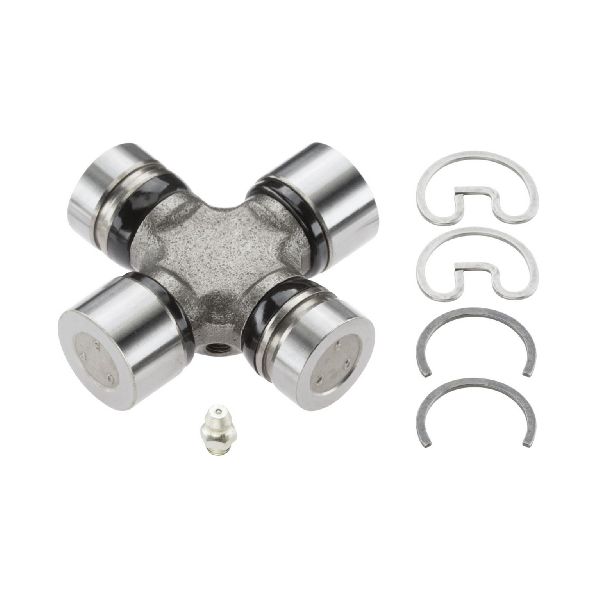
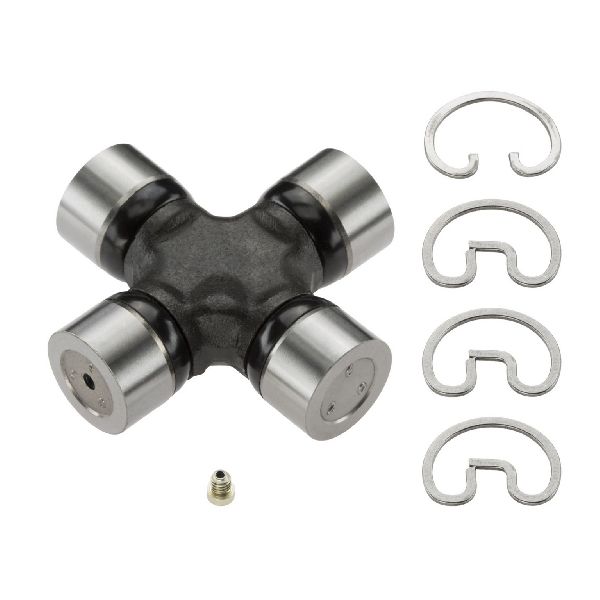
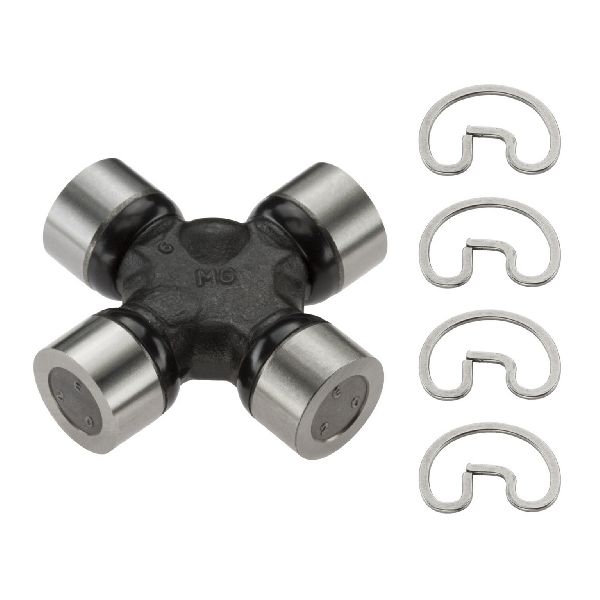
- Before ordering, verify if your specific year requires a standard snap-ring U-joint or the earlier 'wing style' at the rear differential.
Signs of a Failing Universal Joint
A worn U-joint will give you clear warning signs. Because these parts are under constant load, symptoms that start small can get serious quickly. Listen and feel for these common indicators of failure.
- Squeaking Noise: A rhythmic squeak that is most noticeable at low speeds (5-10 mph) is often the first sign. This is caused by dry, worn-out needle bearings inside the U-joint cap.
- Clunking or Ringing Sound: A sharp 'clunk' when you shift from park into drive or reverse is a classic symptom of a U-joint with excessive play.
- Vibration: As wear increases, you may feel a vibration throughout the vehicle, especially at highway speeds. This indicates the driveshaft is no longer balanced or rotating smoothly, which can cause damage to other driveline components.
Critical Failure Warning
If a U-joint fails completely, the driveshaft can detach from the transmission or rear axle. This will cause an immediate loss of power and can cause significant damage as the heavy driveshaft falls and strikes the underside of your vehicle. Do not ignore U-joint symptoms.
Choosing the Right Aftermarket U-Joint
For a classic vehicle like the 1950-1962 Country Squire, new original Ford parts are not available. The market consists entirely of aftermarket replacements, which are often made with modern materials and can be excellent quality. Your main choices are between brands and whether the joint is greasable or sealed.
Brand Quality Tiers
Not all brands are created equal. Based on owner experiences and mechanic recommendations, aftermarket U-joints generally fall into these tiers:
- Premium (Best): Brands like Dana Spicer and SKF are highly regarded. Spicer was the original equipment supplier for many American cars of this era and is considered a top-tier choice for durability and fit. SKF is also known for high-quality bearings and driveline components.
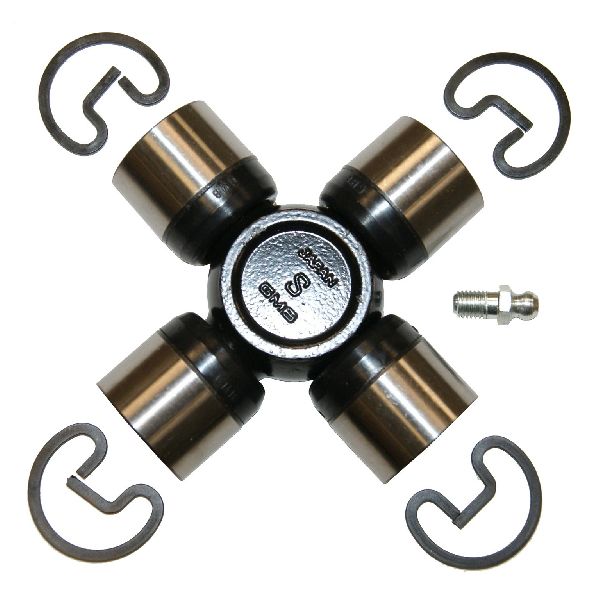
- Standard (Good): Brands like GMB and Neapco offer a solid balance of quality and value. They are reliable replacements for daily driving and are widely available.
- Economy / Mixed Reviews (Use with Caution): The Moog brand has a mixed reputation. While once considered a premium choice, many recent forum discussions suggest a decline in quality. While some Moog parts may be fine, Spicer and SKF are generally considered more consistent choices today.
Greasable vs. Non-Greasable (Sealed) U-Joints
You will need to choose between a greasable U-joint with a zerk fitting or a sealed, non-greasable one. There are pros and cons to each.
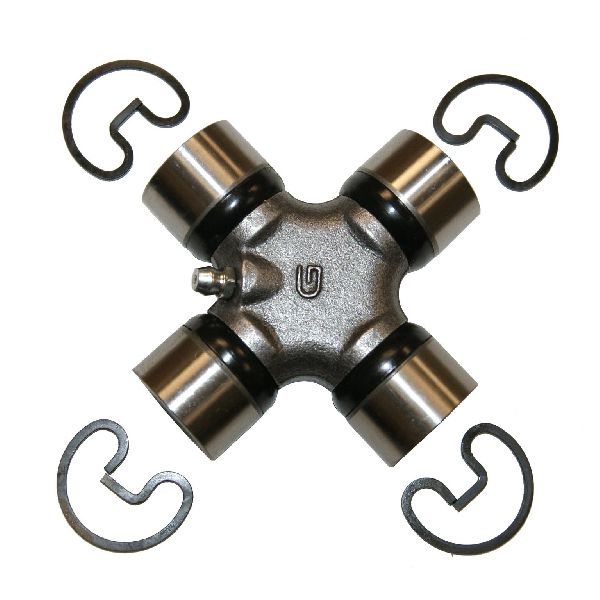
- Non-Greasable (Sealed): These are stronger because the main body (cross) is solid steel, without a channel drilled through it for grease. They are maintenance-free, just like the original factory joints. This is a great 'fit-it-and-forget-it' option.
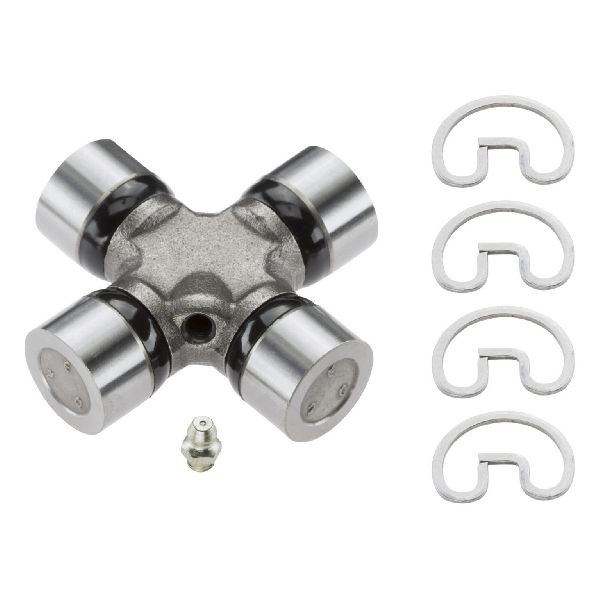
- Greasable: These allow you to pump fresh grease in regularly, which flushes out moisture and contaminants. For a classic car that may see varied use, this can extend the part's life, but only if you are diligent about greasing them with every oil change. Forgetting to do so will lead to premature failure.
| Quality Tier | Common Brands | Estimated Part Cost |
|---|---|---|
| Premium | Dana Spicer, SKF | $50 - $122 |
| Standard | GMB, Neapco | $30 - $60 |
| Economy | Moog, Store Brands | $18 - $45 |
Frequently Asked Questions (FAQ)
How many U-joints does my Country Squire have?
A typical 1950-1962 Ford Country Squire has two universal joints on the rear driveshaft: one at the transmission end (front) and one at the rear differential end (rear). It is recommended to replace them in pairs.
Are the front and rear U-joints the same?
Often, but not always. It is critical to verify the part numbers for both positions. Some earlier models (pre-1959) may use a different 'wing style' U-joint at the rear. Always confirm the part fitment for your specific year and model before ordering.
Do new U-joints need to be greased before installation?
Yes. Even sealed, non-greasable U-joints should have a small amount of grease applied to the needle bearings inside the caps during assembly. Greasable joints should be fully lubricated via the zerk fitting after the driveshaft is reinstalled in the vehicle.
Can I replace a U-joint myself?
This is a moderately difficult job for a DIY mechanic. Removing the old, rusted U-joint from the driveshaft yokes requires either a special U-joint press tool, a ball joint press, or a very large bench vise and various sockets. It is easy to damage the driveshaft yoke if not done carefully. If you are not equipped for heavy-duty pressing work, this job is best left to a professional shop.
What is a 'wing style' U-joint?
Some Fords from 1949-1959 used a U-joint at the rear differential that does not use snap rings. Instead, it has bearing caps with flat 'wings' that are bolted to the differential pinion flange. Be sure to visually inspect your vehicle's rear U-joint to see if you have this style before ordering parts.
Technical Specifications
Your 1950-1962 Country Squire will have two U-joints on the rear driveshaft. Common aftermarket part numbers that fit various years in this range include Moog 369, Moog 433, and Neapco 1-2134. However, it is essential to confirm the exact part number for your specific year, as different styles (e.g., wing style vs. snap ring) were used. Always measure your old joints or use a vehicle-specific parts catalog to ensure a correct match.
We Have This Part in Stock

The information in this article is provided for general reference and educational purposes only. Vehicle specifications, procedures, and part compatibility can vary by production date, trim level, and region. Always consult your vehicle's factory service manual and verify part numbers before purchasing or performing repairs. Safety-critical components such as airbags, seat belts, and braking systems should be installed by a qualified professional.