

1952 Kaiser Virginian Ignition Contact Set Replacement and Diagnosis
Keep your classic Kaiser running like new by understanding, diagnosing, and replacing the ignition contact set.
- The ignition contact set (points) is a critical wear item that requires regular replacement, typically every 10,000-12,000 miles.
- Always replace the condenser at the same time as the points to prevent premature failure.
- Setting the correct point gap is essential for engine performance. For the 1952 Kaiser's 226 L-head engine, the gap should be set to 0.020 inches.
- Symptoms of failure include hard starting, rough running, stalling, and poor acceleration.
Symptoms of a Failing Ignition Contact Set
Ignition points are a normal wear item. The metal contacts and the small rubbing block that rides on the distributor cam wear down over time. When they start to fail, you will notice clear signs.
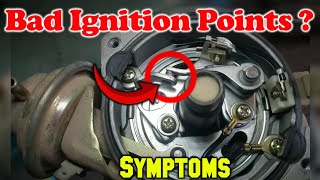
🎬 Watch this video to see common symptoms of failing points.- Hard Starting or No-Start: This is a very common symptom. If the points are too worn or dirty, they can't create the strong spark needed to start the engine. You may hear the engine crank but fail to fire up.
- Engine Misfires and Rough Running: Worn or pitted points cause an inconsistent spark. This leads to the engine shaking, sputtering, or running unevenly, especially at idle.
- Stalling: Your engine may stall when you come to a stop or at low RPMs. This happens because the weak spark can't keep the engine running smoothly without momentum.
- Reduced Power and Poor Acceleration: A weak or intermittent spark means the fuel in the cylinders isn't burning efficiently. This results in a noticeable loss of power when you try to accelerate.
Choosing the Right Aftermarket Part
For a 1952 Kaiser Virginian, new OEM parts are no longer available. Your only option is an aftermarket ignition contact set. This is not a concern, as reputable aftermarket brands have been making these parts for decades.
Standard Ignition is a well-known and respected brand for classic American vehicle ignition components. They have a long history of producing quality parts that meet or exceed original specifications. When shopping for your Kaiser, a Standard Ignition contact set is a reliable choice.
Pro Tip: Replace the Condenser
Always replace the ignition condenser at the same time you replace the points. The condenser prevents the points from arcing and burning out prematurely. A new condenser is inexpensive and ensures the longevity and reliability of your new points.
Replacement Cost
The cost of parts and labor for replacing an ignition contact set is relatively low. The parts themselves are affordable, and the job is straightforward for a mechanic familiar with classic cars.
| Item | Estimated Cost |
|---|---|
| New Aftermarket Ignition Contact Set | $21.53 - $27.65 |
| Shop Labor | $100 - $180 |
| Total Estimated Cost | $122 - $208 |
The Importance of the Point Gap
The most critical step of the installation is setting the point gap. For the 226 cubic inch L-head engine in your Kaiser, the correct point gap is 0.020 inches. This small gap must be set precisely with a feeler gauge. An incorrect gap will lead to poor timing, rough running, and potential engine damage.
Frequently Asked Questions
How often should I replace the ignition points on my Kaiser Virginian?
Ignition points are a regular maintenance item. For best performance, they should be inspected at every tune-up and replaced every 10,000 to 12,000 miles, or at least once a year. Given the age of the vehicle, annual inspection and replacement is a good practice.
What is the difference between ignition points and electronic ignition?
Ignition points are a mechanical switch, while electronic ignition uses a sensor (like a Hall effect or optical sensor) to trigger the spark. While many classic car owners convert to electronic ignition for reduced maintenance, a properly maintained points system is very reliable and easy to fix on the side of the road.
🎬 Learn more about choosing the best electronic ignition conversion kit.Can I replace the ignition points myself?
Yes, this is a very feasible DIY job for those with basic mechanical skills and the right tools, which include a feeler gauge and a screwdriver. The distributor is easy to access on the L-head 6-cylinder engine. However, setting the gap correctly is crucial.
What does a condenser do and why must I replace it?
The condenser absorbs the excess electrical energy when the points open. This prevents a large arc from forming across the points, which would quickly burn and destroy them. A failing condenser is the most common cause of premature point failure. For this reason, it should always be replaced with the points.
Helpful Videos
Technical Specifications
Point Gap: 0.020 inches Dwell Angle: Approx. 39 degrees (Note: Setting the gap is the standard method; dwell is a more precise measurement).
We Have This Part in Stock


The information in this article is provided for general reference and educational purposes only. Vehicle specifications, procedures, and part compatibility can vary by production date, trim level, and region. Always consult your vehicle's factory service manual and verify part numbers before purchasing or performing repairs. Safety-critical components such as airbags, seat belts, and braking systems should be installed by a qualified professional.