

Ford F-350 Starter Replacement Guide for 1954-1961
Get your classic F-350 turning over reliably with the right new aftermarket starter.
- Before replacing the starter, always check the battery, cable connections, and the separate fender-mounted starter solenoid first.
- You MUST verify if your truck has a 6-volt or 12-volt electrical system before ordering, as the changeover happened mid-generation around 1956.
- New OEM starters are not available; a new aftermarket starter is a reliable and readily available option with a warranty.
- Replacement is a straightforward DIY job for most owners, typically requiring only basic hand tools and 1-2 hours.
Is Your F-350's Starter Failing?
On a classic truck like the 1954-1961 F-350, a no-start condition isn't always a bad starter. The simple electrical systems of this era mean that problems often stem from the battery, cables, or the fender-mounted starter solenoid. Always check these components before deciding to replace the starter motor itself.
Check These Items First!
- Battery Health: Is the battery fully charged? A weak or old battery is the most common cause of starting issues. Have it load-tested at an auto parts store.
- Cable Connections: Check that the thick battery cables are clean, tight, and free of corrosion at the battery terminals, the engine block (ground), and the starter solenoid. A poor connection is a very common problem on vintage trucks.
- Starter Solenoid: These trucks use a solenoid mounted on the inner fender, not on the starter itself. A single, sharp "click" when you turn the key often points to a bad solenoid, which is a separate, easier, and cheaper part to replace.
Choosing the Right Aftermarket Starter
For a vehicle from the 1950s and early '60s, finding a "New Old Stock" (NOS) or new OEM Ford starter is practically impossible. Your realistic options are a used original part, a locally remanufactured unit, or a new aftermarket starter.
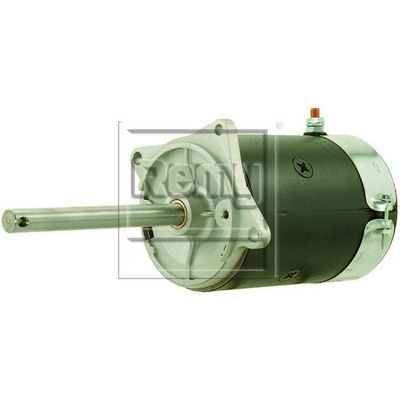
New aftermarket starters, like those from Remy, offer a direct-fit replacement with a warranty. While some classic truck owners have reported mixed results with various aftermarket electrical parts, a new unit from a known brand avoids the uncertainty of a used part's history. Given the simplicity of the original design, a standard new aftermarket starter is a reliable and cost-effective choice for a stock F-350.
Critical Check: 6-Volt or 12-Volt System?
Ford transitioned its trucks from 6-volt to 12-volt electrical systems around 1956. It is essential to verify which system your truck has before ordering. Many 1954-1955 trucks may have also been converted to 12-volt over the years. Using a starter with the wrong voltage will lead to poor performance or rapid failure. Check the battery (a 12V battery has 6 cells/caps, a 6V has 3), light bulbs, or generator/alternator to confirm your voltage.
Starter Replacement Cost for 1954-1961 Ford F-350
The cost for a new aftermarket starter is straightforward. Labor costs at a professional shop are typically low for this job due to good access on these classic trucks, though seized or rusted bolts can sometimes increase the time required.
| Part Type | Estimated Cost |
|---|---|
| New Aftermarket Starter | $210 - $215 |
| Shop Labor | $100 - $250 |
Frequently Asked Questions (FAQ)
Is replacing the starter on a 1954-1961 F-350 a difficult job?
No, for someone with basic mechanical skills, this is a very feasible DIY job. Access is generally good. The process involves safely raising the vehicle, disconnecting the battery, removing a few wires from the starter, and unbolting it from the engine's bellhousing. It typically takes 1-2 hours.
What tools are needed to replace the starter?
You'll need basic hand tools, including a ratchet and socket set, and possibly some wrenches. No special tools are typically required. A wire brush for cleaning electrical connections is also highly recommended.
My starter just spins and makes a whirring noise. What's wrong?
This classic symptom indicates the starter motor is working, but its gear (the Bendix) is not extending to engage the engine's flywheel. This requires a starter replacement.
Are there any recalls or bulletins for the starter on this truck?
No. Formal recalls and Technical Service Bulletins (TSBs) as we know them today were not a common practice for vehicles of this era. The National Highway Traffic Safety Administration (NHTSA), which tracks recalls, was not founded until 1970.
Technical Specifications
OEM Part Numbers: B6A-11002A C3NF-11002-E FAD11002A FAF11001 C2SZ-11002-A
Voltage: 6V (1954-1955) or 12V (1956-1961), Rotation: Clockwise (CW), Teeth: 9, Solenoid: External (fender-mounted)
We Have This Part in Stock

The information in this article is provided for general reference and educational purposes only. Vehicle specifications, procedures, and part compatibility can vary by production date, trim level, and region. Always consult your vehicle's factory service manual and verify part numbers before purchasing or performing repairs. Safety-critical components such as airbags, seat belts, and braking systems should be installed by a qualified professional.