

A Home Mechanic's Guide to Universal Joints for the 1955-1961 Mercury Monterey
Eliminate driveline clunks and vibrations by choosing the right replacement U-joint for your classic Monterey.
- Prioritize premium brands like Dana Spicer for maximum strength and longevity, especially their non-greasable versions.
- Decide between non-greasable (stronger, maintenance-free) and greasable (can last longer if regularly maintained) based on your willingness to perform service.
- Before ordering, you must visually inspect your existing U-joints to confirm the style (snap-ring vs. wing-style) to avoid errors.
- Always replace U-joints in pairs to ensure a smooth, balanced driveline and prevent a repeat repair job.
Symptoms of a Failing Universal Joint
A worn U-joint will give you clear warning signs. Because they are a wear item, they will eventually need to be replaced due to normal use. Ignoring these symptoms can lead to a complete failure, which could cause the driveshaft to detach from the vehicle, resulting in a loss of power and significant damage.
- Clunking or Banging Noises: The most common symptom is a distinct "clunk" when you shift from park into drive or reverse. You might also hear a metallic banging sound during acceleration or deceleration.
- Vibrations: A vibration that you can feel through the floor of the car is a tell-tale sign of a bad U-joint. This vibration often starts at higher speeds and gets progressively worse.
- Squeaking or Chirping: A rhythmic squeaking noise that changes with your speed, often heard at slower speeds, usually means the U-joint has lost its internal lubrication.
Choosing the Right Aftermarket U-Joint
For a classic car like the 1955-1961 Monterey, new original equipment (OEM) Ford parts are no longer available. The market consists entirely of aftermarket brands, which vary in quality and design. Your choice will impact the vehicle's reliability and future maintenance needs.
Aftermarket Brand Quality Tiers
| Tier | Brands | Assessment |
|---|---|---|
| Premium | Dana Spicer, Moog | Dana Spicer is widely considered the top choice for strength and durability, often exceeding original specifications. Moog is also a high-quality option known for its reliable engineering, though some users in forums have noted recent quality can be inconsistent. |
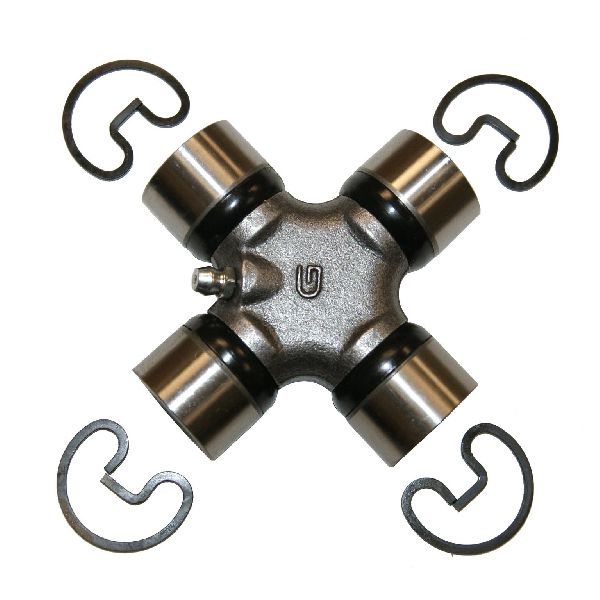
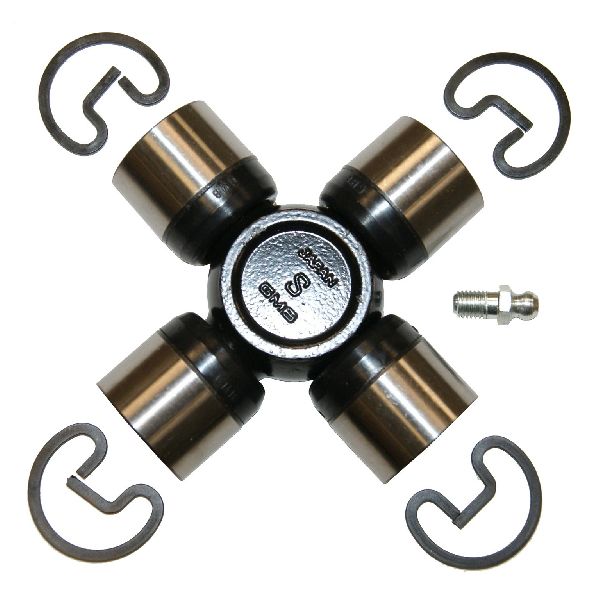
| Standard | SKF, GMB | SKF is a reputable bearing manufacturer offering reliable, good-quality U-joints. GMB provides a functional and budget-friendly replacement that meets standard requirements. These are solid choices for stock vehicles with normal driving habits. |
Greasable vs. Non-Greasable: What's the Difference?
You will see options for both greasable and non-greasable (sealed) U-joints. Neither is universally better; the right choice depends on you.
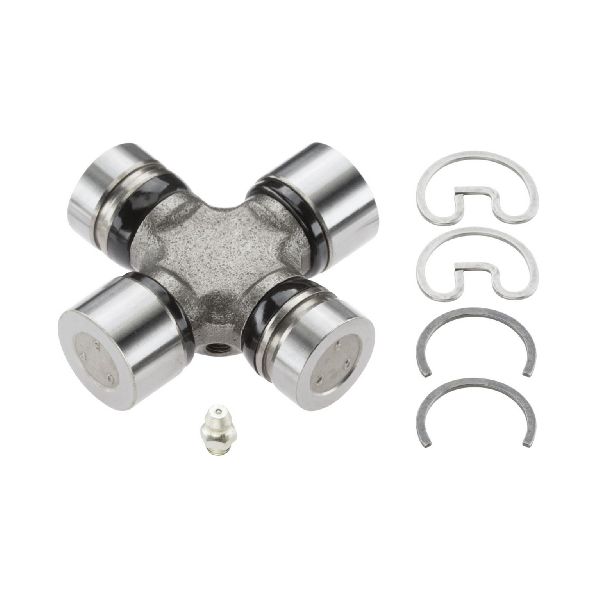
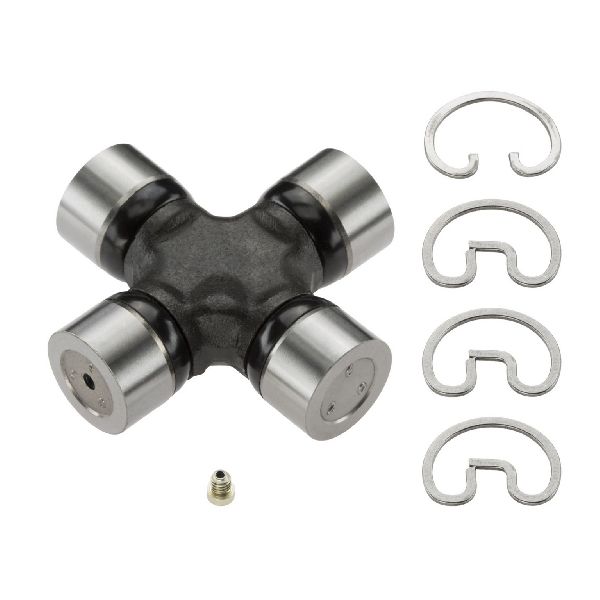
- Non-Greasable U-Joints: These are sealed from the factory and require no maintenance. They are generally stronger because the cross is solid metal, without the channel drilled for a grease fitting. Brands like Spicer often feature their strongest joints in this category. This is a "fit it and forget it" option.
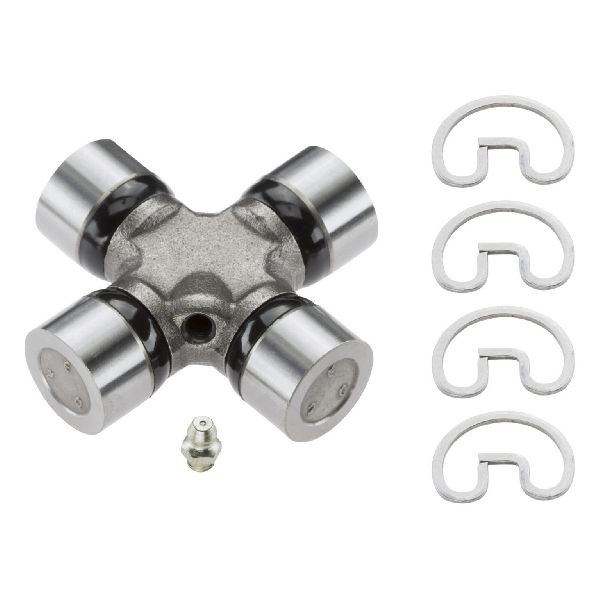
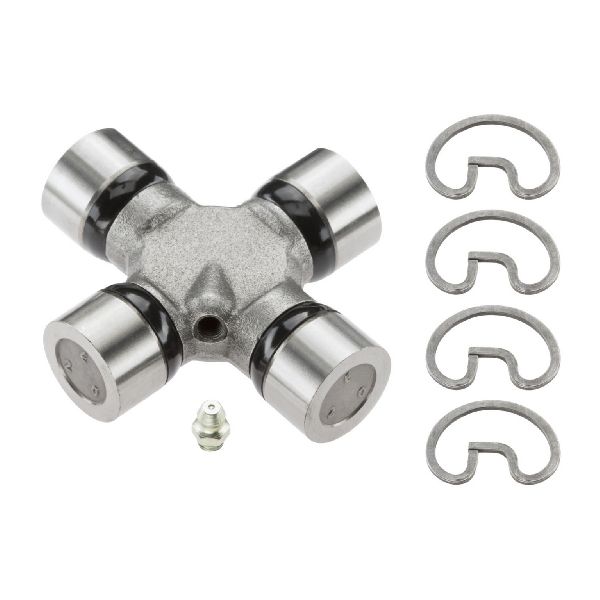
- Greasable U-Joints: These have a small fitting (zerk) that allows you to add fresh grease periodically, typically every 5,000 miles. If you are diligent with maintenance, a greasable joint can outlast a sealed one by flushing out old grease and contaminants. However, if you neglect to grease them, they will fail much faster.
Common Ordering Mistake: Verify Your U-Joint Style
Some 1949-1959 Ford and Mercury vehicles used a specific "Wing Style" U-joint at the rear differential. This is different from the more common style held in by internal or external snap rings. Before ordering, get under your car and visually inspect the U-joints, especially the one connected to the rear axle, to confirm which type you have. Ordering the wrong style is a common and frustrating mistake.
Frequently Asked Questions (FAQ)
How many U-joints does my 1955-1961 Monterey have?
A standard configuration for your Monterey will have two universal joints on the main driveshaft: one connecting the driveshaft to the transmission slip yoke and one connecting it to the rear differential pinion yoke.
Should I replace my U-joints in pairs?
Yes, it is highly recommended. If one U-joint has failed due to age and mileage, the other is likely not far behind. Replacing both at the same time ensures a balanced and smooth-operating driveshaft and prevents you from having to do the same job twice in short order.
Do I need to have my driveshaft balanced after replacing the U-joints?
For a standard U-joint replacement, driveshaft balancing is not usually necessary if the job is done carefully. However, if you still experience vibration after the replacement, or if the driveshaft was damaged during the process, having it professionally balanced is the next step to resolving the issue.
What happens if a U-joint fails completely while driving?
Complete failure is dangerous. The U-joint will break apart, and the driveshaft can disconnect from the transmission or axle. This will cause an immediate loss of power to the wheels. The loose, spinning driveshaft can cause catastrophic damage to your exhaust, fuel lines, transmission case, and floor pan. It is critical to replace a failing U-joint at the first sign of trouble.
Technical Specifications
Part specifications vary. The replacement must match the original's style (e.g., snap-ring or wing-style), bearing cap diameter, and overall dimensions. Measurement of the original part is often required for classic vehicles.
We Have This Part in Stock

The information in this article is provided for general reference and educational purposes only. Vehicle specifications, procedures, and part compatibility can vary by production date, trim level, and region. Always consult your vehicle's factory service manual and verify part numbers before purchasing or performing repairs. Safety-critical components such as airbags, seat belts, and braking systems should be installed by a qualified professional.