

Choosing the Right Ignition Coil for Your 1956-1960 Austin Healey 100-6
Keep your classic Healey running strong with a reliable new ignition coil.
- Verify if your car is positive or negative ground before installation.
- Check if you need a 1.5-ohm coil (for ballast resistor systems) or a 3.0-ohm coil (for non-ballast or electronic systems).
- Symptoms like hard starting, misfiring, and backfiring strongly point to a failing coil.
- Replacement is a simple DIY job that takes less than 30 minutes.
Is Your Austin Healey's Ignition Coil Failing?
The ignition coil is a hardworking part in your Healey's classic Lucas ignition system. Over time, heat and vibration can cause the coil's internal windings to break down, leading to a weak or inconsistent spark. Because the 100-6 uses a single coil for all six cylinders, a failure will affect the entire engine, not just one cylinder.
Common Symptoms of a Bad Ignition Coil:
- Hard Starting: The engine cranks but struggles to fire up, or won't start at all. This is a very common sign of a weak coil.
- Engine Misfires: The engine may sputter, shake, or run roughly, especially under load or at high speeds.
- Backfiring: Loud pops from the exhaust can happen when unburned fuel ignites in the hot exhaust pipes due to a weak or mistimed spark.
- Stalling: The engine may suddenly cut out while driving and may or may not restart.
- Loss of Power: Your Healey may feel sluggish and slow to accelerate.
An Important Note on Polarity
Austin Healey 100-6 models were originally built with a positive ground electrical system. Many have been converted to negative ground over the years. It is critical to connect your new coil correctly based on your car's specific setup (positive or negative ground). Connecting a coil with reversed polarity can lead to poor performance and premature failure of ignition components. On a positive ground car, the positive (+) coil terminal usually connects to the distributor. On a negative ground car, the negative (-) terminal connects to the distributor.
Choosing the Right Aftermarket Ignition Coil
Original Lucas coils are no longer mass-produced. Aftermarket coils are the most common and affordable option. The most important factor is selecting a coil with the correct internal resistance (measured in ohms) for your specific ignition setup.
- For a stock points system with an external ballast resistor: You need a coil designed for a ballast resistor system, which typically has a primary resistance of around 1.5 ohms.
- For a system without a ballast resistor (or if it's been bypassed): You need a coil with a primary resistance of approximately 3.0 ohms. Many electronic ignition upgrades, like Pertronix, require a 3.0-ohm coil.
Pro Tip: If you are unsure, you can test your current coil's primary resistance with a multimeter. Set the multimeter to ohms (Ω) and measure between the two small primary terminals (+ and -). This will tell you what type of coil you need to buy.
Aftermarket Brand Tiers
For a classic like the Healey, brand reputation is built on reliability. While there are no head-to-head tests for this specific vehicle, we can group brands based on general owner feedback and market position.
- Tier 1 (High-Quality Replacement): Brands like NGK and Standard Ignition (SMP) are well-regarded in the automotive world. NGK is known for its ignition components, and many owners of various makes trust their quality. Standard Ignition has a long history of producing reliable replacement parts for American and imported vehicles. These brands are a solid choice for a dependable replacement.
- Tier 2 (Standard Replacement): Brands like Spectra offer a functional, budget-friendly replacement. They are a viable option to get your car back on the road, meeting the basic requirements for the ignition system.
Cost of a New Aftermarket Ignition Coil
| Part Type | Estimated Cost |
|---|---|
| New Aftermarket Ignition Coil | $31.18 - $38.58 |
| Specialist/Performance Coil (e.g., Lucas Classic, Pertronix) | $45 - $90 |
Frequently Asked Questions (FAQ)
Can I install a new ignition coil myself?
Yes, this is a very straightforward job for a DIY mechanic. It typically involves disconnecting the battery, labeling and removing two low-voltage wires and one high-tension wire, and unbolting the coil from its mounting bracket. The entire process usually takes less than 30 minutes.
Do I need a special coil if I have an electronic ignition?
Most likely, yes. Many popular electronic ignition conversion kits (like Pertronix) for the Austin Healey require a coil with a specific primary resistance, often around 3.0 ohms. Using a coil with the wrong resistance can damage the electronic ignition module. Always check the requirements of your specific ignition system.
What is a ballast resistor and do I need one?
A ballast resistor is a ceramic block in the ignition circuit that reduces voltage to the coil after the engine has started. This was done to prolong the life of the ignition points. If you are using a stock-style 1.5-ohm coil with points, you need the ballast resistor. If you use a 3.0-ohm coil (often called an internally-resisted coil), you do not need the external ballast resistor.
Are there any recalls for the 1956-1960 Austin Healey 100-6 ignition coil?
No. There are no recalls or technical service bulletins (TSBs) from the manufacturer or NHTSA related to the ignition coil for this vehicle. This is normal for a car of this age.
Technical Specifications
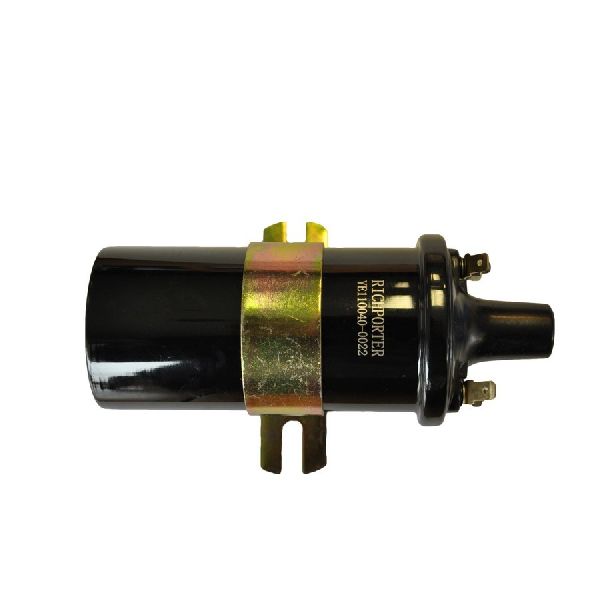
Voltage: 12V. Primary Resistance: ~1.5 Ohm (for use with external ballast resistor) OR ~3.0 Ohm (for use without external ballast resistor). High Tension Connection: Push-in type.
We Have This Part in Stock


The information in this article is provided for general reference and educational purposes only. Vehicle specifications, procedures, and part compatibility can vary by production date, trim level, and region. Always consult your vehicle's factory service manual and verify part numbers before purchasing or performing repairs. Safety-critical components such as airbags, seat belts, and braking systems should be installed by a qualified professional.