

MG Magnette Universal Joint Replacement Guide (1959-1968)
Addressing driveshaft vibrations and clunks in your Farina Magnette starts with the universal joints.
- A vibration you can feel or a clunking sound when shifting are urgent signs that your MG Magnette's U-joints need inspection.
- Do not continue driving with a noticeably bad U-joint; complete failure can be dangerous and cause extensive damage.
- For reliability, choose a premium aftermarket brand like Dana Spicer or Moog over a standard budget part.
- It is strongly recommended to replace both U-joints at the same time while the driveshaft is removed.
Symptoms of a Failing Universal Joint
When a U-joint wears out, it develops looseness or "play." This looseness causes distinct problems you can feel and hear. Ignoring these signs is dangerous, as a complete failure can cause the driveshaft to detach from the car. Be aware of the following symptoms:
- Vibrations: This is the most common sign. You may feel a new vibration through the floor of the car that appears at certain speeds. A worn front U-joint (near the transmission) can often cause the gear shift lever to vibrate in your hand. A bad rear U-joint may cause a more general vibration in the car's body.
- Clunking or Pinging Noises: A loud "clunk" or ringing sound when you shift between forward and reverse is a classic sign of a worn U-joint. The noise comes from the slack in the joint being taken up suddenly.
- Squeaking Sounds: A cyclical squeaking or chirping noise that starts when you begin to move and gets faster with speed can point to a dry, failing U-joint that has lost its grease. This sound may be hard to hear over 10 mph due to other road noises.
Critical Warning
Any detectable free play in a U-joint means it needs to be replaced immediately. Once you can feel a vibration while driving, the joint may only have a few hundred miles left before it fails completely, which can cause the driveshaft to fall off and lead to a loss of control or severe damage.
Choosing the Right Aftermarket U-Joint
For a classic car like the MG Magnette, original factory parts are scarce. Today's high-quality aftermarket U-joints often use modern metallurgy and manufacturing that can be superior to the original 1960s parts. The key is choosing a reputable brand. Your choice will generally fall into three tiers based on quality and price.
Brand Quality Tiers
Tier 1: Premium (Dana Spicer)
Dana Spicer is widely considered the benchmark for universal joints, used as original equipment by many manufacturers. They are known for exceptional strength and durability. For an owner who wants the best possible part with the longest life, Spicer is the top choice. Their non-greasable "Spicer Life Series" joints are particularly robust and are often considered a fit-and-forget solution.
Tier 2: Quality Aftermarket (Moog)
Moog is a well-respected aftermarket brand known for its "Problem Solver" line of parts, which often feature design improvements over the original. They are a very solid choice for a stock vehicle and are known for good quality and durability. While most experiences are positive, it's always wise to inspect any part before installation.
Tier 3: Standard/Economy (GMB)
GMB is a large manufacturer that produces parts for both OEM and the aftermarket. Their U-joints are typically the most affordable option. However, owner reviews are mixed; some find them perfectly adequate, while others have reported issues with roughness out of the box and shorter service life. If budget is the primary concern, they are an option, but inspect the part carefully before installation.
Pro Tip: Greasable vs. Sealed Joints
You will see options for both greasable (with a zerk fitting) and non-greasable (sealed) U-joints. Sealed joints, like many from Spicer, are filled with high-quality grease at the factory and require no maintenance. Greasable joints can last a very long time if—and only if—they are regularly greased with the proper lubricant. For many classic car owners who perform their own maintenance, this is not an issue. For those who prefer not to add another maintenance task, a high-quality sealed joint is often the better choice.
Typical Cost for New Aftermarket Universal Joints
The cost for the part itself is low. Labor at a shop can vary, as some mechanics charge more for working on classic cars. This is a very feasible DIY job for an enthusiast with the right tools.
| Part Type | Price Range |
|---|---|
| New Aftermarket Universal Joint | $17 - $56 |
| Shop Labor (per joint) | $100 - $250 |
Frequently Asked Questions (FAQ)
How many U-joints does my MG Magnette have?
A standard 1959-1968 MG Magnette has two universal joints on the main driveshaft: one at the front connecting to the transmission and one at the rear connecting to the differential.
Should I replace both U-joints at the same time?
Yes. If one U-joint has failed due to age and mileage, the other is likely not far behind. Since you will already have the driveshaft removed from the vehicle, it is highly recommended to replace both at the same time to save on future labor and prevent another failure down the road.
Do I need to balance my driveshaft after replacing the U-joints?
If you are careful to mark the orientation of the driveshaft to the differential flange before removal and reinstall it in the same position, balancing is not usually required for a simple U-joint swap. However, if you still have a vibration after installing new joints, the driveshaft balance may be off and should be checked by a specialty driveline shop.
Can I replace a U-joint myself?
Yes, this is a common job for DIY mechanics. However, it requires specific tools, including a good set of snap-ring pliers, a sturdy vise, and sockets or a U-joint press tool to push the old joints out and the new ones in. It is critical not to damage the driveshaft yokes (the "ears" that hold the joint) or dislodge any of the tiny needle bearings inside the new U-joint caps during installation.
Technical Specifications
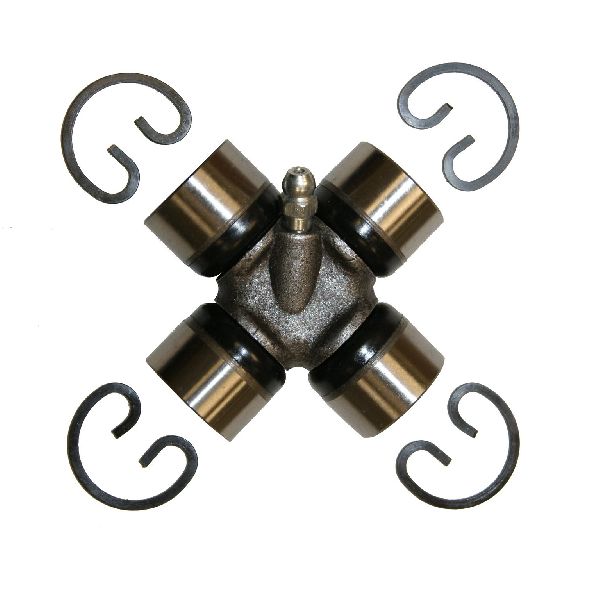
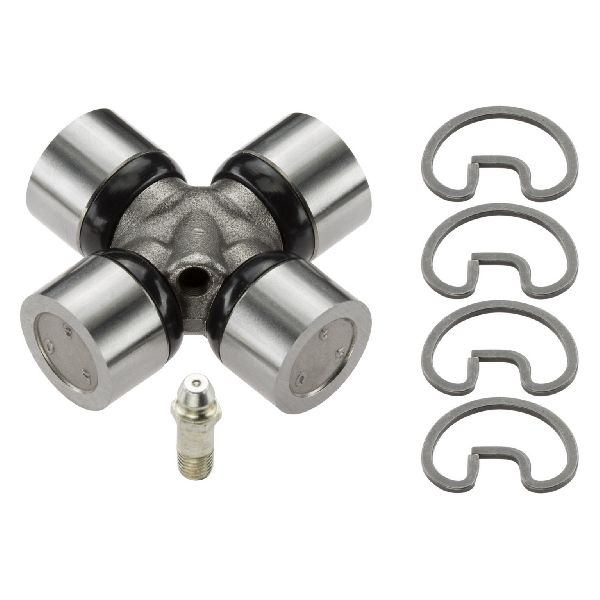
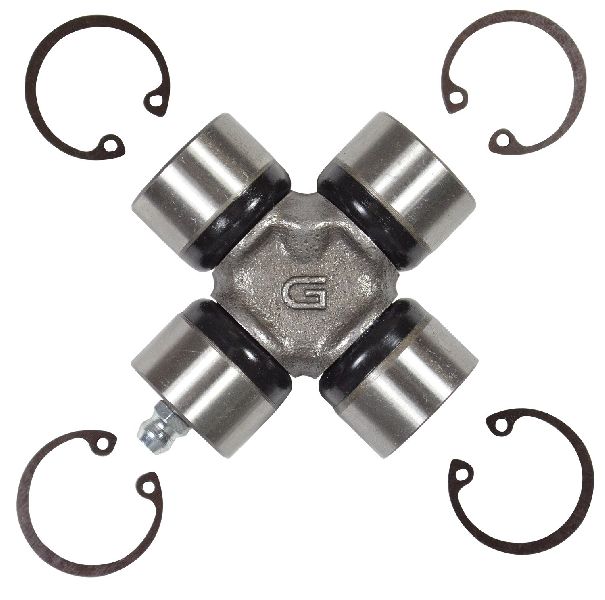
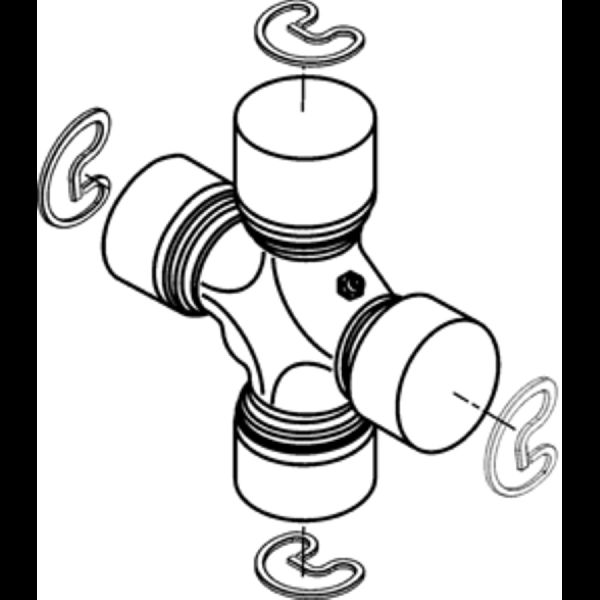
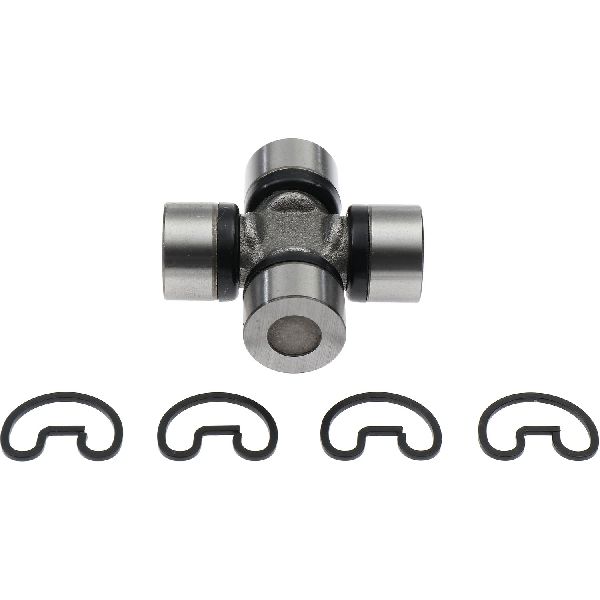
The driveshaft contains two universal joints. Measurements of the bearing cap diameter and overall width are required to ensure correct fitment.
We Have This Part in Stock

The information in this article is provided for general reference and educational purposes only. Vehicle specifications, procedures, and part compatibility can vary by production date, trim level, and region. Always consult your vehicle's factory service manual and verify part numbers before purchasing or performing repairs. Safety-critical components such as airbags, seat belts, and braking systems should be installed by a qualified professional.