

Engine Cylinder Head Gasket Guide for 1965-1977 Chevrolet Impala
Choosing the right head gasket for your classic Impala is all about knowing your specific engine.
- You MUST identify your specific engine (e.g., 283 V8, 350 V8, 396 V8) before ordering; the car's year alone is not enough.
- Choose between a forgiving composite gasket for un-machined surfaces or a high-performance MLS gasket for perfectly smooth, resurfaced engines.
- This is not a DIY job for beginners. Labor is the biggest cost, and professional installation is highly recommended.
- Do not drive your car if you suspect a blown head gasket, as you can cause catastrophic and much more expensive engine damage.
Symptoms of a Failing Head Gasket
A blown head gasket on a 1965-1977 Impala will make its presence known. Overheating is a primary cause and symptom of head gasket failure on these classic cars. Look for these clear warning signs:
- Engine Overheating: Hot exhaust gases leaking into the cooling system can quickly cause the engine to overheat.
- White Smoke from Exhaust: Thick, sweet-smelling white smoke coming from the tailpipe is a classic sign that coolant is leaking into the cylinders and being burned off as steam.
- Milky Engine Oil: If the oil on your dipstick or under the oil filler cap looks like a foamy, brown "milkshake," it means coolant is mixing with your oil. This is very damaging to engine bearings.
- Bubbles in Radiator: With the engine running, bubbles in the radiator or coolant overflow tank can indicate that combustion gases are being forced into the cooling system.
- Loss of Power or Rough Idle: If the gasket fails between two cylinders, it can cause a loss of compression, leading to a rough-running engine.
- External Leaks: You may see visible oil or coolant leaking from the seam where the cylinder head meets the engine block.
Stop Driving Immediately
If you notice these symptoms, do not continue to drive the vehicle. Driving with a blown head gasket can quickly lead to severe, permanent engine damage like warped cylinder heads or a cracked block.
Choosing the Right Aftermarket Gasket
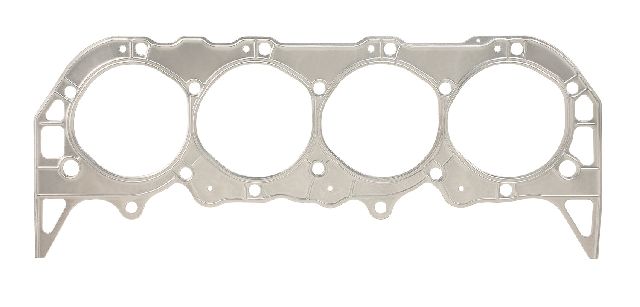
For a vehicle of this age, aftermarket gaskets are not only the most common option, but they can also offer superior technology compared to the original 1960s and 70s parts. The most important factor is knowing exactly which engine your Impala has. Over its 13-year run, the Impala used everything from a 250 inline-6 to small-block V8s (283, 307, 327, 350, 400) and big-block V8s (396, 427, 454). A gasket for a 327 will not work on a 396.
Gasket Material: Composite vs. MLS
Your main choice will be between a traditional composite gasket and a modern Multi-Layer Steel (MLS) gasket.
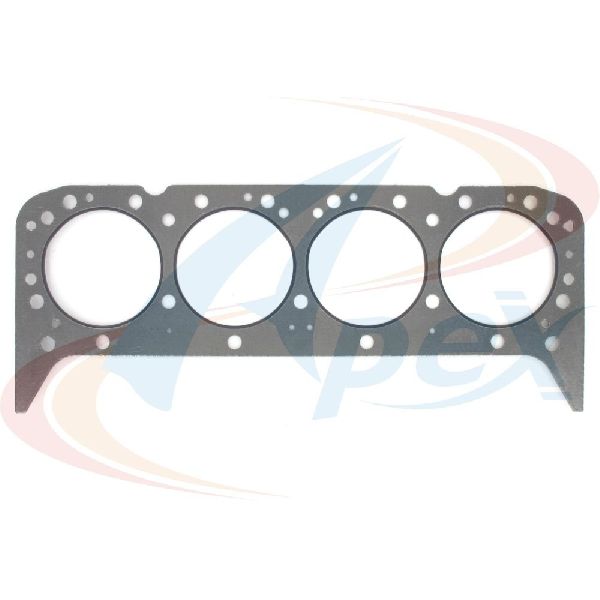
- Composite Gaskets: These are similar to the original style. Brands like Mr. Gasket and some offerings from Apex or Victor Gaskets fall into this category. They are more forgiving of minor imperfections on the head and block surfaces, which is common for older engines that haven't been recently machined.
- Multi-Layer Steel (MLS) Gaskets: These are the modern standard for performance and durability. Brands like Cometic, Edelbrock, and Victor Reinz are well-known for their MLS gaskets. They offer superior sealing but have a critical requirement: the cylinder head and engine block surfaces must be perfectly flat and smooth. Using an MLS gasket on a warped or rough surface will likely result in leaks.
Pro Tip: If your engine is being completely rebuilt and the block and heads are being resurfaced (decked) by a machine shop, an MLS gasket is the best choice. If you are performing a simple gasket swap in your garage on an otherwise untouched, original engine, a high-quality composite gasket is often the safer, more reliable option.
Brand Tiers
Based on general reputation and materials, the available brands can be grouped into tiers:
- Premium/Performance (Often MLS): Cometic Gasket, Edelbrock, Victor Reinz. These brands are trusted in the performance and racing communities. They often use modern MLS technology that provides excellent sealing under high compression and heat, but requires proper surface preparation.
- Standard Replacement (Composite or MLS): Mr Gasket, Reinz, Victor Gaskets. These brands offer reliable, OEM-quality replacements. Mr. Gasket has a long history in the classic Chevy space. Victor Reinz is a respected OEM supplier that offers both standard and advanced MLS gaskets.
- Economy: Apex. These gaskets can provide a functional seal for a standard, daily-driven vehicle at a lower cost, but may not offer the longevity or advanced materials of the premium brands.
| Item | Estimated Cost |
|---|---|
| Aftermarket Head Gasket Set | $25 - $132 |
| Shop Labor | $1,000 - $2,500+ |
| Potential: Head Machining | $150 - $400 |
| Total Professional Repair | $1,200 - $3,000+ |
Frequently Asked Questions
Do I need to replace both head gaskets on my V8 engine?
Yes. If one head gasket has failed due to age or overheating, the other is likely not far behind. Since the labor is the most expensive part of the job, it is strongly recommended to replace both gaskets at the same time. You will also need to replace the head bolts, as the old ones can stretch and will not torque down correctly a second time.
What is the most common mistake when replacing a head gasket?
The most common mistakes are improper surface preparation and incorrect bolt tightening. The head and block surfaces must be perfectly clean and flat. Additionally, you must use a quality torque wrench and follow the specific multi-step torque sequence and specification for your engine to ensure even clamping pressure.
Is an MLS gasket always better?
Not necessarily. While an MLS gasket has higher performance capabilities, it is only effective if the engine block and cylinder head surfaces are smooth enough to its requirements. For an older engine that has not been machined, a high-quality composite gasket is often more forgiving and can provide a better long-term seal.
Were there any recalls for the 1965-1977 Impala head gasket?
No. Searches of the National Highway Traffic Safety Administration (NHTSA) database and other records show no recalls or specific technical service bulletins (TSBs) related to engine head gasket failure for this vehicle range.
Technical Specifications
The key specification is the engine type. The 1965-1977 Impala was available with a wide range of engines, including the 230 I6, 250 I6, 283 V8, 307 V8, 327 V8, 350 V8, 396 V8, 400 V8, 409 V8, 427 V8, and 454 V8. Each requires a specific head gasket design. The choice between composite and Multi-Layer Steel (MLS) material is also a critical specification.
We Have This Part in Stock


The information in this article is provided for general reference and educational purposes only. Vehicle specifications, procedures, and part compatibility can vary by production date, trim level, and region. Always consult your vehicle's factory service manual and verify part numbers before purchasing or performing repairs. Safety-critical components such as airbags, seat belts, and braking systems should be installed by a qualified professional.