

Chevrolet Impala Engine Water Pump Guide (1965-1977)
Keep your classic Impala's engine cool by choosing the right water pump and avoiding common installation mistakes.
- You MUST identify if your Impala needs a 'short' or 'long' style water pump before buying; measuring is the only sure way.
- Symptoms include coolant leaks from the front-center of the car, engine overheating, and whining or grinding noises from the engine bay.
- For most owners, an OEM-quality brand like ACDelco or Gates is a reliable choice; performance brands like Edelbrock offer enhanced cooling for modified cars.
- While replacing the pump, it is a good idea to also replace the thermostat and radiator hoses.
Is Your Impala's Water Pump Failing?
A failing water pump will give you clear warning signs. Ignoring them can lead to expensive engine damage. Look out for these symptoms:
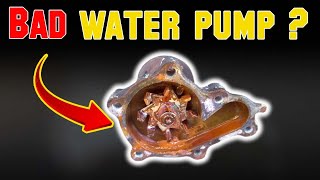
- Coolant Leaks: This is the most common sign. You might see puddles of green or orange fluid under the front-center of your car. A slow leak can also leave behind crusty, colored residue on the pump itself or on the engine block below it. Leaks often start at the "weep hole," a small hole on the pump designed to let coolant escape when the internal seal fails.
- Engine Overheating: If your temperature gauge starts climbing into the hot zone, the water pump may not be circulating coolant effectively. Steam or smoke coming from under the hood is a critical sign of overheating; pull over immediately if you see this.
- Unusual Noises: A high-pitched whining or a grinding, rumbling noise from the front of the engine that changes with engine speed can indicate a bad water pump bearing. This might sound like a loose belt at first but is a serious warning.
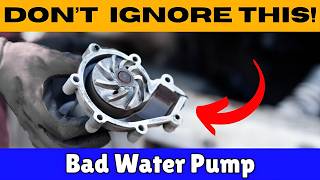
- Wobbly Pulley: If you can see the water pump pulley wobbling while the engine is running, the bearing has failed. This is a critical failure, and the pump needs immediate replacement. 🎬 Watch: 7 common symptoms of a bad water pump
A Common and Critical Mistake: Short vs. Long Water Pumps
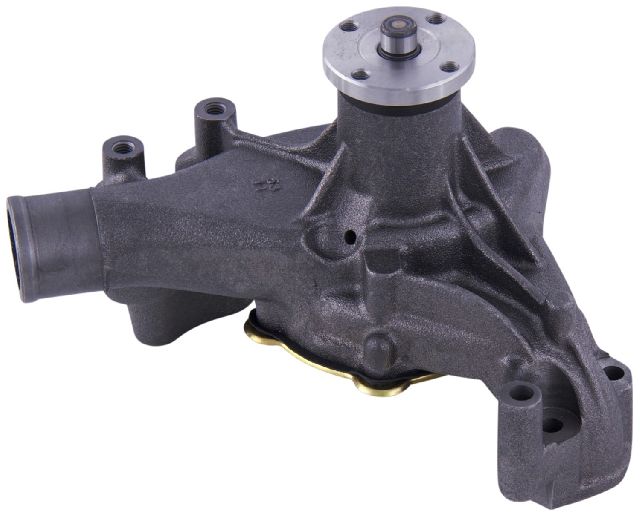
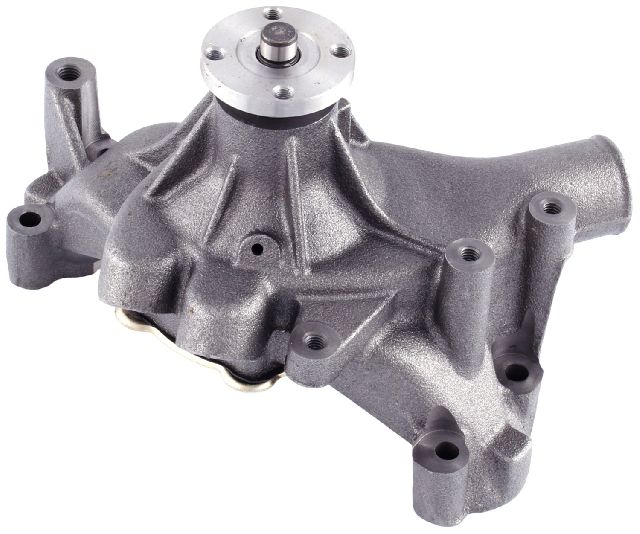
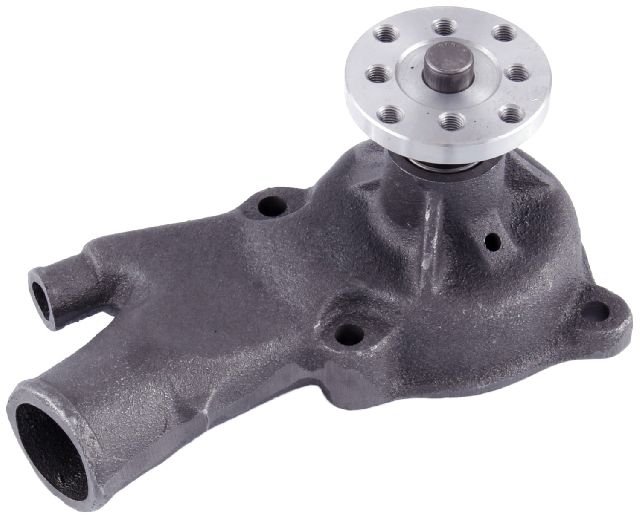
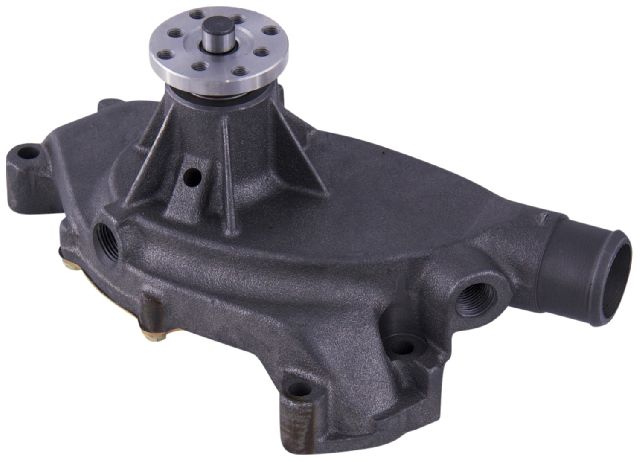
For 1965-1977 Chevrolet V8 engines, one of the most critical details is choosing between a "short" and a "long" style water pump. Installing the wrong one will cause your accessory belts (for the alternator, power steering, etc.) to be misaligned, which can throw the belt off and cause immediate problems.
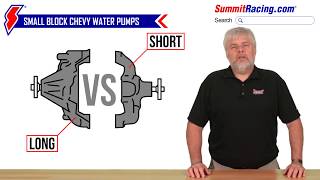
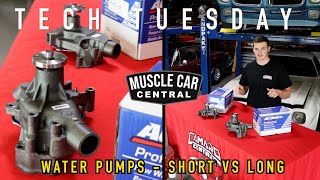
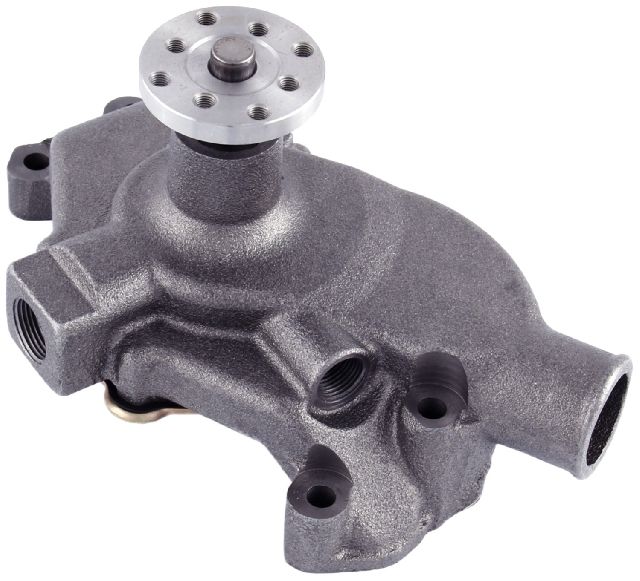
- Short Water Pump: Generally used on 1955-1968 small block passenger car engines. The distance from the engine block mounting surface to the pulley mounting flange is about 5 5/8 inches. There is a very narrow gap between the pump and the timing chain cover.
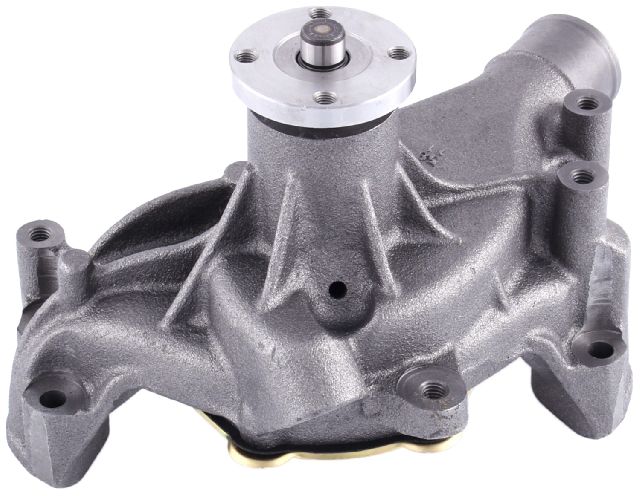
- Long Water Pump: Generally used on 1969 and later small block passenger car engines. The distance from the block to the pulley flange is about 6 15/16 or 7 inches. You can usually fit your hand between the pump and the timing chain cover.
Pro Tip: Never assume based on the year of your car alone. Engine swaps are common in classic cars. Always measure your existing water pump or check the gap between the pump and the engine block before ordering a replacement.
🎬 See the difference: Small block Chevy long vs. short pumpsChoosing the Right Aftermarket Water Pump
For a classic vehicle like the 1965-1977 Impala, aftermarket parts are the primary option. Quality can range from basic replacements to high-performance upgrades. Here’s how the brands break down:
Brand Quality Tiers
Tier 1: Performance & Heavy-Duty (Edelbrock, Weiand, Frostbite)
These brands specialize in high-performance parts. Their water pumps are often made from lightweight aluminum instead of cast iron and feature high-flow designs that can improve cooling efficiency, especially for modified engines. Brands like Edelbrock and Weiand are well-respected in the classic Chevy community for quality and performance. They are the most expensive option but offer superior cooling for performance applications.
Tier 2: OEM-Quality Replacement (ACDelco, Gates, Dayco)
These brands are the go-to for a reliable, stock-equivalent replacement. ACDelco is the original equipment manufacturer (OEM) for General Motors, so their parts are considered a benchmark for fit and function. Gates and Dayco are also major names in cooling system components, known for their durability. While some forum users have noted occasional quality control issues with all major brands, these are generally considered safe and reliable choices for a daily driver or stock restoration.
Tier 3: Value-Oriented (GMB, US Motor Works, Proform, PRW, Mr. Gasket)
These brands offer a more budget-friendly option. They are a good choice for a car that is driven less frequently or when the budget is the primary concern. GMB is a large manufacturer that produces pumps for many brands and is often seen as a solid value choice. Quality can be more variable in this tier, but they provide a functional replacement at an affordable price point.
| Part Type | Estimated Cost | Notes |
|---|---|---|
| New Aftermarket (Value) | $46 - $80 | Standard cast iron, stock flow. Good for budget repairs. (GMB, US Motor Works) |
| New Aftermarket (OEM-Quality) | $80 - $150 | Cast iron or aluminum, stock flow. The standard for most owners. (ACDelco, Gates, Dayco) |
| New Aftermarket (Performance) | $150 - $280+ | Typically aluminum, high-flow design for improved cooling. (Edelbrock, Weiand, Frostbite) |
| Shop Labor | $150 - $300 | Varies by shop rate and vehicle condition. |
Frequently Asked Questions (FAQ)
Do I need a high-flow water pump?
For a stock or lightly modified engine, a standard flow water pump is perfectly adequate. A high-flow pump, which circulates more coolant at lower engine speeds, is beneficial for high-performance engines, vehicles used for towing, or cars that operate in very hot climates.
Should I choose a cast iron or aluminum water pump?
Original pumps were cast iron. Cast iron is durable and inexpensive. Aluminum pumps are much lighter (saving weight on the front of the car) and can dissipate heat slightly better. For most users, either material is fine. If you are building a performance car or want a polished look, aluminum is the preferred choice.
Is replacing the water pump a DIY job?
For a 1965-1977 Impala, replacing the water pump is a straightforward job for someone with basic mechanical skills and tools. The process involves draining the coolant, removing the fan and belts, unbolting the old pump, cleaning the gasket surface, and installing the new pump. The biggest challenge is often dealing with old bolts and cleaning the engine block surface properly.
🎬 Watch: Step-by-step guide to replacing a small block Chevy pumpWhat else should I replace with the water pump?
It is highly recommended to replace the radiator hoses, heater hoses, and thermostat at the same time. These parts are inexpensive and you've already drained the coolant and have everything accessible. It's also a good time to inspect the fan belts and replace them if they show signs of cracking or wear.
Helpful Videos
Technical Specifications
Primary specifications are 'Short' vs. 'Long' pump style, which determines accessory drive alignment. Short pumps measure ~5 5/8" from block to hub, while long pumps measure ~7". Rotation is standard (clockwise). Material can be cast iron (original) or aluminum (aftermarket performance).
We Have This Part in Stock

The information in this article is provided for general reference and educational purposes only. Vehicle specifications, procedures, and part compatibility can vary by production date, trim level, and region. Always consult your vehicle's factory service manual and verify part numbers before purchasing or performing repairs. Safety-critical components such as airbags, seat belts, and braking systems should be installed by a qualified professional.