

Ford LTD Starter Solenoid Guide for 1965-1977 Models
Having trouble starting your classic Ford LTD? It might be the starter solenoid.
- The starter solenoid on a 1965-1977 LTD is an easy-to-access, fender-mounted part, making it a simple DIY replacement.
- A single, loud 'click' with no engine crank is the most common symptom of a failed solenoid.
- Always disconnect the negative battery terminal before starting work to prevent dangerous electrical shorts.
- Both Motorcraft and Standard Ignition are reputable brands for this part; quality is comparable for this component.
Diagnosing a Faulty Starter Solenoid
A failing starter solenoid in your Ford LTD will usually give you clear warning signs. Because the solenoid is the switch that sends power to your starter, any problems will prevent your car from starting properly. You need to figure out if the problem is the solenoid, the battery, or the starter motor itself.
Common Failure Symptoms
- Single Loud Click: 🎬 Watch: What a single click sounds like and how to fix it. When you turn the key, you hear one loud click from the engine bay, but the engine doesn't crank. This often means the solenoid is receiving the signal but isn't sending power to the starter.
- No Sound at All: You turn the key and nothing happens. If your dashboard lights still come on, it could be a completely failed solenoid.
- Rapid Clicking: A series of fast clicks can sometimes point to a solenoid issue, but it more commonly indicates a weak or dead battery that can't supply enough power.
- Intermittent Starting: The car starts fine sometimes and fails to start at other times. This can be a sign of a solenoid that is beginning to fail.
- Starter Stays On: In rare cases, the internal contacts of the solenoid can weld themselves together, causing the starter motor to keep running even after you've released the key. This is a serious issue that requires immediate attention.
Choosing the Right Aftermarket Solenoid
For a classic vehicle like the 1965-1977 Ford LTD, you won't find original factory parts still in production. However, high-quality new aftermarket parts are readily available. The choice often comes down to brand reputation and quality.
Motorcraft: As Ford's own parts division, Motorcraft is the closest you can get to an original equipment (OE) part. Many classic Ford owners prefer to use Motorcraft parts to maintain originality and for their reputation of quality and reliability. A Motorcraft solenoid is engineered to Ford's specifications.
Standard Ignition (SMP): Standard Motor Products is a well-respected aftermarket manufacturer that has been around for decades. Their parts are known for being a reliable and cost-effective alternative to OE parts. Forum discussions among classic Ford owners often mention Standard (and its premium line, Echlin) as a quality choice.
Pro Tip: For a simple but critical part like a solenoid, both Motorcraft and Standard Ignition are solid choices. The quality difference is minimal for this component. Some owners of older Fords seek out New Old Stock (NOS) Motorcraft parts for ultimate authenticity and perceived durability, but a new part from either brand will perform well.
Estimated Costs for Replacement
Replacing the starter solenoid on a 1965-1977 LTD is one of the more affordable repairs you can perform. The part itself is inexpensive, and the labor is straightforward due to its easy-to-access location on the fender.
| Item | Estimated Cost |
|---|---|
| New Aftermarket Solenoid (Standard, Motorcraft) | $49.14 - $61.83 |
| Shop Labor | $50 - $120 |
| Total Estimated Cost (DIY) | $49.14 - $61.83 |
| Total Estimated Cost (Professional) | $99.14 - $181.83 |
Frequently Asked Questions
Where is the starter solenoid located on my 1965-1977 Ford LTD?
On these classic Fords, the starter solenoid is not on the starter motor itself. It is a small, cylindrical part mounted remotely in the engine bay, almost always on the passenger-side inner fender wall, close to the battery.
Is this a difficult part to replace myself?
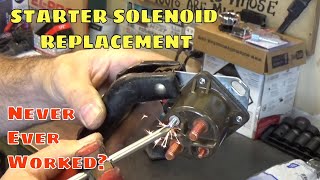
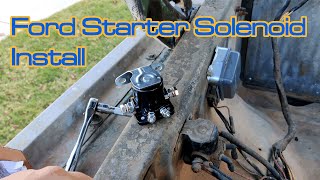
No, this is a very easy DIY job for most owners. It typically requires only basic hand tools 🎬 See this easy step-by-step solenoid replacement walkthrough. like wrenches or a socket set. The process involves disconnecting the battery, taking a picture of the wire layout, removing a few nuts and mounting bolts, swapping the solenoid, and reconnecting the wires.
How do I test my starter solenoid?
A simple test is to have someone turn the key to 'start' while you listen. A single, loud click from the solenoid usually means it's getting a signal but not working correctly. A more advanced test involves using a multimeter to check for voltage at the 'S' (start) terminal when the key is turned, and then checking if voltage passes from the battery terminal to the starter terminal when the solenoid clicks.
🎬 Watch: How to test your solenoid using a multimeter.Is a starter solenoid the same as a starter relay?
Yes, for this application, the terms are used interchangeably. The fender-mounted part on your LTD is technically a relay, but it is almost universally called a solenoid.
Can a bad solenoid cause other problems?
Yes. If the solenoid sticks in the 'on' position, it can cause the starter motor to run continuously, which can damage the starter and drain the battery very quickly. Also, poor connections at the solenoid can cause a no-start condition that might be mistaken for a bad battery or starter.
Helpful Videos

Technical Specifications
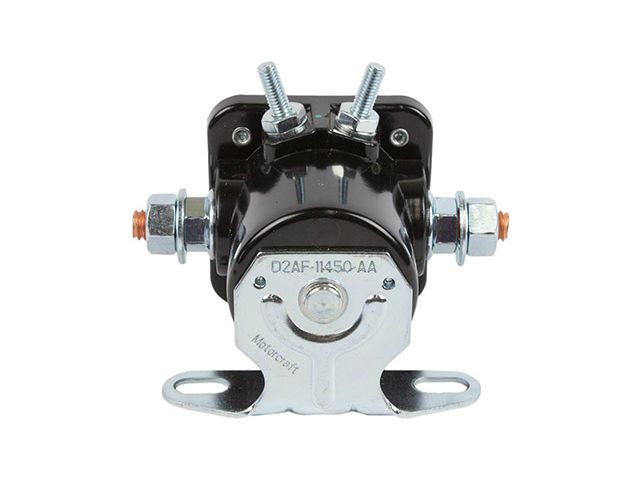
OEM Part Numbers: SW-3 B6AZ-11450-A C5AF-11450-A SW-1951-C
12-Volt, Fender-Mounted, 4-Post (2 large, 2 small) or 3-Post (2 large, 1 small) depending on specific year/application.
We Have This Part in Stock


The information in this article is provided for general reference and educational purposes only. Vehicle specifications, procedures, and part compatibility can vary by production date, trim level, and region. Always consult your vehicle's factory service manual and verify part numbers before purchasing or performing repairs. Safety-critical components such as airbags, seat belts, and braking systems should be installed by a qualified professional.