

Mercury Capri Engine Coolant Bypass Hose Guide (1970-1978)
Everything you need to know about replacing the engine coolant bypass hose on your classic Mercury Capri.
- The bypass hose is critical for proper engine warm-up; failure can lead to overheating.
- Verify the correct part for your specific engine (I4 vs. V6) before purchasing.
- Since OEM parts are unavailable, choose a quality aftermarket brand like Gates or ACDelco.
- If the bypass hose is failing from age, it is highly recommended to replace all coolant hoses at the same time.
Understanding the Engine Coolant Bypass Hose in Your Capri
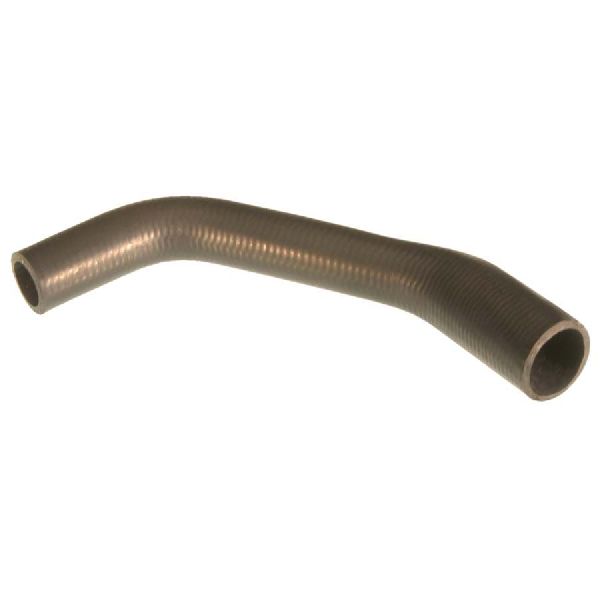
The first-generation Mercury Capri, sold in North America from 1970 to 1978, used several engines, including the 1.6L Kent four-cylinder and the larger 2.6L and 2.8L Cologne V6 engines. The engine coolant bypass hose is a component that can vary depending on your specific engine. Its job is to provide a path for coolant to flow when the thermostat is shut. Without it, pressure could build, and parts of the engine might overheat before the thermostat opens to allow flow to the main radiator. Over decades of use, this rubber hose is exposed to constant heat and pressure, making it a common point of failure.
Symptoms of a Failing Bypass Hose
A failing bypass hose will show the same signs as other coolant leaks. Because of its location, a small leak might evaporate before it drips on the ground, making it hard to spot. Look for these common symptoms:
- Sweet Smell of Coolant: A strong, sweet smell from the engine bay after a drive is often the first sign of a pinhole leak.
- Low Coolant Levels: You may find yourself needing to top off the coolant reservoir more frequently without seeing any obvious puddles under the car.
- Visible Coolant Residue: Look for white or greenish crusty deposits on or around the hose and its connection points. This is dried coolant.
- Engine Overheating: If the hose fails completely, it will cause a rapid loss of coolant, leading to engine overheating. This can cause serious engine damage.
Warning: Do Not Ignore Overheating
If your Capri's temperature gauge starts to climb into the red, pull over immediately and shut off the engine. Driving with an overheating engine can lead to warped cylinder heads and other catastrophic failures, especially on these older iron-block engines.
Choosing the Right Aftermarket Hose
For a vehicle of this age, finding a New Old Stock (NOS) or OEM Ford part is nearly impossible. The market consists entirely of aftermarket replacements. Fortunately, brands like Gates and ACDelco are well-known for producing quality rubber components.
- Gates: A major manufacturer of hoses and belts, Gates is a trusted name in the aftermarket. Their coolant hoses are typically made from high-quality EPDM rubber, which is engineered to resist heat, abrasion, and electrochemical degradation—a leading cause of hose failure from the inside out.
- ACDelco (Professional/Gold): While often associated with GM vehicles, ACDelco's Professional series (now called Gold) parts are made for a wide range of makes and models. They are considered a high-quality alternative to original equipment and are a reliable choice for your Capri.
Pro Tip: Check Your Engine
The 1970-1978 Capri came with different engines. The bypass hose for a 2.8L V6 will be different from one for a 1.6L I4. Always confirm that the part you are buying is listed as compatible with your specific year and engine before ordering.
| Part/Service | Estimated Cost |
|---|---|
| New Aftermarket Hose (ACDelco, Gates) | $14 - $82 |
| Shop Labor | $90 - $180 |
| Total Professional Installation | $104 - $262 |
Frequently Asked Questions (FAQ)
Can I replace the bypass hose myself?
Yes, this is a very DIY-friendly job for a home mechanic. It requires basic hand tools, a drain pan for the coolant, and some patience. The main steps involve draining the cooling system, accessing the hose (which can sometimes be in a tight spot), removing the old clamps and hose, and installing the new one. Always use new hose clamps.
Should I replace other hoses at the same time?
Absolutely. If the bypass hose has failed due to age, the upper and lower radiator hoses, as well as the heater hoses, are likely in similar condition. Replacing them all at once is a smart preventative measure and can save you from another breakdown down the road.
Are there any recalls for the Mercury Capri coolant bypass hose?
No. There are no recalls or Technical Service Bulletins (TSBs) from the NHTSA or Ford regarding the coolant bypass hose for the 1970-1978 Mercury Capri. Failures are typically due to the normal wear and tear of a rubber component over 40+ years.
What kind of coolant should I use in my Capri?
For classic cars like the Capri, a conventional green IAT (Inorganic Additive Technology) coolant is generally the safest choice. Modern OAT (Organic Acid Technology) coolants, which are often orange, red, or purple, can sometimes be incompatible with the solder and other materials used in older radiators and heater cores. Always use distilled water when mixing with concentrated antifreeze.
Technical Specifications
Varies by engine (1.6L I4, 2.0L I4, 2.6L V6, 2.8L V6). Typically a small, molded EPDM rubber hose.
We Have This Part in Stock


The information in this article is provided for general reference and educational purposes only. Vehicle specifications, procedures, and part compatibility can vary by production date, trim level, and region. Always consult your vehicle's factory service manual and verify part numbers before purchasing or performing repairs. Safety-critical components such as airbags, seat belts, and braking systems should be installed by a qualified professional.