

A Ford Bronco Owner's Guide to the Starter Solenoid (1966-1979)
Don't get stranded by a 'click-no-start'—here's what you need to know about this simple but vital part.
- The most common symptom of failure is a loud 'click' with no engine crank.
- It is located on the passenger-side inner fender, making it one of the easiest parts to replace on a classic Bronco.
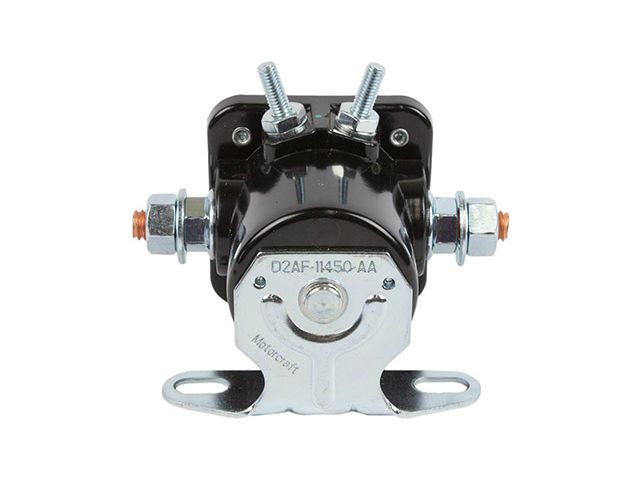
- Poor quality aftermarket solenoids are a common problem; spending more for a Motorcraft brand part is highly recommended by owners.
- Before replacing the solenoid, always check for a fully charged battery and clean, tight cable connections, as these cause similar symptoms.
Signs of a Failing Starter Solenoid
The starter solenoid is a common failure point on classic Ford trucks, but the symptoms are usually easy to spot. Because the part is simple, it often fails in a few predictable ways. Being able to recognize the signs can save you from being stranded.
| Symptom | Description |
|---|---|
| Single, Loud Click, But No Crank | This is the most common sign. When you turn the key, you hear a single, solid "click" from the engine bay, but the engine doesn't turn over. This usually means the solenoid is engaging but failing to send power to the starter. |
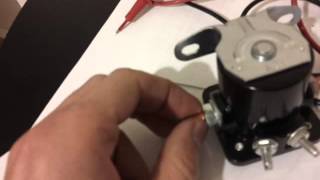
| No Sound or Action at All | If you turn the key and nothing happens—no click, no crank—the solenoid 🎬 Watch: Troubleshooting a classic Ford truck that won't crank. could be completely dead. However, this can also be a symptom of a dead battery or bad cables, so check those first. | 🎬 Watch: How to diagnose and test your Ford starter solenoid.
| Rapid Clicking or Buzzing | A series of rapid clicks often points to a low battery, which can't provide enough power to fully engage the solenoid. It can also indicate poor connections at the battery or the solenoid itself. |
| Starter Keeps Running (Stuck On) | In some cases, the internal contacts of the solenoid can weld themselves together. This causes the starter to continue running even after you release the key, which can quickly damage the starter and flywheel. If this happens, disconnect the battery immediately. |
Choosing the Right Aftermarket Solenoid
For a 1966-1979 Bronco, you are buying a replacement part, not the exact one that came from the factory. The quality of modern aftermarket solenoids can vary significantly. Many owners report that cheap, generic parts can fail quickly, sometimes right out of the box.
Pro Tip: Many experienced Bronco owners recommend keeping a spare solenoid and the necessary wrenches in the truck. It's a cheap and easy part to swap on the trail or in a parking lot.
Brand Tiers
- Premium Aftermarket (Motorcraft): Motorcraft is Ford's own parts brand and is widely considered the best option for reliability. While technically an aftermarket replacement, it's made to OEM specifications. Owners in forums consistently recommend spending a little more for a Motorcraft solenoid to avoid the frustration of a premature failure.
- Standard Aftermarket (Standard Ignition): Standard Motor Products (SMP), often sold as Standard or Standard Ignition, is a well-respected brand. Their parts are generally considered a reliable alternative to Motorcraft, and a significant step up from generic, white-box parts. Older, US-made Standard parts are noted to be of very high quality.
- Economy Brands: Many auto parts stores offer lower-cost, house-brand solenoids. While the lifetime warranty can be appealing, many Bronco owners have reported these parts failing quickly. The warranty doesn't help much when you're stranded.
A Note on Quality
Forum discussions among classic Ford owners show a strong preference for finding a New Old Stock (NOS) Motorcraft or even a used, original Ford-made solenoid from a junkyard over a new, cheap aftermarket part. The consensus is that the build quality and materials (like copper contacts) in the older parts were superior. If you can't find an original, a new Motorcraft is your next best bet.
Typical Replacement Costs
Replacing the starter solenoid on a '66-'79 Bronco is one of the most affordable and simple repairs you can do. The part itself is inexpensive, and the labor is minimal due to its easy-to-reach location on the inner fender.
| Item | Estimated Cost |
|---|---|
| New Aftermarket Part | $49.14 - $69.91 |
| Shop Labor | $50 - $100 |
Frequently Asked Questions
Where is the starter solenoid on my Bronco?
On 1966-1979 Ford Broncos, the starter solenoid is not attached to the starter. It is almost always located on the passenger-side inner fender wall, close to the battery. This makes it very easy to find and replace.
Can I replace the starter solenoid myself?
Yes, this is a very easy job for a DIY mechanic. It typically requires only a couple of basic wrenches to disconnect the battery, unbolt the old solenoid, and install the new one. The entire process usually takes less than 30 minutes.
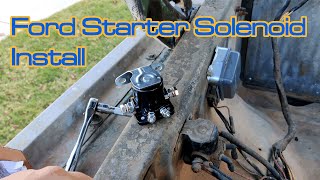
🎬 See this step-by-step solenoid installation on a classic Bronco.Why does my new solenoid just click?
A clicking sound is often caused by a bad connection or low voltage, not necessarily a bad solenoid. Before you blame the new part, make sure your battery is fully charged and that all cable connections at the battery, solenoid, and starter are clean and tight. The solenoid also needs a good ground through its mounting bracket to the fender.
What's the difference between a 3-post and 4-post solenoid?
Most original solenoids had 4 posts. The two large posts are for the main battery cables. Of the two small posts, the 'S' terminal receives the signal from the ignition switch to start. The 'I' terminal was used to send a full 12 volts to the ignition coil during cranking for a hotter spark, bypassing the resistor wire. Many modern replacement solenoids may have only 3 posts, omitting the 'I' terminal. For a stock ignition system, a 4-post solenoid is correct.
Are there any recalls for the starter solenoid?
There are no specific recalls or Technical Service Bulletins (TSBs) found for the starter solenoid on 1966-1979 Ford Broncos. Any issues are related to age, wear, or the quality of replacement parts.
Helpful Videos


Technical Specifications
OEM Part Numbers: SW3 B6A-11450-A
12-Volt, Fender Mounted, 4-Post (2 battery, 1 'S' terminal, 1 'I' terminal)
We Have This Part in Stock


The information in this article is provided for general reference and educational purposes only. Vehicle specifications, procedures, and part compatibility can vary by production date, trim level, and region. Always consult your vehicle's factory service manual and verify part numbers before purchasing or performing repairs. Safety-critical components such as airbags, seat belts, and braking systems should be installed by a qualified professional.