

A Guide to the Ported Vacuum Switch for the 1968-1981 Buick Riviera
Understand this small but important part to keep your Riviera's engine running cool and efficient.
- The Ported Vacuum Switch is a key part of your Riviera's original cooling and emissions system.
- Symptoms of failure include overheating at idle, incorrect idle speed, and vacuum leaks.
- When buying a new part, matching the number of ports and ensuring it's for your specific engine is critical.
- Replacing the switch is an easy DIY job, but you must route the vacuum hoses correctly.
Understanding Your Riviera's Ported Vacuum Switch
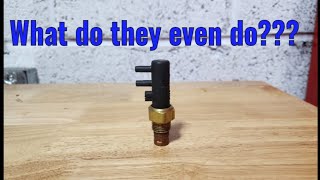
On your 1968-1981 Buick Riviera, the Ported Vacuum Switch (PVS) is a simple but clever device from the pre-computer era. 🎬 Watch: A deep dive into how thermal vacuum switches function. It's a small valve, usually with two or three vacuum hose ports, that screws into the engine's intake manifold or block. Its tip sits in the engine coolant to read the temperature.
Its primary purpose is to help control engine temperature. Under normal conditions, it sends 'ported' vacuum to the distributor. Ported vacuum is absent at idle. However, if your engine 🎬 See this video to understand manifold versus ported vacuum sources. starts to get too hot in traffic, the switch detects the high coolant temperature. It then cleverly switches the vacuum source to 'manifold' vacuum. This full-time vacuum source advances the ignition timing, causing the engine's idle speed to increase. A faster idle spins the water pump and fan quicker, which helps cool the engine down.
Symptoms of a Failing Ported Vacuum Switch
A bad PVS can cause subtle problems that might be hard to diagnose. Because these cars are carbureted and don't have modern computer diagnostics, you have to watch for the mechanical signs.
🎬 Watch: How to test the behavior of your vacuum switch.- Overheating at Idle: If your Riviera starts to run hot while sitting in traffic but cools down once you're moving, the PVS might be the culprit. It may not be switching to manifold vacuum to raise the idle speed and cool the engine.
- Incorrect Idle Speed: A switch that is stuck open or closed can send the wrong vacuum signal at the wrong time. This could cause an unusually high idle after the engine is warm, or a rough idle when cold.
- Vacuum Leaks: The plastic housing of an old switch can crack, creating a vacuum leak. A vacuum leak can cause a rough idle, hesitation, and overall poor engine performance.
- Poor Fuel Economy: Incorrect ignition timing managed by a faulty switch can lead to reduced engine efficiency and worse gas mileage.
Choosing the Right Aftermarket Switch
Since new original GM parts for this era are rare, you will be looking at new aftermarket parts. Brands like Standard Ignition and ACDelco are well-known manufacturers that produce reliable replacements for these switches.
The most important thing is not the brand, but matching the part to your car's specific needs. Here's what to look for:
- Port Count: Your new switch MUST have the same number of vacuum ports as the original. They came in 2-port and 3-port versions (and sometimes more for complex systems).
- Temperature Rating: Switches are designed to activate at a specific temperature. While this is often not listed on a retail site, buying a part that is specified for your exact year and engine is the best way to get the correct one.
- Thread Size: Ensure the thread size (e.g., 1/2"-14 NPT) matches the port on your engine's manifold.
Estimated Replacement Costs
Replacing a PVS is a budget-friendly repair, especially if you do it yourself. The main cost is the part itself.
| Part or Service | Estimated Cost |
|---|---|
| New Aftermarket Switch | $45.84 - $86.51 |
| Shop Labor | $75 - $140 |
| New OEM (NOS) | Varies, often unavailable |
Known Issues, Recalls, and Bulletins
Searches of the National Highway Traffic Safety Administration (NHTSA) database did not show any recalls or specific technical service bulletins (TSBs) for the ported vacuum switch on the 1968-1981 Buick Riviera. For vehicles of this age, recalls are uncommon unless a major safety defect is discovered late. Most common issues are simply related to age and wear.
Frequently Asked Questions
Where is the ported vacuum switch located?
It is typically threaded into the engine's intake manifold or sometimes directly into the cylinder head, in a location where its sensor tip is exposed to engine coolant.
Can I replace this part myself?
Yes, this is a good DIY task for a beginner. The process involves partially draining the coolant, unplugging the vacuum lines, unscrewing the old switch, and installing the new one. You will need basic hand tools and thread sealant for the new switch.
What happens if I just bypass the switch?
Many people do this, but it's not recommended. If you bypass it, you lose the engine's ability to protect itself from overheating at idle. For a stock or daily-driven car, it's best to keep the system working as designed.
Is a Ported Vacuum Switch the same as an EGR valve?
No. The PVS is a switch that helps control other parts. The EGR (Exhaust Gas Recirculation) valve is a separate component that the PVS might help to operate. The PVS tells the EGR valve when to open or close based on engine temperature.
Helpful Videos
Technical Specifications
OEM Part Numbers: 3010922 3019022 3030975 3031712 1230500 1238524
Key specifications are the number of vacuum ports (typically 2 or 3), the thread size for mounting (e.g., 1/2"-14 NPT), and the temperature at which the switch activates.
We Have This Part in Stock


The information in this article is provided for general reference and educational purposes only. Vehicle specifications, procedures, and part compatibility can vary by production date, trim level, and region. Always consult your vehicle's factory service manual and verify part numbers before purchasing or performing repairs. Safety-critical components such as airbags, seat belts, and braking systems should be installed by a qualified professional.