

Upgrading Your 1970-1976 Plymouth Duster Engine Timing Set
Keep your classic Duster's Slant-6 or V8 engine running in perfect sync with a durable aftermarket timing set.
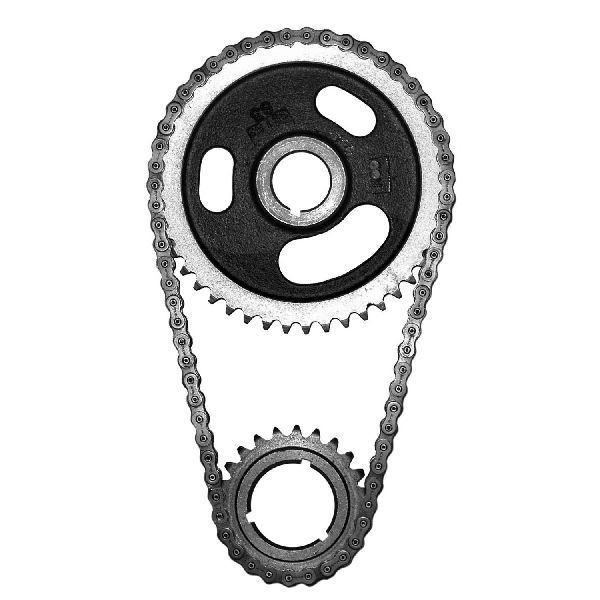
- The original nylon-toothed camshaft gear is a common failure point and should be replaced with an all-metal aftermarket set to prevent engine damage.
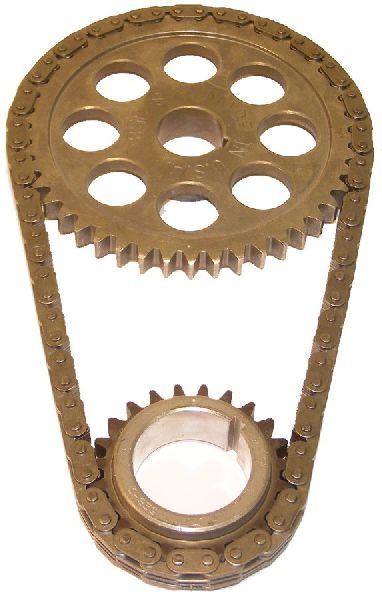
- For V8 engines, especially performance models like the 340 and 360, upgrading to a double roller timing set is highly recommended for durability and timing accuracy.
- Always verify your specific engine (Slant-6 or V8 model) before ordering, as the parts are not interchangeable.
- It is best practice to also replace the water pump, timing cover gasket, and front crankshaft seal during the job.
Is Your Duster's Timing Set Failing?
The original timing sets in many classic Mopar engines, including those in the Plymouth Duster, had a significant weak point: a camshaft gear with nylon-coated teeth. Over decades of use, the nylon becomes brittle, breaks off, and falls into the oil pan. These pieces can clog the oil pump pickup screen, starving the engine of oil and leading to major failure. Before a complete failure, you'll likely notice some clear warning signs.
Key Failure Symptoms
- Engine Rattle: A rattling or scraping noise from the front of the engine, especially at idle, is a classic sign of a loose or stretched timing chain.
- Poor Performance: A stretched chain can retard the camshaft timing, causing a noticeable loss of low-RPM power and sluggish acceleration.
- Backfiring: Incorrect cam timing can cause the engine to backfire through the intake or exhaust.
- Metal Shavings in Oil: During an oil change, finding small plastic pieces or metal shavings in the drained oil is a red flag that the timing gear is disintegrating.
- Engine Won't Start: If the chain breaks or jumps a tooth on the gears, the camshaft and crankshaft will no longer be synchronized, and the engine will not run.
Choosing the Right Aftermarket Timing Set
For a classic vehicle like the 1970-1976 Duster, new OEM (Original Equipment Manufacturer) parts are generally unavailable. The aftermarket is the go-to source, and modern replacements are often significant upgrades over the original factory parts. The most important upgrade is moving from the failure-prone nylon gear to an all-metal set.
Standard Replacement vs. Performance Sets
Your choice depends on your Duster's engine and how you use it. You must verify which engine your Duster has before ordering parts, as the Slant-6 and V8 engines use different timing sets.
Good: Standard Replacement (Single Roller)
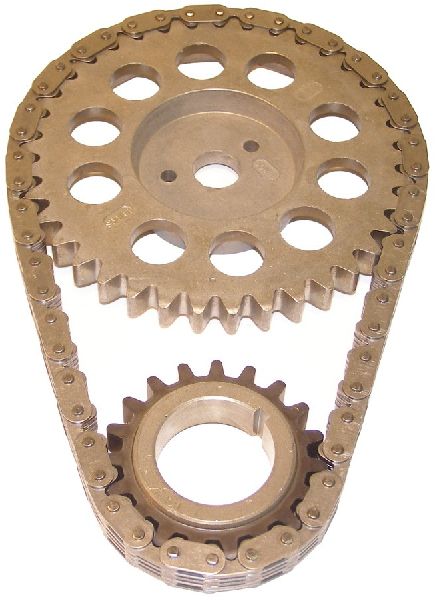
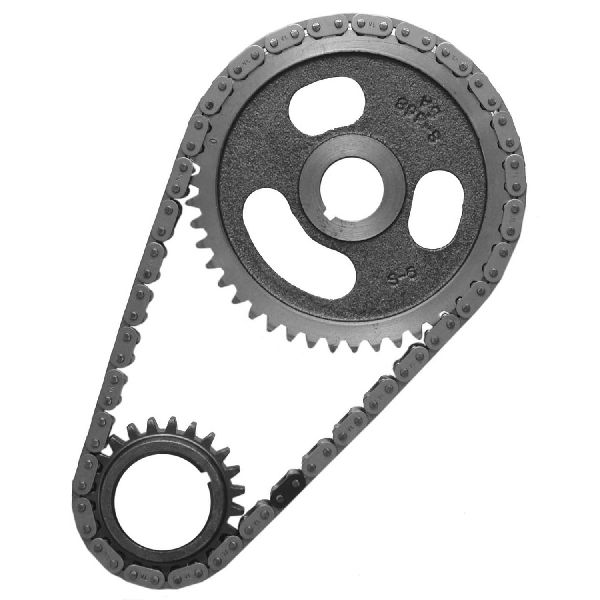
Brands like Melling and Cloyes offer high-quality standard replacement sets. These typically feature an all-metal construction, replacing the weak OEM nylon gear. For a stock Slant-6 or 318 V8 daily driver, a standard set is a reliable and affordable choice that will last for many years.
Better: Performance (Double Roller)
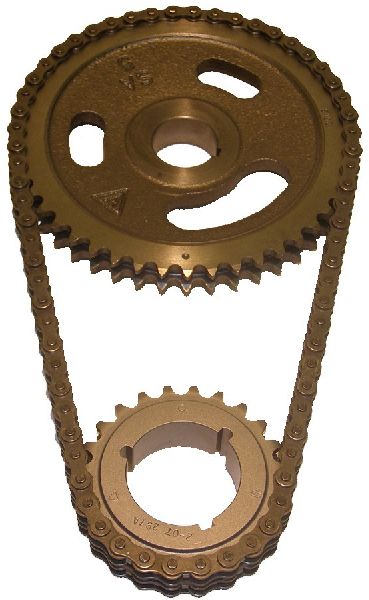
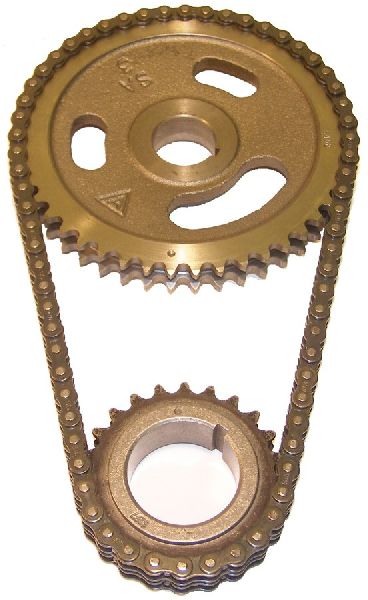
For performance-built engines (like the 340 and 360 V8s) or for owners seeking maximum durability, a double roller timing set is the best option. Brands like Edelbrock, Melling Select Performance, and Cloyes offer these robust kits. A double roller chain is stronger, stretches less over time, and provides more accurate and stable cam timing, which is crucial for making consistent power. Many of these kits also offer multiple keyways on the crank sprocket, allowing for advanced or retarded cam timing to fine-tune engine performance.
| Part Tier | Common Brands | Our Price Range | Best For |
|---|---|---|---|
| Standard Replacement | Cloyes, Melling | $31.57 - $75.00 | Stock Slant-6 & 318 V8 engines, daily driving |
| Performance Double Roller | Edelbrock, Melling Select, Cloyes | $75.00 - $167.28 | 340/360 V8s, modified engines, maximum durability |
Frequently Asked Questions
Are there any recalls for the 1970-1976 Plymouth Duster timing set?
No, searches of the National Highway Traffic Safety Administration (NHTSA) database show no specific recalls for the engine timing set on the 1970-1976 Plymouth Duster. The most well-known issue is the use of nylon-toothed cam gears, which was a design choice rather than a manufacturing defect that would trigger a recall.
What is the difference between a single and double roller chain?
A single roller chain has one row of rollers, similar to a bicycle chain. A double roller chain has two rows of rollers, making it significantly stronger and more resistant to stretching. For high-performance or heavy-duty applications, a double roller is the preferred choice for Mopar engines.
Do I need a timing chain tensioner?
Most Mopar V8s of this era did not come with a timing chain tensioner from the factory. While some builders add them, many experts argue they are not necessary with a quality double roller chain and can even be problematic, as the tensioner block may wear prematurely against the aggressive roller chain.
How do I know which engine my Duster has?
The 1970-1976 Duster was available with several engines: the 198 and 225 Slant-6 (I6), and the 318, 340, and 360 V8s. The easiest way to tell is to look at the engine. A Slant-6 is an inline engine that is visibly tilted to one side. A V8 will have two banks of cylinders in a 'V' shape with a centrally located distributor at the rear of the engine. Your vehicle's VIN can also be decoded to determine the original engine.
Technical Specifications
Compatibility is determined by the specific engine in the vehicle. The primary engines for the 1970-1976 Plymouth Duster are the 198/225 cu in Slant-6 I6 and the 318/340/360 cu in LA-series V8. V8 sets are often available in standard 'silent' chain, single roller, or double roller configurations.
We Have This Part in Stock

The information in this article is provided for general reference and educational purposes only. Vehicle specifications, procedures, and part compatibility can vary by production date, trim level, and region. Always consult your vehicle's factory service manual and verify part numbers before purchasing or performing repairs. Safety-critical components such as airbags, seat belts, and braking systems should be installed by a qualified professional.