

Dodge Charger Distributor: An Essential Guide for 1972-1979 Models
Understanding distributor problems and choosing the right replacement for your classic Charger.
- Distributor failure often presents as a no-start, rough running, or misfiring.
- For street driving, always choose a distributor with a vacuum advance for better efficiency.
- Performance brands like MSD and Edelbrock offer significant reliability and performance upgrades over stock.
- When converting to electronic ignition, problems are often related to wiring, grounds, or the ballast resistor.
Signs of a Failing Distributor in Your Charger
A bad distributor can cause a range of problems, from annoying to leaving you stranded. Since these Chargers use a relatively simple ignition system, the distributor is a common source of issues. Look out for these symptoms:
- Engine Misfires: The engine may stumble or hesitate, especially under acceleration.
- Hard Starting or No Start: A complete failure of a component inside the distributor, like the pickup coil, can prevent the engine from starting at all.
- Rough Idle: Worn bushings in the distributor shaft can cause inconsistent timing, leading to a shaky idle.
- Backfiring: If the timing is off due to a faulty distributor, the engine might backfire through the intake or exhaust.
- Shaking or Engine Vibration: Inconsistent spark delivery can make the engine run unevenly, causing vibrations.
Common Points of Failure
For these Mopars, the issue isn't always the entire distributor. The most common failures are individual components like the ballast resistor, the electronic control unit (ECU box), or the pickup coil inside the distributor. Diagnosing which part has failed can save you from replacing the whole unit unnecessarily. If you get spark when turning the key off but not while cranking, the pickup coil is a likely suspect.
Choosing the Right Aftermarket Distributor
Finding a new OEM distributor from Mopar for a car this old is nearly impossible. Your choice is between a remanufactured original part or a new aftermarket unit. For many owners, especially those upgrading from an old points-style system, a new aftermarket electronic distributor is a significant upgrade in reliability and performance.
Brand Quality Tiers
Not all aftermarket brands are created equal. They generally fall into three categories for your Charger:
Performance Tier: MSD, Edelbrock, FAST
These brands are for owners looking for an upgrade over stock. They are ideal for modified engines but also work well on stock motors for improved reliability and spark energy.
- MSD: Widely considered a top choice for performance and reliability. Owners report easier starting and a smoother idle. Their systems are a complete upgrade, often including a powerful ignition box. 🎬 See how to install and time an MSD Pro-Billet distributor. They can be sensitive to low battery voltage.
- Edelbrock: Offers popular "Ready-to-Run" distributors that are easy to install without a separate ignition box. They are a quality upgrade, but check for potential fitment issues, as some units can be taller than stock.
- FAST: Often sold as part of a complete fuel injection system, but they offer ignition components as well. They are a high-performance option, though less common than MSD or Edelbrock for simple distributor swaps.
Pro Tip: When upgrading to a performance distributor like MSD or Edelbrock, it's a good idea to buy their matched ignition coil to get the full benefit of the system.
Standard Replacement Tier: Cardone (New), WAI Global
These brands offer new, stock-level replacement distributors. They are a cost-effective solution for getting a daily driver back on the road with a fresh part.
- Cardone: Offers both new and remanufactured parts. Their new distributors are a budget-friendly option. However, owner reviews are mixed, with some reporting long-term reliability issues or problems with included components like the vacuum advance.
- WAI Global: A manufacturer of new aftermarket parts that are often sold under various store brands. They are considered a basic, functional replacement to meet OEM specifications.
| Brand | Typical Use Case | Known For |
|---|---|---|
| MSD | Performance / Racing / Hot Rod | High spark energy, reliability, system approach. |
| Edelbrock | Performance / Street Performance | Easy-to-install "Ready-to-Run" systems. |
| Cardone / WAI Global | Stock Replacement / Budget Repair | Affordability, availability. |
Known Issues, Recalls, and Service Bulletins
There are no active recalls or Technical Service Bulletins (TSBs) from the NHTSA specifically for the distributor on the 1972-1979 Dodge Charger. Most issues are related to the age of the components. The factory electronic ignition system is known for failures of the ballast resistor and the firewall-mounted ECU. Many owners carry a spare ballast resistor in their glove box as a precaution.
Frequently Asked Questions (FAQ)
Is replacing a distributor a DIY job?
Yes, for someone with basic mechanical skills. It involves removing the cap, marking the rotor's position, unplugging the wiring and vacuum hose, and removing a single hold-down bolt. The most critical step is ensuring the new distributor is installed in the same position to keep the ignition timing correct.
Do I need a vacuum advance on my distributor?
For a street-driven car, yes. A vacuum advance significantly improves fuel economy and part-throttle response. Race-only distributors may omit this for simplicity, but it is highly recommended for any Charger that sees regular road use.
What is an HEI conversion?
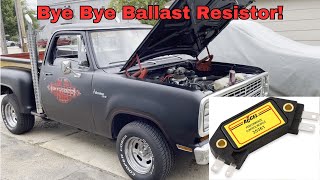
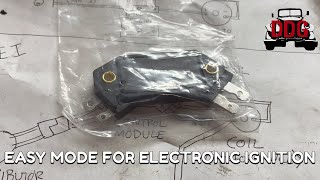
This is a popular modification that uses a General Motors High Energy Ignition (HEI) module with a Mopar distributor. It's known for being a simple, reliable, and inexpensive way to get a strong spark while eliminating the Mopar ECU and ballast resistor.
🎬 Watch a step-by-step walkthrough of the Mopar HEI conversion process.My new electronic distributor won't work! What's wrong?
Wiring issues are the most common problem when converting from points or replacing an electronic system. Double-check that the new distributor, ECU, and ballast resistor (if required) are all wired correctly according to the manufacturer's diagram. Also, ensure the ECU has a good ground connection to the firewall.
Helpful Videos
![No Spark Troubleshooting [Mopar Electronic Ignition with Ballast Resistor]](https://img.youtube.com/vi/RiC8OaSXMs8/mqdefault.jpg)
Technical Specifications
Varies by engine (e.g., 318, 360, 400, 440). Key types include original points-style and aftermarket electronic conversions (Mopar electronic, HEI style, Ready-to-Run). All use an intermediate shaft to drive the oil pump.
We Have This Part in Stock

The information in this article is provided for general reference and educational purposes only. Vehicle specifications, procedures, and part compatibility can vary by production date, trim level, and region. Always consult your vehicle's factory service manual and verify part numbers before purchasing or performing repairs. Safety-critical components such as airbags, seat belts, and braking systems should be installed by a qualified professional.