

Engine Oil Pressure Switch Guide for 1973-1981 Ford Mustang
Keep your classic Mustang's engine safe by understanding this critical but simple part.
- Never ignore an oil pressure warning; always verify the oil level and then confirm actual pressure with a mechanical gauge before driving.
- The factory gauge on these Mustangs is typically an 'idiot light' in gauge form, not a true pressure reading.
- A failing switch can leak oil externally or fail internally, causing false warnings or no warning at all.
- For this low-cost, high-importance part, choosing a quality brand like Motorcraft or Standard Ignition is a wise investment in engine protection.
Understanding Your Mustang's Oil Pressure System
For the 1973-1981 Mustang, which covers the end of the first generation, the Mustang II, and the beginning of the Fox Body era, the oil pressure warning system is straightforward. Unlike modern cars with complex electronics, these models used a simple pressure switch. This switch is designed to activate the dashboard warning light when oil pressure is dangerously low. It's a common misconception that the factory gauge shows the actual oil pressure; in most cases, it's just an 'ok' or 'not ok' indicator controlled by this switch. A failure in this part can either cause a false alarm or, more dangerously, fail to warn you of a real problem.
Symptoms of a Failing Oil Pressure Switch
A bad oil pressure switch can be tricky. It can make you think you have a catastrophic engine problem when you don't, or fail to alert you when you actually do. Here are the common signs:
- Oil Light Flickering or Stays On: If the oil light on your dash flickers, especially at idle or during turns, it could be a faulty switch. If the light stays on constantly, but the engine sounds normal and the oil level is correct, the switch is the most likely suspect.
- Oil Gauge Reads Zero or Acts Erratically: On cars with a gauge, a bad switch can cause the needle to drop to zero or bounce around randomly. This is often caused by an internal failure of the switch.
- Oil Light Never Comes On: The oil light should briefly illuminate when you turn the key before starting the engine. If it never comes on, the bulb could be burnt out, or the switch may have failed in the 'open' position.
- Visible Oil Leak: The switch itself can fail and leak oil. Over time, the plastic or metal housing can crack, or the internal seals can degrade, causing oil to seep out from the body of the sensor or its electrical connector. You might see oily residue on the switch or drips on the ground below it.
Choosing a New Aftermarket Switch
For a part this critical, quality matters. While it's a simple component, a cheap, unreliable switch can cost you an engine. Here’s a breakdown of the available brands:
Tier 1: OEM-Level Quality
- Motorcraft: As Ford's own brand, Motorcraft is the original equipment (OE) benchmark. Choosing Motorcraft ensures a direct fit and performance as the factory intended. For a classic Mustang, if a Motorcraft part is available, it's a top choice for reliability.
- Standard Ignition (SMP): Standard is a highly respected aftermarket manufacturer with a long history. Many professional mechanics trust their sensors. Their parts often meet or exceed OE specifications and are known for quality and durability.
Tier 2: Standard Replacement
- Rostra Powertrain: Rostra is known for manufacturing a wide range of automotive electronics, including OE parts for some manufacturers. Their aftermarket parts are generally considered reliable standard replacements.
- Global Parts: This brand typically falls into the budget-friendly category. While it may offer a cost-effective solution, long-term durability might not match that of premium brands. For a car that is driven regularly, investing in a higher-tier brand is recommended.
Estimated Costs
| Part Type | Price Range |
|---|---|
| New Aftermarket | $7.35 - $35.57 |
| New OEM (Motorcraft) | $15 - $45 |
| Shop Labor | $50 - $100 |
| Total Professional Replacement | $60 - $145 |
Frequently Asked Questions
Where is the oil pressure switch located on a 1973-1981 Mustang?
The location varies slightly by engine (4-cyl, 6-cyl, or V8). On most V8 models, it is typically found on the engine block, near the oil filter. For the 2.3L 4-cylinder engine, it can be on the driver's side of the block, sometimes towards the back. It will have a single wire connected to it.
Is it hard to replace an oil pressure switch?
No, this is a very DIY-friendly job. It usually requires basic hand tools and a special deep socket for oil pressure switches, which is inexpensive. The main difficulty can be accessing the switch, which may be in a tight spot. The entire process typically takes less than an hour.
Should I use Teflon tape on the new switch?
Many new switches come with a pre-applied sealant on the threads. If yours does, do not add Teflon tape. If it does not have sealant, a small amount of thread sealant or a wrap or two of Teflon tape is acceptable to prevent leaks, but be careful not to get any into the engine's oil passages.
How do I know if my oil pump is bad or just the switch?
The only way to know for sure is to test the actual oil pressure with a mechanical gauge. You can rent one from an auto parts store. You remove the switch, thread the gauge in its place, and run the engine to see the real pressure. If the pressure is good, you just need a new switch. If the pressure is low, you have a more serious internal engine problem.
Technical Specifications
OEM Part Numbers: E4ZZ9278A SW1547B
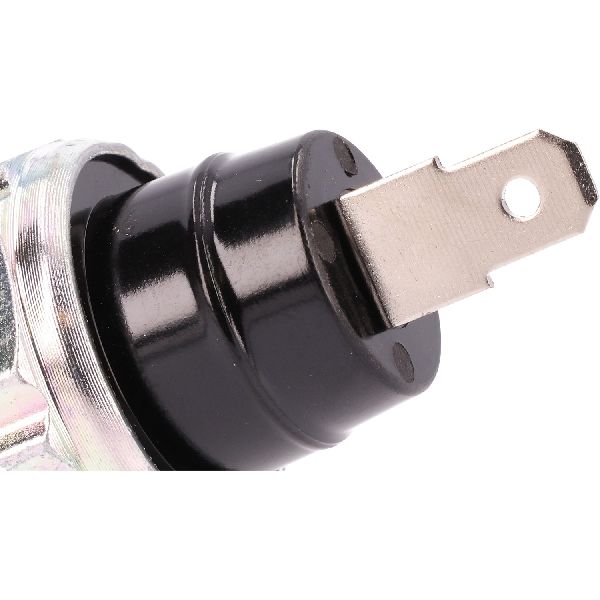
Typically a single-pin, 1/4" NPT threaded switch. Actuation pressure is generally between 5-7 PSI.
We Have This Part in Stock


The information in this article is provided for general reference and educational purposes only. Vehicle specifications, procedures, and part compatibility can vary by production date, trim level, and region. Always consult your vehicle's factory service manual and verify part numbers before purchasing or performing repairs. Safety-critical components such as airbags, seat belts, and braking systems should be installed by a qualified professional.