

Choosing the Right Spark Plug Wire Set for Your 1973-1982 Buick Century
Don't let old, worn-out wires rob your classic Buick of its power and smoothness.
- Before ordering, you must know your Century's engine size and whether it has a points ignition (pre-1975) or an HEI ignition (1975+).
- For a stock vehicle, ACDelco or NGK wires provide reliable, factory-style performance.
- Performance brands like MSD and Taylor offer lower resistance for modified engines but are not necessary for a stock car.
- Replacing wires one at a time is the easiest way to avoid mixing up the engine's firing order.
Signs of Failing Spark Plug Wires
Old spark plug wires can cause a surprising number of problems. Because they carry high voltage, any cracks, wear, or internal breakdown can lead to a weak spark or the spark jumping to the engine block instead of reaching the spark plug. If you notice any of these symptoms, your wires might be the culprit.
- Rough Idle: The engine may shake or run unevenly when you're stopped.
- Engine Misfire: You might feel a stutter or hesitation as you drive. This happens when a cylinder fails to fire correctly.
- Trouble Starting: A weak spark makes it harder for the engine to fire up, especially when cold.
- Poor Acceleration: The car may feel sluggish or hesitate when you press the gas pedal.
- Decreased Fuel Economy: When the engine isn't burning fuel efficiently due to weak spark, you'll get fewer miles to the gallon.
- Visible Damage: Check the wires for any cracking, melting, or burn marks on the outer insulation.
Choosing the Right Aftermarket Wires
For a vehicle of this age, new aftermarket parts are not only the most common option, but they often outperform the original 1970s technology. Original GM parts are essentially unavailable. Aftermarket brands offer a wide range of quality and performance levels.
Know Your Engine!
Before you buy, you MUST know three things: your engine size (e.g., 231 V6, 350 V8), your model year, and your ignition type. Through 1974, many Centurys used a "points" style ignition. By 1975, most had switched to a High Energy Ignition (HEI) system, which has the ignition coil built into the distributor cap. Wire sets are different for each system. Also, be aware that the 1982 model year was a split; most aftermarket parts listed for "1982 Century" are for the new front-wheel-drive model, not the older rear-wheel-drive platform.
Brand Quality Tiers
We can sort the available brands into three general categories based on their intended use and quality.
| Tier | Brands | Description & Best For |
|---|---|---|
| Economy | Standard Wires, Walker Products | These are basic, functional replacements. They will get your car running properly and are very affordable. They typically use a carbon core, similar to the original style, which has higher electrical resistance. Best for budget-conscious owners of stock, daily-driven cars. |
| OEM-Quality / Daily Driver | ACDelco, NGK, Delphi, Denso | ACDelco is General Motors' own parts brand, making it the closest you can get to original equipment specifications. These brands are trusted for their reliability and consistent performance. They offer a great balance of quality and price for a stock vehicle that you depend on. |
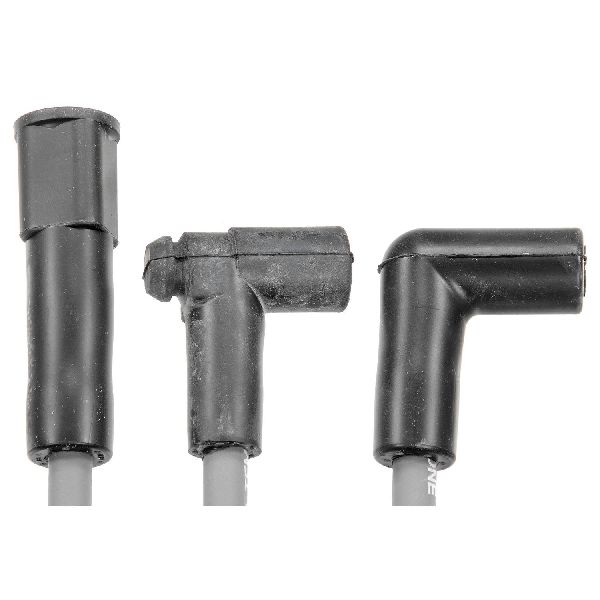
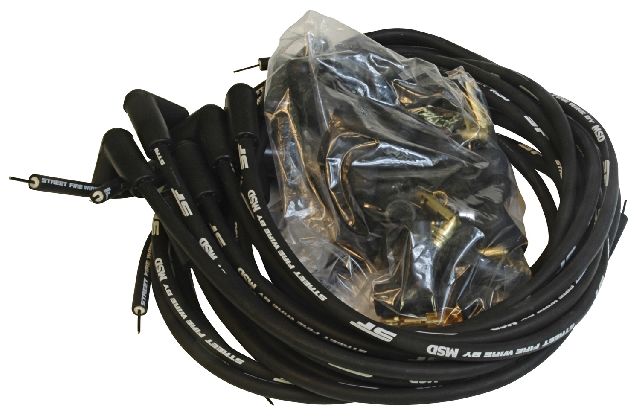
| High-Performance | MSD, Taylor Cable, Accel, Edelbrock, FAST, Granatelli | These brands are for enthusiasts looking for maximum performance. They typically feature thicker 8mm (or larger) silicone jackets and a spiral-wound core for very low resistance. This delivers the hottest possible spark. While some owners use them on stock cars, they are most beneficial for vehicles with upgraded ignition systems, carburetors, or other engine modifications. Forum users often recommend MSD and Taylor for performance builds. |
Known Issues, Recalls, or Service Bulletins
Searches of the National Highway Traffic Safety Administration (NHTSA) database did not reveal any recalls or technical service bulletins (TSBs) specifically for the spark plug wires on the 1973-1982 Buick Century. Any issues would be related to normal wear and tear over the vehicle's long life.
Frequently Asked Questions (FAQ)
Do I need special tools to change my spark plug wires?
No, you typically don't need special tools. The job can be done with just your hands. A spark plug wire puller can make it easier to remove stubborn boots without damaging them, but it's not required. Applying a small amount of dielectric grease to the inside of the new boots will make installation easier and prevent them from getting stuck in the future.
What's the difference between carbon core and spiral core wires?
Carbon core wires were the standard for many years. They use carbon-impregnated fiberglass strands to conduct electricity and suppress radio frequency interference (RFI). Spiral core wires, found in performance sets like MSD, use a wire conductor wrapped around a magnetic core. This provides much lower resistance for a stronger spark, but still provides RFI suppression to prevent static in your radio.
Will new performance wires give my stock engine more horsepower?
Probably not. While low-resistance performance wires can deliver a hotter spark, a stock engine that is running well with OEM-style wires will not see a noticeable power gain just from changing to performance wires. The main benefit comes from replacing old, high-resistance, or damaged wires with new ones that deliver a consistent spark, which restores lost performance. If your current wires are bad, any new set will feel like an upgrade.
How do I make sure I don't mix up the wires?
The best method is to replace one wire at a time. Start with the wire for cylinder #1, remove the old wire from the distributor cap and the spark plug, and then install the new wire for cylinder #1. Then move on to the next cylinder. This prevents you from crossing wires, which would cause the engine to run very poorly or not at all.
Technical Specifications
Varies by engine (V6 or V8) and ignition type (Points or HEI). Wire core can be carbon (stock) or spiral-wound (performance). Diameter typically ranges from 7mm to 8.5mm+.
We Have This Part in Stock

The information in this article is provided for general reference and educational purposes only. Vehicle specifications, procedures, and part compatibility can vary by production date, trim level, and region. Always consult your vehicle's factory service manual and verify part numbers before purchasing or performing repairs. Safety-critical components such as airbags, seat belts, and braking systems should be installed by a qualified professional.