

Chevrolet Corvette Engine Oil Pressure Switch & Sender Guide (1973-1983)
Is your C3 Corvette's oil pressure gauge acting up? Here’s what you need to know before replacing the sending unit.
- A gauge pegged to maximum pressure is the most common symptom of a failed sending unit, not high oil pressure.
- If your gauge reads zero, stop the engine immediately and verify the actual oil pressure before assuming it's just a bad sensor.
- Confirm if your Corvette has an electrical or mechanical gauge before purchasing a part; some early models in this range differ.
- Accessing the sender, usually near the distributor, is the hardest part of the job; the replacement itself is simple.
Is Your C3 Corvette's Oil Pressure Gauge Lying?
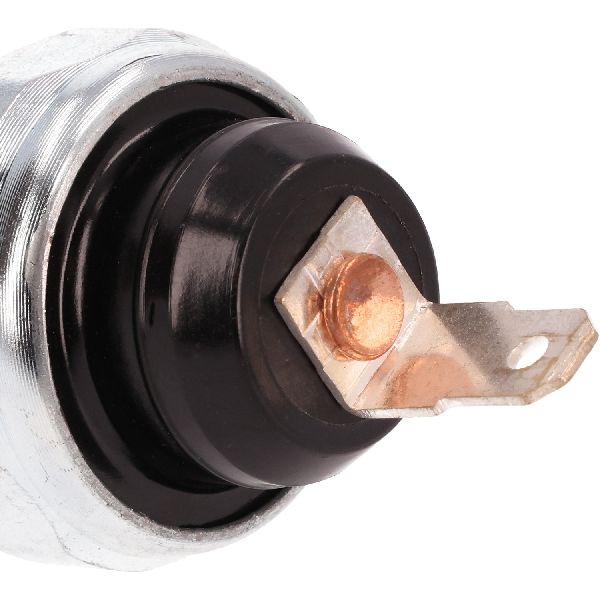
The oil pressure gauge is a critical monitor for the health of your Corvette's engine. In the 1973-1983 C3 models, issues with the gauge are common and often point to a failure of the oil pressure sending unit, not the engine itself. These sending units are known to fail over time, leading to incorrect readings that can be alarming. Before you worry about major engine problems, understanding how this simple part works and fails is the first step in diagnosis.
Symptoms of a Failing Oil Pressure Sending Unit
A bad oil pressure sender can cause several distinct symptoms on your dashboard gauge. Because these cars pre-date modern computer systems, there are no trouble codes to help. You must rely on the gauge's behavior.
- Gauge Pegged High: The most common failure symptom is the gauge needle swinging to its maximum reading and staying there. This is typically 🎬 Watch: Troubleshooting a pegged oil pressure gauge caused by an internal failure in the sender or a break in the wire connecting to it.
- Gauge Reads Zero: The needle shows no oil pressure, even when the engine is running. This is the most serious symptom, as it could indicate a failed sender, a wiring short, or a genuine and critical loss of oil pressure.
- Erratic or Bouncing Needle: The gauge needle jumps around wildly. This is often caused by a loose electrical connector or a frayed wire at the sending unit.
- Gauge Stuck at One Reading: The gauge shows a constant pressure that doesn't change with engine RPM. This points to a sender that is no longer able to vary its resistance correctly.
- Oil Leak: The body of the sending unit itself can crack or the seal can fail, causing an oil leak from its location on the engine block.
Warning: Do Not Ignore a Zero Reading
If your gauge reads zero, do not continue to run the engine. While it could be a simple sensor failure, it could also be a catastrophic loss of oil pressure. It is critical to stop the engine and verify the actual oil pressure with a mechanical test gauge before assuming the sender is the only problem.
Choosing the Right Aftermarket Sending Unit
For a vintage vehicle like the C3 Corvette, new OEM parts are scarce. The aftermarket is the primary source for these sending units. Quality can vary, but several reputable brands are available.
| Brand Tier | Brands | Quality & Performance Assessment |
|---|---|---|
| Trusted Aftermarket | Standard Ignition (SMP) | Standard Motor Products is a long-established brand with a strong reputation among mechanics and Corvette owners for producing reliable electronic components that meet or exceed OE specifications. Their parts undergo extensive testing, and they are a trusted choice for a durable replacement. |
| Reliable Alternative | Rostra Powertrain | Rostra is a known OE manufacturer for many electronic parts, specializing in transmission components and sensors. While less discussed for oil pressure senders specifically, their overall reputation for quality electronics makes them a solid choice. |
| Budget-Friendly | Global Parts | This brand falls into the category of a general parts supplier. Reviews are mixed and often refer to different companies with similar names. These parts may be a cost-effective solution, but may not have the same level of documented quality control as more specialized brands. |
Pro Tip: Mechanical vs. Electrical Gauge
Before ordering, confirm what type of gauge your Corvette has. Some early C3 models (around 1973) used a mechanical gauge, which has a physical oil line running from the engine to the dash. Later models use the electrical system described here. If you have a physical tube connected to your gauge, you do not need an electrical sending unit.
Frequently Asked Questions (FAQ)
Why did my gauge peg to max pressure after I started the car?
This is the classic sign of a failed sending unit or an open circuit. The gauge is designed to go to its maximum reading when it receives no resistance signal from the sender. The first step is to check the wire and connector at the sender. If they are secure, the sender itself has likely failed and needs replacement.
Is it hard to replace the oil pressure sender myself?
The replacement itself is easy, but access can be difficult. The sender is often located at the back of the engine block near the distributor. On some Corvettes, you may need to remove the distributor cap for clearance. It is generally considered a DIY-friendly job for those comfortable working in tight spaces.
🎬 Watch: Step-by-step Chevy oil pressure sensor installationWhere is the oil pressure sender located on my Corvette?
The most common location on the small-block Chevy engine is at the top rear of the engine block, just behind the intake manifold and near the distributor. Another possible location is on the driver's side of the block, above the oil filter. Check both locations on your engine.
🎬 See this guide on Corvette oil pressure switch locationsDo I need a special tool to replace it?
A special oil pressure switch socket is recommended. It is a deep socket with a cutout for the electrical connector. However, some owners have successfully used a standard deep well socket or a wrench (9/16" is commonly mentioned) depending on access.
Can a bad oil pressure sender cause my engine to run poorly?
On its own, a faulty gauge sending unit will not affect engine performance. However, some GM vehicles of this era used a separate oil pressure *switch* as a safety backup for the electric fuel pump. If that switch fails, it can cause starting or stalling issues. It is important to correctly identify which part has failed.
Helpful Videos
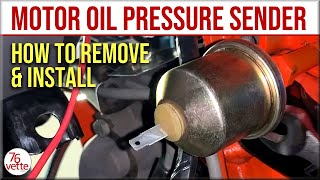
Technical Specifications
The sending unit for the gauge operates on a 0-90 Ohm resistance scale, where 0 Ohms corresponds to zero pressure and 90 Ohms corresponds to maximum pressure on the gauge.
We Have This Part in Stock


The information in this article is provided for general reference and educational purposes only. Vehicle specifications, procedures, and part compatibility can vary by production date, trim level, and region. Always consult your vehicle's factory service manual and verify part numbers before purchasing or performing repairs. Safety-critical components such as airbags, seat belts, and braking systems should be installed by a qualified professional.
- 🎬 Helpful Videos
- 🛍️ Shop This Part
- Is Your C3 Corvette's Oil Pressure Gauge Lying?
- Symptoms of a Failing Oil Pressure Sending Unit
- Warning: Do Not Ignore a Zero Reading
- Choosing the Right Aftermarket Sending Unit
- Pro Tip: Mechanical vs. Electrical Gauge
- Frequently Asked Questions (FAQ)
- 🎟️ Get 5% Off