

1973-1983 Ford F-100 Speedometer Cable: A Complete Guide for Owners
If your speedometer needle is bouncing, squealing, or dead, this guide will help you find the right replacement cable for your classic Ford truck.
- Common failure symptoms are a bouncing needle, squealing noises from the dash, or a completely dead speedometer.
- Aftermarket cables are the only option; measure your old cable's length before ordering a fixed-length replacement from brands like ATP or Pioneer.
- For a guaranteed fit and higher quality, consider a 'cut-to-fit' kit from a premium brand like Lokar, though it is more expensive.
- Replacement is a straightforward DIY job; ensure the new cable is routed with smooth, gentle curves to prevent binding.
Is Your F-100 Speedometer Cable Failing?
For a truck as old as a 1973-1983 F-100, the speedometer cable is a common wear item. The original grease inside the housing dries up, the cable starts to bind, and problems appear. Because it's a mechanical part, the symptoms are usually obvious and directly related to its function.
Common Failure Symptoms
- Bouncing Speedometer Needle: The most common symptom. As the cable binds and releases inside the housing, it sends jerky movements to the speedometer, causing the needle to jump around erratically, especially at higher speeds.
- Squealing or Whirring Noise: A dry, binding cable can make a squealing or grinding noise that seems to come from behind the dashboard or within the steering column area. This noise may change with vehicle speed.
- No Speed Reading: If the inner cable breaks, usually from age and binding, the speedometer will stop working entirely. The odometer will also stop counting miles.
A Note on OEM vs. Aftermarket
New Original Equipment Manufacturer (OEM) Ford speedometer cables for this generation of truck are virtually impossible to find. The market is served entirely by aftermarket manufacturers. While original cables were often built heavier, a quality aftermarket cable will perform correctly if installed properly. The biggest challenge with aftermarket cables is ensuring you buy the correct length for your specific truck configuration.
Choosing the Right Aftermarket Speedometer Cable
There are several aftermarket brands available, which can be grouped into two main tiers: standard replacements and premium/custom options.
Standard Replacement Brands (ATP, Pioneer Cable)
These brands produce direct-fit replacement cables that aim to match the original's function. They are affordable and widely available. The main challenge is ordering the correct part number, as these trucks were built with many different transmission, 2WD/4WD, and cruise control configurations, all of which could affect the required cable length. Always double-check the length of your old cable before ordering a replacement. Common lengths range from 76 to over 100 inches.
Premium / Custom-Fit Brands (Lokar)
Brands like Lokar offer a high-quality, premium solution. These are often "cut-to-fit" kits, which eliminates the guesswork of finding the exact length. You receive a long cable and housing that you trim to the perfect size for your truck. They feature upgraded materials like stainless steel housings and billet aluminum ends, ensuring smooth operation and long life. While significantly more expensive, a cut-to-fit kit is a great option for modified trucks or for owners who want a guaranteed fit and premium quality.
| Brand Tier | Price Range (Part Only) | Notes |
|---|---|---|
| Standard (ATP, Pioneer) | $15 - $30 | Fixed length. Verify your required length before purchasing. |
| Premium (Lokar) | $100 - $140 | Cut-to-fit for custom length. Higher quality materials. |
Pro Tip: Lubricate Before You Install
Many experienced mechanics and truck owners recommend lubricating a new speedometer cable before installation, even if it comes pre-lubed. Pull the inner cable out of the housing, apply a light coat of white lithium grease or a specific graphite cable lubricant, and slide it back in. This ensures the smoothest possible operation and can prevent premature binding and failure.
Frequently Asked Questions (FAQ)
How do I know what length speedometer cable to buy?
The most reliable method is to remove your old cable and measure the housing from end to end. Ford used many different lengths depending on the year, transmission (manual vs. automatic), drivetrain (2WD vs. 4WD), and presence of cruise control. If you can't measure the old one, forum posts and supplier catalogs can provide estimates, but be aware that ordering the wrong fixed-length cable is a common mistake. A cut-to-fit kit like those from Lokar avoids this issue entirely.
Can I just lubricate my old cable instead of replacing it?
Sometimes, yes. If the cable isn't broken or badly frayed, you can try removing the inner core, cleaning it and the inside of the housing, and re-lubricating it with white lithium grease or graphite lube. This can solve bouncing and noise issues and is a cheap first step. However, if the cable is kinked, frayed, or broken, replacement is the only option.
Is replacing the speedometer cable a difficult DIY job?
No, it is generally considered an easy to moderate DIY job. It requires basic hand tools. The main steps are removing some dash panels to access the back of the instrument cluster, unscrewing the cable from the cluster and the transmission, and carefully routing the new one. The most important part is to route the new cable with large, gentle bends to avoid kinking it, which would cause it to fail prematurely.
My new cable is longer than the original. Can I still use it?
Yes, as long as the extra length isn't excessive. You must route the cable in a large, wide loop to take up the slack. Make sure the loop is secured away from hot exhaust components and moving parts. Never create sharp bends or kinks in the cable, as this will cause it to bind and fail.
Technical Specifications
OEM Part Numbers: D3TZ17260C D4TZ17260D D4TZ17260E D9BZ17260A
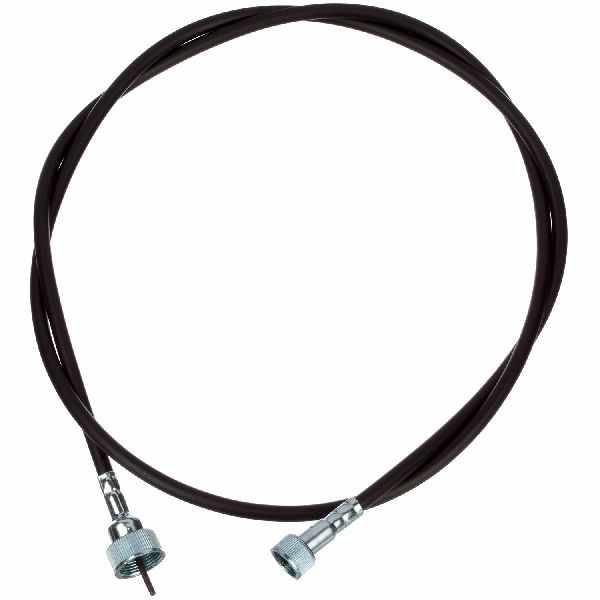
The cable is mechanical, driven by a gear in the transmission. It connects to the speedometer head with a 5/8"-18 threaded fitting. Length is the most critical specification and varies widely (76", 83", 95", 118" are common sizes) based on truck configuration (2WD/4WD, transmission type, cruise control).
We Have This Part in Stock


The information in this article is provided for general reference and educational purposes only. Vehicle specifications, procedures, and part compatibility can vary by production date, trim level, and region. Always consult your vehicle's factory service manual and verify part numbers before purchasing or performing repairs. Safety-critical components such as airbags, seat belts, and braking systems should be installed by a qualified professional.
- 🛍️ Shop This Part
- Is Your F-100 Speedometer Cable Failing?
- Common Failure Symptoms
- A Note on OEM vs. Aftermarket
- Choosing the Right Aftermarket Speedometer Cable
- Standard Replacement Brands (ATP, Pioneer Cable)
- Premium / Custom-Fit Brands (Lokar)
- Pro Tip: Lubricate Before You Install
- Frequently Asked Questions (FAQ)
- 🎟️ Get 5% Off