

Guide to the 1973-1986 Buick Century Ported Vacuum Switch
Learn about this small but critical part that affects your Century's engine performance, cooling, and emissions.
- A faulty ported vacuum switch can cause rough idling, poor performance, overheating in traffic, and failed emissions tests.
- Symptoms often mimic a simple vacuum hose leak, so inspect all related hoses for cracks before replacing the switch.
- Standard Motor Products (SMP) is a reliable aftermarket brand; avoid their lower-quality 'T-Series' line.
- When buying a replacement, match the color and number of ports on your original switch to ensure correct function.
Understanding the Ported Vacuum Switch on Your Buick Century
On carbureted engines like those in the 1973-1986 Buick Century, the ported vacuum switch (PVS) plays a key role in balancing performance, emissions, and engine temperature. It acts like a traffic cop for vacuum signals. 🎬 Watch this deep dive into how thermal vacuum switches function. For instance, when the engine gets too hot in traffic, the switch can change the vacuum supply to the distributor, advancing the ignition timing. This small adjustment increases the idle speed, which makes the water pump and fan run faster to cool the engine down. It also manages emissions components like the EGR valve, keeping them off when the engine is cold to prevent stalling and rough running.
Symptoms of a Failing Ported Vacuum Switch
When a PVS fails, it can cause problems that may seem unrelated. The plastic body can become brittle with age and crack, creating a vacuum leak. Internal failure can also mean it no longer switches vacuum sources correctly. Common symptoms include:
- Rough or High Idle: If the switch fails, it can cause an unstable idle. For example, if it incorrectly sends vacuum to the distributor at idle, the engine may idle too fast once warm.
- Engine Overheating at Idle: A primary function of some switches is to help cool the engine in traffic by adjusting timing. If it fails, your car may be more likely to overheat on hot days.
- Poor Engine Performance: Incorrect vacuum signals can lead to hesitation during acceleration and reduced power.
- Failed Emissions Test: Because the switch controls emissions devices, a failure can directly cause the vehicle to fail an emissions inspection.
- Hissing Sound: A cracked or broken switch creates a vacuum leak, which can often be heard as a hissing noise from the engine bay.
Is It a Bad Switch or Just a Bad Hose?
The symptoms of a failed PVS are very similar to a simple cracked vacuum hose. Before replacing the switch, carefully inspect all connected vacuum lines for brittleness, cracks, and loose connections. Replacing a worn-out hose is a much cheaper first step.
Choosing the Right Aftermarket Part
For a vehicle from this era, finding original OEM parts is nearly impossible. The aftermarket is your primary source. The main brand available for this part is Standard Motor Products (SMP), often sold in a red box.
Standard Ignition is a long-standing brand with a generally good reputation for quality, often considered equivalent to or even an improvement on original parts for older American vehicles. However, be aware of their different product lines. The main "Standard" line is well-regarded, but their budget "T-series" line (often in a green box) has reports of questionable quality. When shopping, stick with the primary Standard line for better reliability.
Pro Tip: These switches are often identified by the color of their plastic top and the number of vacuum ports. When ordering a new one, be sure to match the color and port count of your original switch to ensure it functions at the correct temperature and routes vacuum properly.
🎬 Learn more about identifying different types of thermal vacuum switches.Cost to Replace a Ported Vacuum Switch (1973-1986 Buick Century)
| Part Type | Estimated Cost |
|---|---|
| New Aftermarket Part (Standard Ignition) | $18.58 - $86.51 |
| Shop Labor | $50 - $100 |
Cost estimates are for parts and labor only and do not include taxes, shop fees, or diagnostic charges.
Frequently Asked Questions
Where is the ported vacuum switch located?
The PVS is almost always threaded directly into a coolant passage to read the engine's temperature. Look for it on the intake manifold or near the thermostat housing. It will have two or more small vacuum hoses connected to it.
Can I replace this part myself?
Yes, this is a very DIY-friendly job for most home mechanics. It typically involves letting the engine cool, partially draining the coolant to a level below the switch, unscrewing the old switch, applying thread sealant to the new one, and screwing it in. Then, reconnect the vacuum hoses, top off the coolant, and check for leaks.
What happens if I just bypass the ported vacuum switch?
Bypassing the switch is not recommended. Depending on how you route the hoses, you could cause the engine to run poorly when cold, lose the overheating protection feature, or cause a constant vacuum leak, leading to poor performance and high emissions.
🎬 See why bypassing these switches can negatively impact your engine.Are there any recalls for this part on my Buick Century?
Our search of the National Highway Traffic Safety Administration (NHTSA) database did not find any recalls or technical service bulletins (TSBs) specifically for the ported vacuum switch on the 1973-1986 Buick Century. Most recalls for these model years relate to other issues like seat belts or fuel filler hoses.
Helpful Videos
Technical Specifications
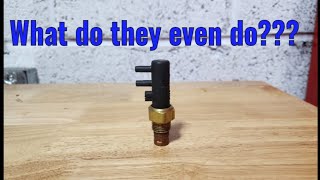
The key specifications are the number of vacuum ports (typically 2, 3, or more) and the color of the switch body, which indicates its operating temperature range.
We Have This Part in Stock


The information in this article is provided for general reference and educational purposes only. Vehicle specifications, procedures, and part compatibility can vary by production date, trim level, and region. Always consult your vehicle's factory service manual and verify part numbers before purchasing or performing repairs. Safety-critical components such as airbags, seat belts, and braking systems should be installed by a qualified professional.
- 🎬 Helpful Videos
- 🛍️ Shop This Part
- Understanding the Ported Vacuum Switch on Your Buick Century
- Symptoms of a Failing Ported Vacuum Switch
- Is It a Bad Switch or Just a Bad Hose?
- Choosing the Right Aftermarket Part
- Cost to Replace a Ported Vacuum Switch (1973-1986 Buick Century)
- Frequently Asked Questions
- 🎟️ Get 5% Off