

Chevrolet Corvette External Voltage Regulator: 1973-1986 Guide
Understand the critical role of the voltage regulator in your C3 Corvette's charging system.
- First, confirm your Corvette has an external regulator (common in 1973-1974 models) before purchasing.
- Symptoms of failure include pulsing lights, battery issues, and erratic gauge behavior.
- A modern solid-state aftermarket regulator from a brand like Standard Ignition is a reliable upgrade over the original mechanical part.
- Replacement of the external regulator is a simple, quick DIY job for most owners.
Is Your C3 Corvette's Electrical System Unstable?
A failing voltage regulator can cause a host of confusing electrical problems in your classic Corvette. Because it controls the power for the entire car, its failure can mimic other issues. Understanding the symptoms is the first step to a correct diagnosis.
Important: External vs. Internal Regulator
Before purchasing, you must identify what your Corvette has. From 1973 until sometime in 1974 or 1975, Corvettes used an external voltage regulator—a small box mounted separately in the engine bay. After that, GM switched to an alternator with an internal regulator. This part is ONLY for models with the external regulator. Check your engine bay; if you don't see a separate regulator box connected to the alternator wiring, your regulator is internal, and this part will not fit.
Symptoms of a Failing Voltage Regulator
When a voltage regulator starts to fail, it can either undercharge or overcharge the system, leading to distinct symptoms:
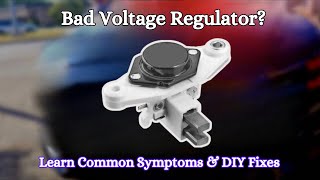
🎬 Watch: A visual guide to the top 6 failure symptoms- Flickering or Pulsing Lights: Headlights and dash lights may dim, flicker, or pulse, getting brighter as you rev the engine. This is a classic sign of unstable voltage.
- Battery Problems: A weak regulator can fail to charge the battery, leaving you with a car that won't start. Conversely, a regulator stuck in a charging state can overcharge the battery, causing it to overheat, swell, or leak acid, which has a distinct rotten egg smell.
- Erratic Gauge Behavior: The voltmeter on your dash may swing wildly, or other gauges might act unpredictably.
- Poor Engine Performance: Voltage fluctuations can confuse electronic ignition components, potentially causing misfires, rough idling, or stalling.
Choosing the Right Aftermarket Regulator
For these classic Corvettes, the original regulators were mechanical. Modern aftermarket replacements, like those from Standard Ignition, are typically solid-state electronic units.
Pro Tip: A new solid-state regulator is considered an upgrade over the original mechanical style. It provides more accurate and consistent voltage control, has no moving parts to wear out, and is more resistant to vibration and heat, leading to a longer, more reliable service life.
🎬 See why upgrading to a solid-state regulator is a smart moveStandard Ignition (Standard Motor Products) is a long-standing manufacturer known for producing quality aftermarket components that meet or exceed original specifications. For a part as critical as the voltage regulator, their electronic replacements offer a dependable solution to keep your Corvette's electrical system stable.
| Part Type | Price Range | Notes |
|---|---|---|
| New Aftermarket (Standard Ignition) | $35.65 | Recommended. Modern solid-state design offers improved reliability. |
| New OEM (ACDelco) | N/A | New old stock (NOS) may be found at a premium but is likely aged. |
| Shop Labor | $50 - $100 | Typically less than one hour of labor. |
Frequently Asked Questions (FAQ)
How do I know if I have an external or internal regulator?
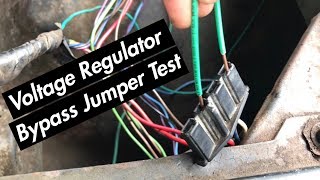
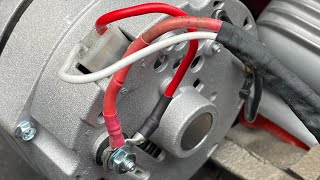
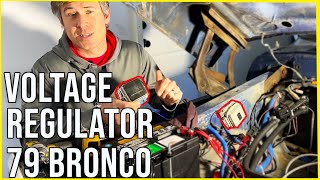
Look in your engine bay, typically on the driver's side fender well or firewall. If you have an external regulator, you will see a small, roughly square or rectangular box with a wiring harness plugged into it. 🎬 Learn how to test an external regulator with this walkthrough If you cannot find this component, your regulator is likely inside the alternator, common on 1975 and newer models.
Is a solid-state regulator really better than the original?
Yes. The original mechanical regulators use contact points that can wear, stick, or fall out of adjustment. A modern solid-state electronic regulator has no moving parts, offering much more precise voltage control and significantly better long-term reliability.
Can a bad voltage regulator damage my battery or other parts?
Absolutely. An overcharging regulator can boil the acid in your battery, permanently damaging it and potentially harming other electronics with high voltage. An undercharging regulator will leave you stranded with a dead battery. Prompt replacement is crucial.
Why are my headlights pulsing?
Pulsing or flickering lights are a tell-tale sign of a failing voltage regulator. The regulator is unable to provide a steady voltage, and the lights reflect this fluctuation, often changing intensity with engine RPM.
Helpful Videos
Technical Specifications
OEM Part Numbers: 1119515
This is an external, solid-state electronic voltage regulator designed to replace the original mechanical unit on early C3 Corvettes.
We Have This Part in Stock


The information in this article is provided for general reference and educational purposes only. Vehicle specifications, procedures, and part compatibility can vary by production date, trim level, and region. Always consult your vehicle's factory service manual and verify part numbers before purchasing or performing repairs. Safety-critical components such as airbags, seat belts, and braking systems should be installed by a qualified professional.