

Choosing the Right Spark Plug Wire Set for Your 1975-1979 Dodge D100
Get your classic Dodge truck's ignition system in top shape by selecting the correct new aftermarket spark plug wires.
- Verify your engine size (225, 318, 360, etc.) before ordering to get the correct wire set.
- Choose between standard replacement wires (NGK, Denso) for stock use or performance wires (MSD, Taylor, Accel) for modified engines or heavy use.
- It is highly recommended to replace the distributor cap and rotor at the same time as the wires for a complete tune-up.
- Replace wires one at a time to avoid mixing up the engine's firing order, which will cause it to run poorly.
Signs of Failing Spark Plug Wires
The ignition system on your classic D100 is straightforward, and worn-out spark plug wires will cause noticeable problems. Unlike modern vehicles, you won't get a "Check Engine" light, so you have to pay attention to how the truck runs. Common symptoms include a rough idle, engine hesitation or stumbling during acceleration, difficulty starting, and a general lack of power. You might also notice a decrease in fuel economy. In some cases, you can see physical damage like cracks, melting, or burn marks on the wire insulation or boots.
Choosing the Right Aftermarket Spark Plug Wire Set
Original Equipment (OEM) spark plug wire sets for a 1975-1979 D100 are generally no longer available. The good news is that the aftermarket offers a wide range of options, from standard replacements to high-performance upgrades.
Standard Replacement Wires
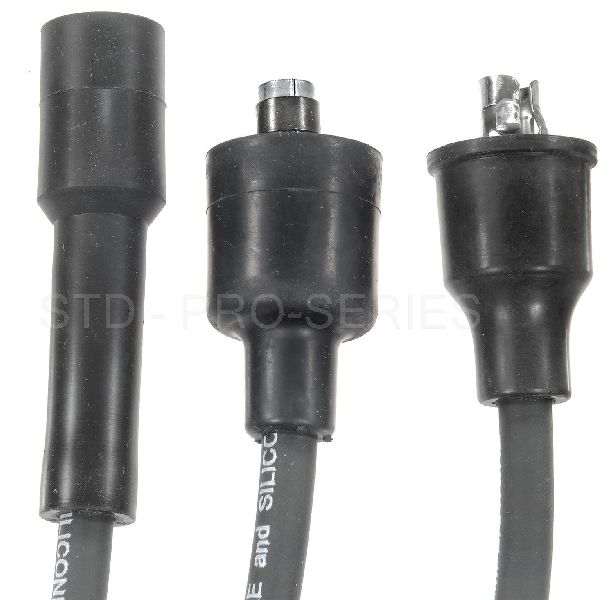
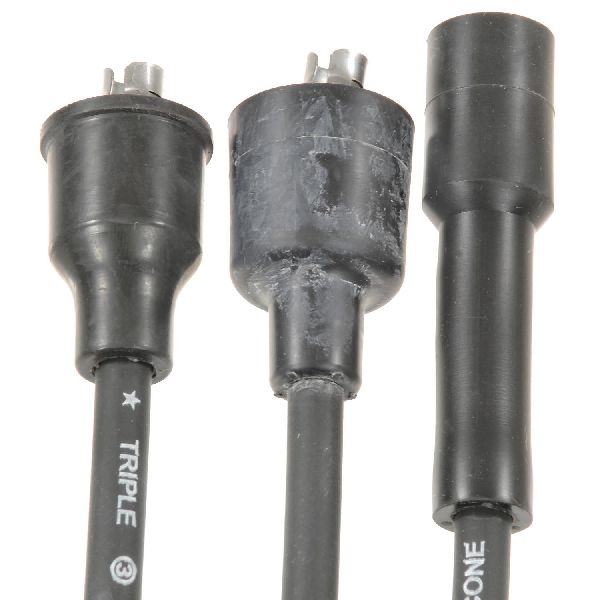
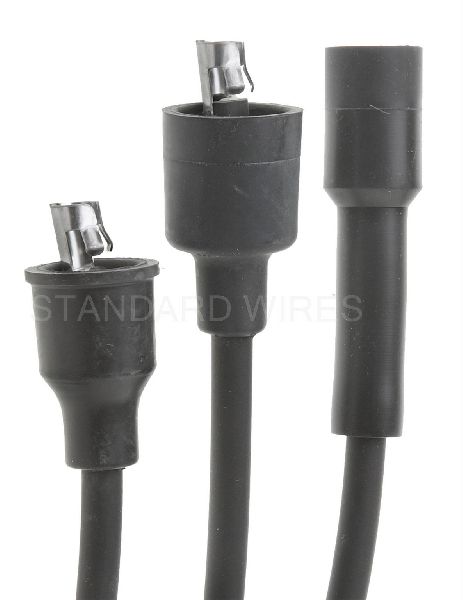
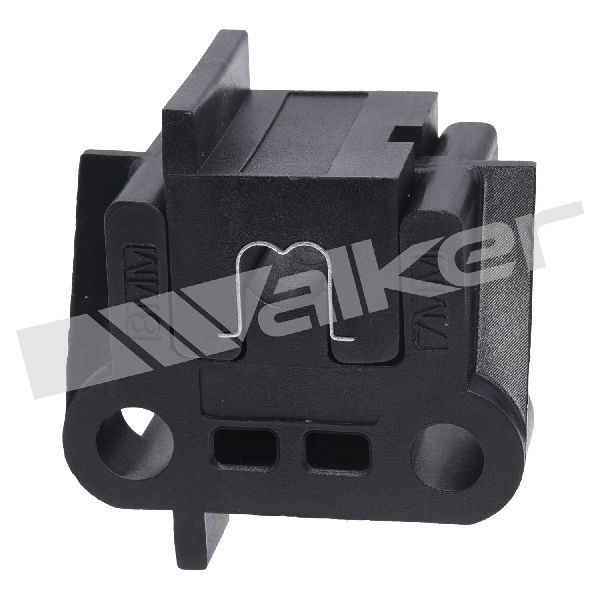
For a stock D100 that's used as a daily driver or for light work, a standard replacement set is a great choice. These are designed to meet or exceed the original factory specifications. They typically feature a 7mm or 8mm silicone jacket to protect against engine heat and chemicals. Brands like NGK, Denso, Standard Wires, and Walker Products offer reliable, direct-fit sets that provide excellent value and performance for stock engines.
Performance & Heavy-Duty Wires
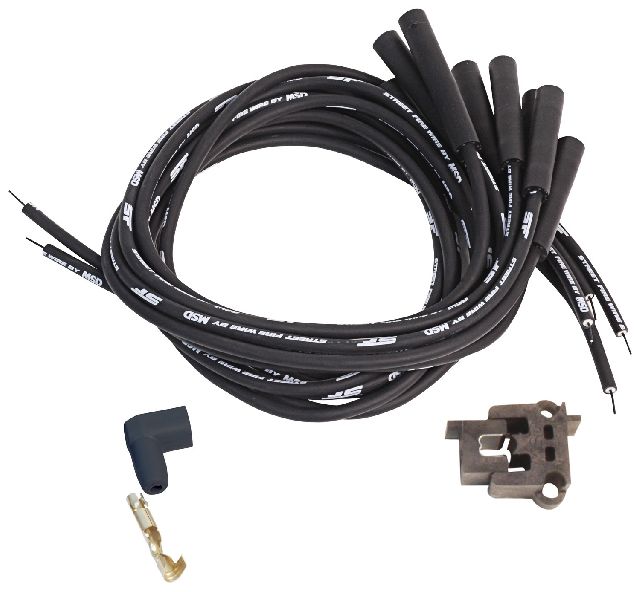
If your D100 has a modified engine, sees heavy-duty use like towing, or if you simply want an upgrade in durability and spark energy, a performance wire set is a good investment. These wires often have thicker 8.5mm or larger silicone jackets, lower electrical resistance, and superior heat protection. Lower resistance means more electrical energy reaches the spark plug, which can lead to a stronger spark. Brands like MSD, Accel, Taylor Cable, and Granatelli are well-known in the performance world. They often feature spiral-wound cores that provide low resistance while suppressing the radio frequency interference (RFI) that can cause static in your radio. Some owners prefer cut-to-fit universal sets from these brands to create a perfect, custom-routed installation.
Aftermarket Spark Plug Wire Cost
| Quality Tier | Price Range | Best For |
|---|---|---|
| Standard Replacement (NGK, Denso, Standard) |
$23 - $60 | Stock engines, daily driving |
| Performance/Heavy-Duty (MSD, Accel, Taylor) |
$50 - $241 | Modified engines, towing, high-heat conditions |
Pro Tip: Check Your Engine First!
The 1975-1979 D100 was available with several engines, including the 225 Slant 6, 318 V8, 360 V8, and even the 440 V8. Each engine requires a different spark plug wire set with specific lengths and number of wires. Always confirm your truck's engine size before ordering to ensure you get the correct part.
Known Issues, Recalls, or TSBs
Due to the age of the 1975-1979 Dodge D100, there are no active recalls or recent Technical Service Bulletins (TSBs) from the NHTSA related to spark plug wires. Any issues you encounter will almost certainly be from normal wear and tear over decades of use. Some later model Dodge trucks had TSBs issued for wire routing to prevent cross-firing, which can cause misfires. While not specific to the 1975-1979 models, it's always good practice to route wires neatly and keep them separated to prevent electrical interference.
Warning: Firing Order is Crucial
When replacing your wires, change them one at a time to avoid mixing up the firing order. Connecting a wire to the wrong cylinder will cause a persistent misfire and poor running. If you do remove all the wires at once, be sure to consult a service manual for the correct firing order and distributor cap connections for your specific engine.
Frequently Asked Questions (FAQ)
Do I really need performance wires for my stock engine?
No, it's not a requirement. A quality standard replacement set is perfectly adequate for a stock truck. However, performance wires offer better heat resistance and durability, which can be beneficial for any vehicle, especially an older one operating in hot climates or under load.
How often should I replace my spark plug wires?
There is no strict replacement interval. It's best to inspect them for cracks, brittleness, or damage whenever you change your spark plugs. If they are original or look worn, it's a good idea to replace them to ensure reliable ignition performance.
What's the difference between 7mm, 8mm, and 8.5mm wires?
The measurement refers to the outer diameter of the wire. A larger diameter generally means a thicker insulating jacket, which provides better protection against heat and voltage leaks. Performance wires are often thicker than standard replacement wires.
Should I replace my distributor cap and rotor at the same time?
Yes, it is highly recommended. The distributor cap and rotor are also key parts of the ignition system that wear out over time. Replacing the wires, cap, and rotor all at once is a complete ignition tune-up that ensures all components are in good condition for a strong, reliable spark.
Technical Specifications
Key specifications include the wire core material (e.g., spiral wound), outer jacket diameter (typically 7mm to 8.5mm+), boot material (silicone), and the angle of the spark plug and distributor boots (e.g., 90-degree or straight).
We Have This Part in Stock

The information in this article is provided for general reference and educational purposes only. Vehicle specifications, procedures, and part compatibility can vary by production date, trim level, and region. Always consult your vehicle's factory service manual and verify part numbers before purchasing or performing repairs. Safety-critical components such as airbags, seat belts, and braking systems should be installed by a qualified professional.
- 🛍️ Shop This Part
- Signs of Failing Spark Plug Wires
- Choosing the Right Aftermarket Spark Plug Wire Set
- Standard Replacement Wires
- Performance & Heavy-Duty Wires
- Aftermarket Spark Plug Wire Cost
- Pro Tip: Check Your Engine First!
- Known Issues, Recalls, or TSBs
- Warning: Firing Order is Crucial
- Frequently Asked Questions (FAQ)
- 🎟️ Get 5% Off