

Ford Granada Engine Coolant Thermostat Guide (1975-1982)
Keep your classic Granada's engine temperature in check with the right thermostat.
- A thermostat can fail either stuck open (engine runs cold) or stuck closed (engine overheats).
- For a stock Granada, choose a quality aftermarket brand like Motorcraft or Stant with the factory temperature rating (typically 190-195°F).
- Replacement is a simple DIY job for most owners, requiring basic hand tools and taking less than an hour.
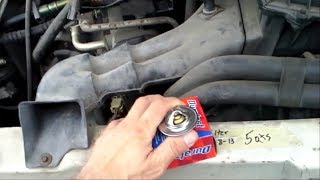
- Always test a new thermostat in hot water before installation and use a new gasket to prevent leaks.
Is Your Granada's Thermostat Failing?
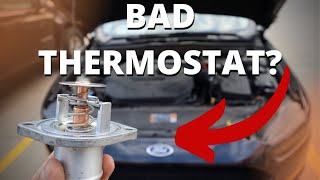
A thermostat is a simple part, but it can cause major problems when it fails. Failures happen in two ways: stuck open or stuck closed. The symptoms are usually very clear and point directly to the thermostat as the culprit.
🎬 Watch: A breakdown of common bad thermostat symptoms.Common Symptoms of a Bad Thermostat:
- Engine Overheating: If the thermostat is stuck closed, it won't allow coolant to get to the radiator. Your temperature gauge will climb into the red, and you might see steam from under the hood. This is a serious condition that can cause severe engine damage.
- Engine Runs Too Cold: If the thermostat is stuck open, coolant will constantly circulate through the radiator. The engine will take a very long time to warm up, or may never reach its proper operating temperature on the gauge. This can lead to poor fuel economy and increased engine wear over time.
- Temperature Gauge Fluctuates: You might see the temperature gauge swing from cool to hot and back again. This can happen when a thermostat is sticking, struggling to open and close correctly.
- Poor Heater Performance: If your engine isn't getting hot enough because the thermostat is stuck open, the coolant flowing to your heater core won't be hot either. This will result in lukewarm or cold air blowing from your vents, even when the heat is on full.
Choosing the Right Aftermarket Thermostat
For a vehicle like the 1975-1982 Ford Granada, aftermarket parts are the most common and accessible option. Original Ford parts are rare, but Ford's own brand, Motorcraft, still produces service parts that are considered OEM-quality. The quality between different aftermarket brands can vary.
Aftermarket Brand Quality Tiers
| Tier | Brands | Assessment |
|---|---|---|
| OEM-Equivalent / Recommended | Motorcraft, Stant | Motorcraft is Ford's official parts brand and is the closest you'll get to the original part. Stant is a long-standing, reputable brand in cooling systems often considered to be of OEM quality. |
| Good Quality Aftermarket | Motorad | A widely available and generally trusted aftermarket brand. Forum users have reported good experiences, sometimes even after OEM parts have failed. Motorad is also known to manufacture thermostats for other brands. |
| Performance / Specialty | Edelbrock, Mr Gasket, Mishimoto | These brands are geared towards modified or performance engines. They may offer different temperature ratings for specific tuning needs. While high quality, they are likely unnecessary for a stock Granada. Mishimoto is a respected brand, though more common in the modern performance scene. |
| Use With Caution | Gates | Reviews for Gates thermostats are mixed. While they are a major brand in belts and hoses, some users have reported their thermostats failing in the dangerous 'stuck closed' position. |
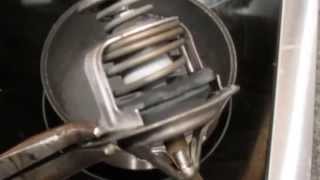
Pro Tip: No matter which brand you buy, it's a good practice to test the new thermostat before you install it. Suspend the new thermostat in a pot of water with a thermometer and heat it on the stove. Watch to see that it opens at its rated temperature (e.g., 195°F) and closes as it cools. This simple test can save you from having to do the job twice.
🎬 See how to test your new thermostat in hot water.Known Issues, Recalls, or TSBs
There are no active recalls or widespread Technical Service Bulletins (TSBs) from the NHTSA or Ford related to the engine coolant thermostat for the 1975-1982 Ford Granada. Any issues you encounter are likely due to the age of the components rather than a specific manufacturing defect.
Frequently Asked Questions (FAQ)
What temperature thermostat should I use for my Granada?
For a stock Ford Granada with either the inline-6 or V8 engine, a thermostat rated for 190°F or 195°F is typically the standard factory specification. Using a cooler thermostat (like a 180°F) is generally not recommended on a stock, computer-free engine unless you are trying to solve a specific vapor lock issue in a hot climate. Always check the specific recommendation for your engine.
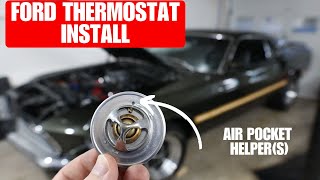
🎬 Watch: Step-by-step guide to replacing a Ford V8 thermostat.Do I need to buy a new gasket?
Yes. Never reuse the old thermostat housing gasket. Most new thermostats come with a new gasket in the box. If not, you must purchase one separately. A new gasket is critical for preventing coolant leaks.
What is the small 'jiggle pin' or hole on the thermostat for?
That small pin or hole is a bleeder valve. It allows trapped air in the cooling system to pass through the thermostat, which helps when you are refilling the system with coolant. When installing the thermostat, this pin should always be facing up, in the 12 o'clock position, to be most effective.
Why is my car still overheating after replacing the thermostat?
If you've installed a new, tested thermostat and the engine still overheats, the problem lies elsewhere. Common causes include trapped air in the system that needs to be bled out, a clogged radiator, a failing water pump, a collapsed radiator hose, or a bad fan clutch.
Helpful Videos


Technical Specifications
OEM Part Numbers: D8NN8575AA RT-1254
The most important specification is the temperature rating, which is stamped on the part itself. Common ratings for the Ford Granada are 180°F, 190°F, and 195°F. The correct choice depends on the original factory specification for your specific engine and year. The thermostat is a simple, non-electronic wax pellet type.
We Have This Part in Stock


The information in this article is provided for general reference and educational purposes only. Vehicle specifications, procedures, and part compatibility can vary by production date, trim level, and region. Always consult your vehicle's factory service manual and verify part numbers before purchasing or performing repairs. Safety-critical components such as airbags, seat belts, and braking systems should be installed by a qualified professional.