

Jaguar XJS V12 Engine Oil Pressure Switch & Sender Guide (1976-1983)
Understanding the common quirks of your XJS oil pressure gauge and how to fix it right.
- A low gauge reading at hot idle is very common and usually caused by a faulty sender, not a bad engine.
- Always check the instrument cluster ground connection before replacing the sender, as it can cause similar symptoms.
- When replacing the sender, you must support the mounting pedestal with a second wrench to prevent breaking the oil feed pipe.
- Standard Ignition is a reputable aftermarket brand for this part.
Understanding Your XJS Oil Pressure Gauge
If you own a 1976-1983 Jaguar XJS, you have likely noticed your oil pressure gauge behave strangely. It is very common for the gauge to read very low, near zero, at a hot idle. While alarming, this is often not a sign of a serious engine problem. In most cases, the issue is a failing oil pressure sender, not a lack of oil pressure. These senders are known to wear out, leak internally, or lose their accuracy over time. Before replacing any parts, it's a good idea to check the simple things first.
Pro Tip: Check Your Grounds
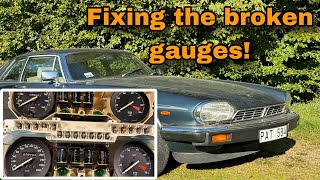
Inaccurate or flickering gauge readings on an XJS can sometimes be caused by a poor electrical ground at the instrument cluster, not a bad sender. Before buying new parts, consider removing the instrument cluster to clean the electrical contacts on the printed circuit board and add a redundant ground wire. 🎬 Watch: A step-by-step guide to fixing your XJS instrument cluster. This simple fix solves the problem for many owners.
Symptoms of a Failing Oil Pressure Sender
A bad oil pressure sender has very distinct symptoms. The most common is an oil pressure gauge that drops to zero or near-zero when the engine is fully warm and idling in traffic. The pressure reading will typically rise again as you accelerate. Other signs include a gauge needle that flickers erratically or provides readings that you know are incorrect when tested against a mechanical gauge. You may also find oil leaking from the sender itself, which is located in the 'V' of the engine.
Choosing the Right Aftermarket Part
When it comes to aftermarket parts for a classic Jaguar, quality can vary. While some brands have a poor reputation for accuracy, Standard Ignition (also known as Standard Motor Products or SMP) is a well-regarded manufacturer. They have been making quality components for a long time and are often considered a reliable alternative to OEM parts. For a critical component like an oil pressure sender, choosing a trusted brand like Standard Ignition helps ensure the gauge will provide a more accurate reading.
| Part | Brand Tier | Our Price | Notes |
|---|---|---|---|
| Engine Oil Pressure Switch/Sender | Standard Aftermarket | $12.56 | This price typically reflects the simple warning light switch. The more complex gauge sender is usually more expensive. |
Installation Tips
Replacing the oil pressure sender on the V12 engine is a challenging job due to its location. It is buried at the back of the engine valley, behind the throttle pedestal. Access is tight, and the easiest method involves removing the four bolts that hold the throttle pedestal in place. This gives you much better access. You will likely need a crow's foot wrench to remove the old sender.
Warning: Avoid Damage During Removal
The sender is mounted on a pedestal that connects to a small oil pipe. When you are loosening or tightening the sender, you MUST use a second wrench to hold the pedestal base steady. If you only apply force to the sender, you risk breaking the pedestal or the oil pipe, which creates a much more serious and expensive repair.
Frequently Asked Questions
Is it safe to drive if my oil pressure gauge reads zero at idle?
If the gauge reads zero but the red oil pressure warning light is NOT on and the engine is not making any unusual noises (like knocking or ticking), it is likely a faulty sender. Always verify your oil level on the dipstick first. If the level is good, you can likely drive the car, but you should get the sender tested and replaced to ensure you are not ignoring a real problem.
What is the difference between an oil pressure switch and a sender?
A sender (or transducer) provides a variable signal to run the needle on your dashboard gauge, showing the full range of pressure. A switch is a simple on/off device that only activates the warning light when pressure drops below a fixed, critical point. Your XJS has both.
Why did Jaguar later use 'dummy' gauges?
In later model years, Jaguar switched to a sender that acts more like a switch. It keeps the needle at a steady mid-range position as long as there is minimal oil pressure. This was done because many customers in the US were concerned by the naturally low pressure readings at idle and were bringing their cars in for service unnecessarily.
Could the gauge itself be broken?
It's possible, but less common than a sender failure. An easy way to test the gauge is to disconnect the wire from the sender and ground it to the engine block. With the ignition on, the gauge needle should swing to its maximum reading. If it does, the gauge and wiring are likely good, and the problem is the sender.
🎬 See how to troubleshoot electrical issues and oil pressure readings.Helpful Videos
Technical Specifications
OEM Part Numbers: C46272
The oil pressure sender for the gauge is distinct from the oil pressure switch for the warning light. The sender is located in the engine 'V' behind the throttle pedestal on the V12 engine.
We Have This Part in Stock


The information in this article is provided for general reference and educational purposes only. Vehicle specifications, procedures, and part compatibility can vary by production date, trim level, and region. Always consult your vehicle's factory service manual and verify part numbers before purchasing or performing repairs. Safety-critical components such as airbags, seat belts, and braking systems should be installed by a qualified professional.