

Choosing Spark Plug Wires for a 1976-1986 Chevrolet Blazer
Get your classic K5 Blazer's V8 running smoothly by picking the right spark plug wire set.
- For a stock Blazer, a standard replacement set from a brand like Walker Products is a reliable and cost-effective choice.
- For modified engines or for maximum durability and heat resistance, upgrade to a performance set from MSD or Taylor Cable.
- Always replace spark plug wires one at a time to avoid mixing up the engine's firing order.
- Visually inspect wires for cracks, burns, or physical damage during oil changes; run the engine in the dark to check for arcing if you suspect a problem.
Signs of Failing Spark Plug Wires
When spark plug wires start to fail on your Blazer, the symptoms are usually noticeable. Because these wires handle thousands of volts, their insulation can break down over time from heat and oil exposure, leading to performance problems.
- Rough Idle: The engine may shake or vibrate more than usual when you're stopped, because one or more cylinders isn't firing consistently.
- Engine Misfires or Hesitation: You might feel a stumble or a lack of power when you accelerate. This happens when a wire fails to deliver a consistent spark under load.
- Trouble Starting: Weak or inconsistent spark can make the engine harder to start, especially in damp weather.
- Worse Fuel Economy: If your engine isn't burning fuel efficiently due to misfires, you'll notice you're filling up the tank more often.
Pro Tip: A classic way to check for bad wires on these older trucks is to start the engine in a completely dark garage. Look for any faint blue sparks jumping from the wires to metal parts of the engine. Any visible spark means the wire's insulation has failed and the set needs to be replaced.
Choosing the Right Aftermarket Spark Plug Wires
For a vehicle of this age, original OEM wires are no longer available. However, modern aftermarket wires often use superior materials compared to what was available in the 1970s and 80s. The main choice is between standard replacement wires and performance wires.
Standard Replacement (Good)
For a stock 1976-1986 Blazer that is used as a daily driver or for light work, a quality standard replacement set is a perfectly good choice. Brands like Walker Products make wire sets that are designed to meet or exceed the original factory specifications. They provide a reliable spark and have the correct fit without the extra cost of high-performance brands. These are a dependable, budget-friendly option for keeping your engine running as it should.
Performance & Heavy-Duty (Better/Best)
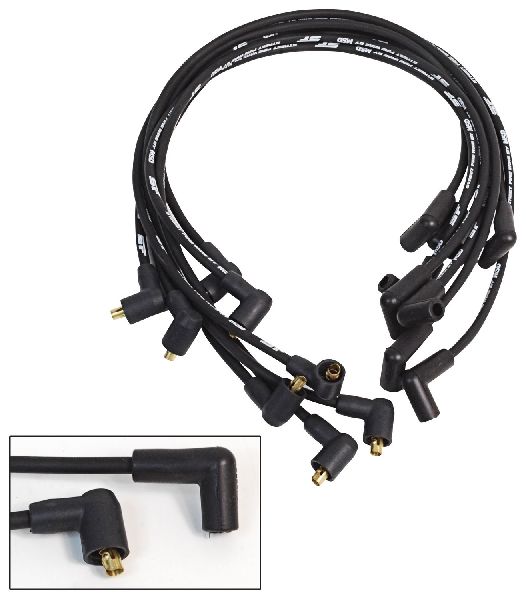
If your Blazer has a modified engine, aftermarket headers, or if you simply want the most durable option, a performance wire set is the best choice. Brands like MSD and Taylor Cable are popular choices among classic truck owners.
- MSD: Often considered a top choice, MSD's 8.5mm Super Conductor wires are praised for their durability, excellent heat resistance, and secure-fitting boots. They are a great option if you have headers that produce extra heat near the spark plugs or if you frequently work on your engine, as they hold up well to being removed and reinstalled.
- Taylor Cable: Taylor is another well-regarded performance brand, sometimes seen as a more budget-friendly alternative to MSD. They offer wires with thick silicone jackets that provide great heat protection and a strong spark. While most users have good experiences, some have noted that the connectors may not feel as durable as MSD's after multiple uses.
A Note on Thicker Wires: Performance wires are often thicker (e.g., 8.5mm vs. a stock 7mm or 8mm). While this provides better insulation, you may need to slightly modify or replace the original wire looms (the small clips that hold the wires in place) for a clean fit.
Replacement Cost
Replacing the spark plug wire set is a common maintenance job. The cost is reasonable, and it's a task many owners can do themselves.
| Part Type | Price Range |
|---|---|
| New Aftermarket Spark Plug Wire Set | $63.83 - $106.69 |
| Shop Labor | $100 - $150 |
Frequently Asked Questions (FAQ)
Do I really need performance wires for my stock Blazer?
No, you don't. A quality standard replacement set will work perfectly fine for a stock engine. However, many owners choose performance wires for their superior durability and heat resistance, which can lead to a longer service life, especially in a hot engine bay.
What does the 'mm' rating (e.g., 8.5mm) on wires mean?
The millimeter rating refers to the outside diameter of the wire. A thicker wire (like 8.5mm or 10mm) has more insulation than a thinner wire (like 7mm or 8mm). This extra insulation helps prevent voltage leaks and provides better protection from engine heat, but it does not inherently mean more power.
How often should I replace my spark plug wires?
There is no strict mileage interval. Wires should be replaced when they show signs of wear, such as cracks, melting, oil saturation, or when you notice performance symptoms like misfiring. It's a good idea to inspect them visually during every tune-up or oil change.
Can I replace just one bad wire?
While you can, it's not recommended. Spark plug wires degrade over time from heat and use. If one wire has failed, the others are likely not far behind. They are sold in sets and should always be replaced as a complete set to ensure consistent performance.
What is the most important part of installing new wires?
Replacing them one at a time is the most critical step. This ensures you don't mix up the firing order, which would cause the engine to run very poorly or not at all. Also, make sure each boot clicks securely onto the distributor cap and spark plug, and use the supplied dielectric grease inside the boots to prevent them from getting stuck.
Technical Specifications
Common aftermarket wire diameters are 8mm to 8.5mm. Look for sets with silicone jackets for high-temperature resistance and spiral wound cores for RFI (radio-frequency interference) suppression. Boot ends will be specific to the V8 engine with a distributor, often requiring a mix of straight and 90-degree boots.
We Have This Part in Stock

The information in this article is provided for general reference and educational purposes only. Vehicle specifications, procedures, and part compatibility can vary by production date, trim level, and region. Always consult your vehicle's factory service manual and verify part numbers before purchasing or performing repairs. Safety-critical components such as airbags, seat belts, and braking systems should be installed by a qualified professional.