

Jeep CJ7 Engine Coolant Temperature Sensor & Sender Guide (1976-1986)
Is your temperature gauge acting up? Here’s what you need to know before replacing the coolant sensor in your CJ7.
- The sensor's main job is to operate the dashboard gauge; it typically does not affect engine performance on a CJ7.
- Symptoms are almost always gauge-related: no reading, a pegged reading, or an incorrect reading.
- Before replacing, verify the engine isn't actually overheating and check for bad grounds, a common CJ issue.
- Replacement is very easy for a DIYer; just be sure not to use thread sealant, which can block the ground connection.
Is Your Temp Gauge Lying? Understanding the CJ7 Sensor
The temperature gauge in a 1976-1986 Jeep CJ7 is a simple system, but a faulty reading can be stressful. More often than not, the issue lies with the engine coolant temperature sending unit, the wiring, or the gauge itself. Unlike modern vehicles, the sensor in your CJ7 typically only operates the gauge and does not provide data to an engine computer, although some later computer-controlled carbureted models may have a separate switch for that purpose. This guide focuses on the common, single-wire sending unit for the dashboard gauge.
Symptoms of a Failing Temperature Sender
When the temperature sender fails, it can cause confusing behavior on your dash. The most common signs include:
- Gauge Reads Cold: The gauge needle never moves from the lowest position, even when the engine is fully warmed up.
- Gauge Reads Hot: The needle quickly pegs to the maximum hot position, even on a cold engine.
- No Reading at All: The needle is completely dead and shows no signs of life.
- Erratic Readings: The needle jumps around unpredictably. 🎬 Watch this quick guide on testing a coolant temperature sensor.
Is it the Sender or is the Engine Overheating?
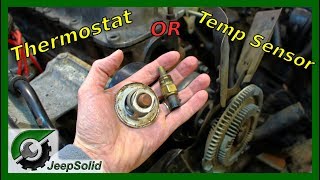
Before you replace the sensor, make sure your engine isn't actually overheating. A gauge reading hot could be accurate. Check for other signs of overheating like steam from the engine bay, the smell of hot coolant, or a boiling sound from the radiator. 🎬 See how to tell if it's the thermostat or sensor. A bad ground connection at the dashboard is also a common problem in CJs that can cause a false high temperature reading.
Choosing the Right Aftermarket Sensor for Your CJ7
For a vintage vehicle like the CJ7, you don't need to hunt down a rare, expensive OEM part. Quality aftermarket sensors are widely available and perform well, provided they have the correct resistance range to work with your factory gauge. Aftermarket brands for this part generally fall into a few tiers.
- Value Brands (Crown, Holstein): Crown Automotive is a very popular choice for Jeep replacement parts due to its low price and wide availability. For a simple part like a temp sender, it's often a perfectly fine choice. However, some user reviews mention parts being faulty out of the box, so quality control can be inconsistent. Holstein is another brand in this price range.
- Mid-Grade & Premium Brands (Standard Ignition, Four Seasons, NGK): Brands like Standard Motor Products (SMP) and Four Seasons have a long-standing reputation for producing reliable electronic components. They are often built to stricter standards with features like brass construction and corrosion-resistant terminals. While they cost more than value brands, they may offer better long-term reliability.
Pro Tip: The sensor grounds through its threads to the engine block. Do not use thread sealant tape when installing the new sensor, as it can prevent a good ground connection and cause incorrect gauge readings.
Engine Coolant Temperature Sensor Cost for 1976-1986 Jeep CJ7
| Part Type | Typical Price Range | Notes |
|---|---|---|
| New Aftermarket | $12.58 - $94.84 | Price varies by brand. Value brands are on the lower end, with premium brands like Standard Ignition on the higher end. |
| Shop Labor | $45 - $90 | This is a very quick job for a professional, typically taking less than 30 minutes. |
Frequently Asked Questions
Where is the coolant temperature sensor located on a Jeep CJ7?
The location can vary slightly by engine, but it is almost always threaded into a coolant passage. Look on the intake manifold near the thermostat housing or on the driver's side of the cylinder head, often towards the rear. It will have a single wire connected to it.
Can a bad temp sensor cause my CJ7 to run poorly?
Generally, no. On most 1976-1986 CJ7s, this sensor's only job is to run the gauge. It does not affect engine performance. If your Jeep is running poorly, you should investigate other causes like the carburetor, ignition system, or vacuum leaks.
Why does my new sensor still give an incorrect reading?
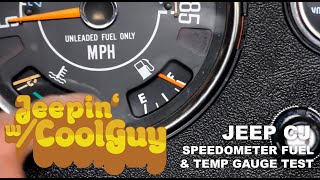
First, check the wiring and connector for corrosion or damage. Second, a common issue on CJs is a bad voltage regulator, which is built into the fuel gauge and supplies 5 volts to the temp gauge. 🎬 Watch: How to test your fuel and temperature gauge system. If it fails and sends 12 volts, it can give a false reading or even burn out the gauge. Finally, ensure the dashboard itself has a solid ground connection.
Is this a difficult part to replace myself?
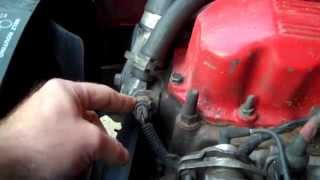
No, this is an excellent DIY job for any skill level. It simply involves unplugging one wire and unscrewing the sensor with a wrench. The most difficult part is often reaching it depending on your engine configuration. The cooling system will leak some fluid when you remove it, so have a drain pan ready.
Helpful Videos
Technical Specifications
OEM Part Numbers: J3177594
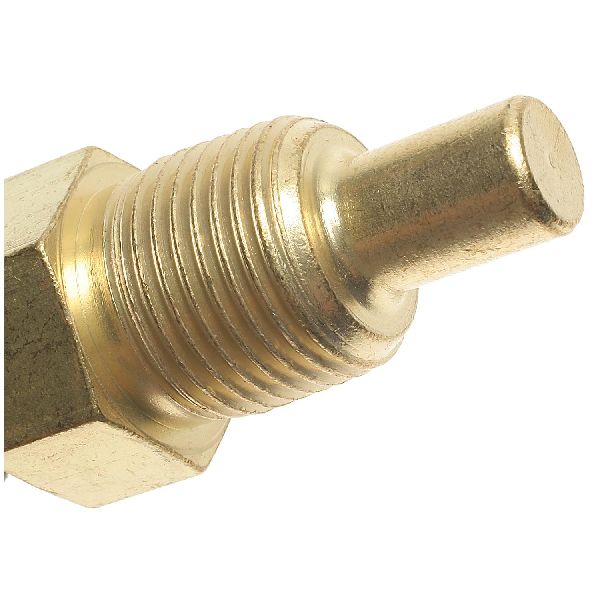
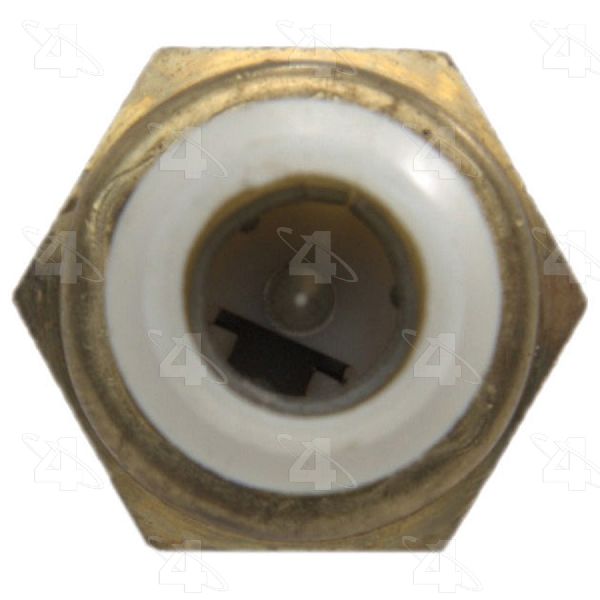
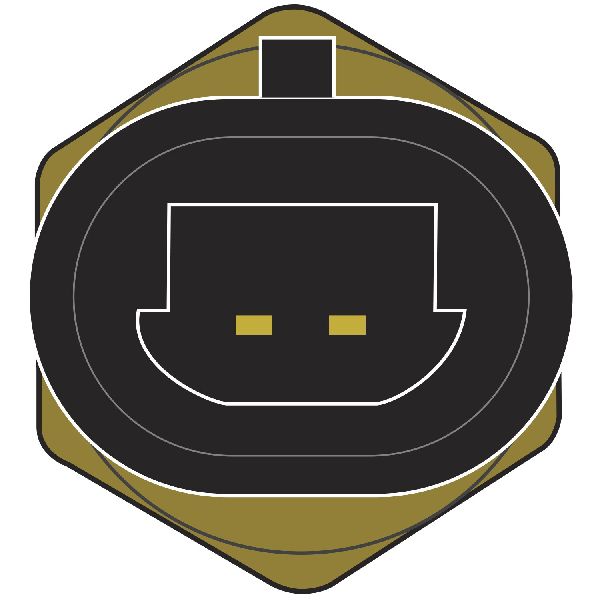
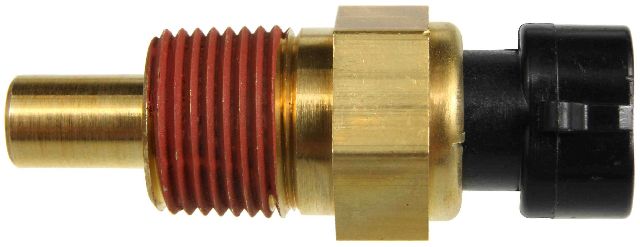
The sensor is a single-wire Negative Temperature Coefficient (NTC) thermistor that grounds through the engine block. It operates on the 5-volt circuit supplied by the instrument cluster's voltage regulator.
We Have This Part in Stock


The information in this article is provided for general reference and educational purposes only. Vehicle specifications, procedures, and part compatibility can vary by production date, trim level, and region. Always consult your vehicle's factory service manual and verify part numbers before purchasing or performing repairs. Safety-critical components such as airbags, seat belts, and braking systems should be installed by a qualified professional.
- 🎬 Helpful Videos
- 🛍️ Shop This Part
- Is Your Temp Gauge Lying? Understanding the CJ7 Sensor
- Symptoms of a Failing Temperature Sender
- Is it the Sender or is the Engine Overheating?
- Choosing the Right Aftermarket Sensor for Your CJ7
- Engine Coolant Temperature Sensor Cost for 1976-1986 Jeep CJ7
- Frequently Asked Questions
- 🎟️ Get 5% Off