

Jaguar XJS (1976-1990) Universal Joint: A Complete Guide
Understanding the critical U-joints in your classic XJS and how to choose the right replacement parts.
- Your XJS has six U-joints; the four on the rear half-shafts are the most common and difficult to replace.
- Prioritize quality over price. Use top-tier brands like Dana Spicer for the rear half-shafts to avoid costly repeat labor.
- A 'clunk' when shifting into gear or a squeak at low speeds are early warnings that should not be ignored.
- Due to the complexity of the Jaguar IRS, replacing the rear U-joints is a difficult job best left to experienced mechanics.
Understanding Universal Joint Failure in Your XJS
Universal joint failure is a well-known issue for 1976-1990 Jaguar XJS owners. The most common failures occur in the four U-joints located on the rear half-shafts. This is largely due to their location next to the inboard rear disc brakes. The heat generated by the brakes can cook the grease inside the U-joint bearings, causing them to dry out and fail prematurely. Regular inspection and using high-quality, properly lubricated U-joints is essential. While the main driveshaft U-joints are relatively straightforward to service, the half-shaft U-joints are a notoriously difficult and labor-intensive job.
Signs of a Failing U-Joint
Don't ignore these symptoms. A complete failure can cause the driveshaft or half-shaft to detach, leading to a loss of control or significant damage to the undercarriage, transmission, and differential.
- Clunking Noise: A distinct "clunk" or "ping" when you shift from Park into Drive or Reverse is a classic sign of a worn U-joint with excessive play.
- Vibrations: A vibration that increases with vehicle speed can be felt through the floor. This is different from a wheel balance issue and is caused by the driveshaft spinning out of balance due to a bad joint.
- Squeaking or Chirping: A rotational squeaking noise, especially at low speeds, often indicates the needle bearings inside the U-joint have lost their grease and are failing.
Choosing the Right Aftermarket U-Joints
For a vehicle of this age, high-quality aftermarket parts are the most practical choice. Given the extreme difficulty of replacing the rear half-shaft U-joints, this is not a part you want to save money on. The cost of the part is tiny compared to the labor involved, so choosing a durable, top-tier brand is a wise investment to avoid doing the job twice.
Brand Quality Tiers for Jaguar XJS
Based on owner experiences and general reputation, aftermarket U-joints can be grouped into tiers.
- Tier 1: Dana Spicer - Spicer is an original equipment (OE) supplier for many manufacturers and is widely considered the gold standard for U-joints. Their cold-forged, non-greasable joints are often considered their strongest and most durable option, which is ideal for the high-stress XJS application. Many experienced owners will use nothing else, especially for the rear half-shafts.
- Tier 2: Moog / SKF - Both Moog and SKF are reputable aftermarket brands with a long history. They often offer both greasable and non-greasable (sealed) options. While generally considered good quality, some users have noted a decline in Moog's quality in recent years compared to their older products. They are a solid choice, but for the difficult-to-access rear joints, most owners still prefer Spicer.
- Tier 3: GMB & Value Brands - GMB is a common aftermarket brand that offers a more budget-friendly option. While functional, they are generally not recommended for the critical half-shaft positions on an XJS due to concerns about longevity. Using a value-brand U-joint in a location that requires 8-10 hours of labor to access is a poor trade-off.
Greasable vs. Sealed (Non-Greasable) U-Joints
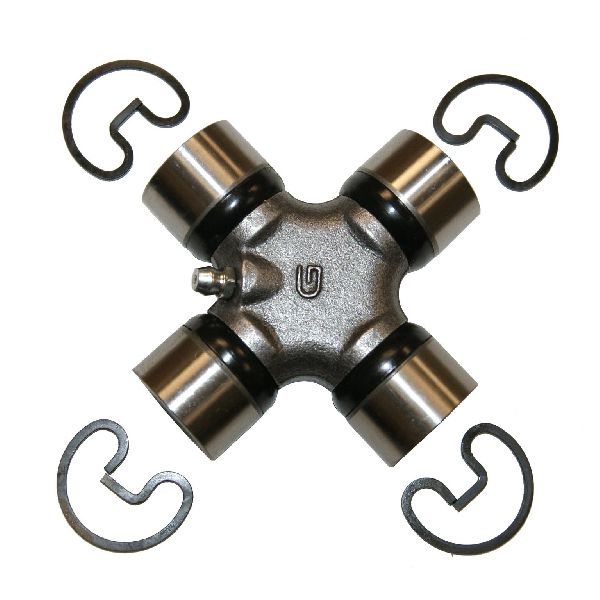
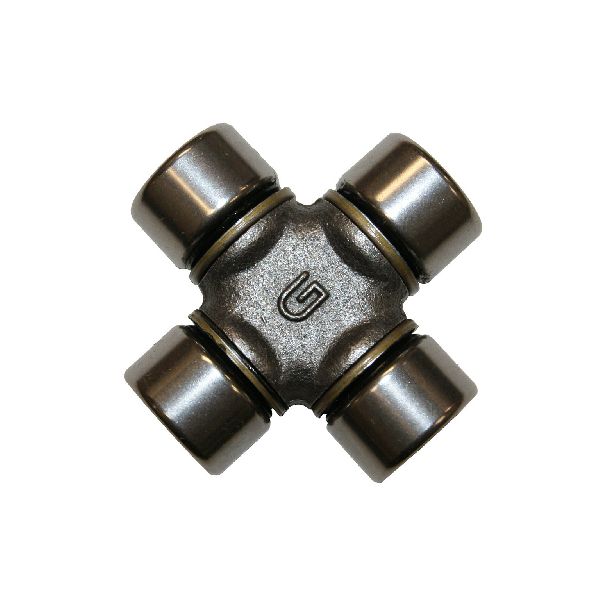
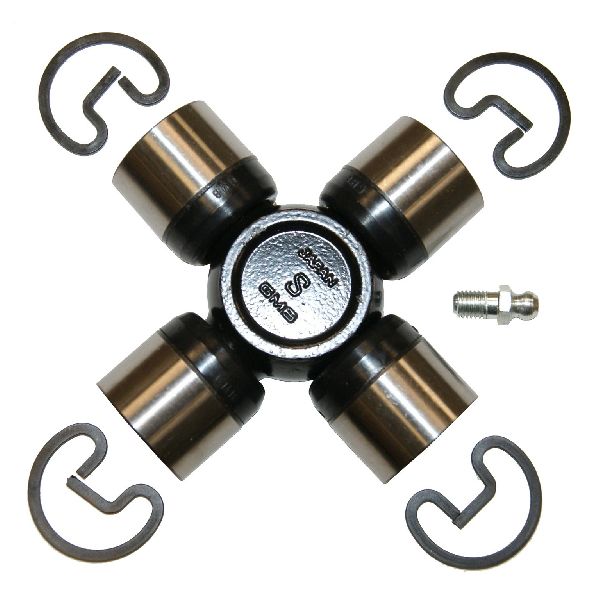
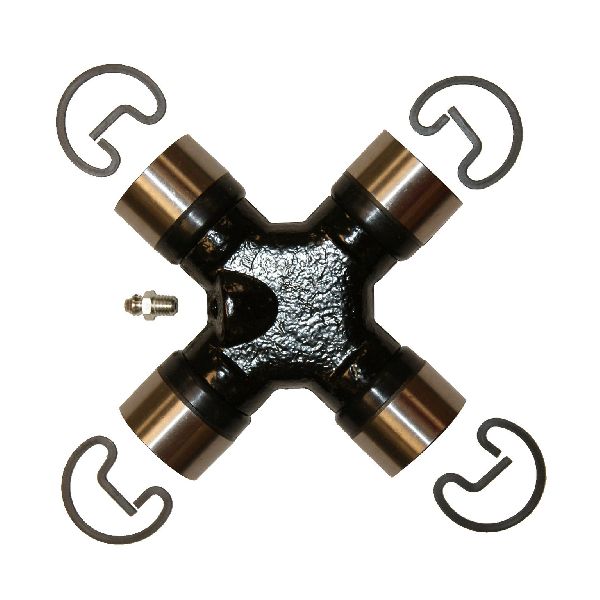
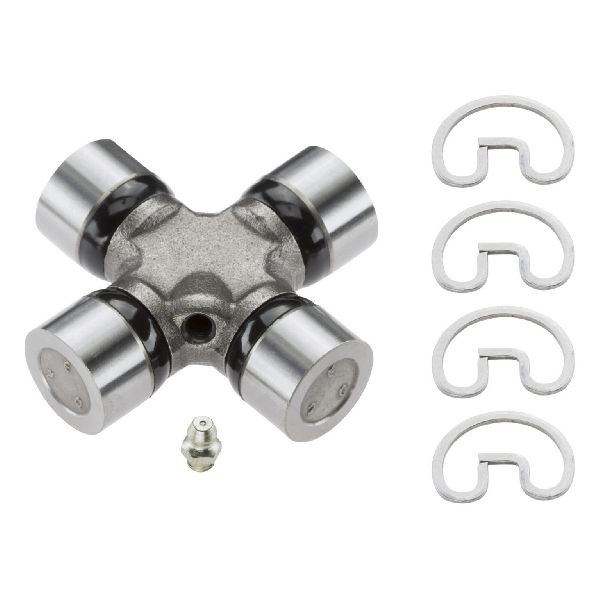
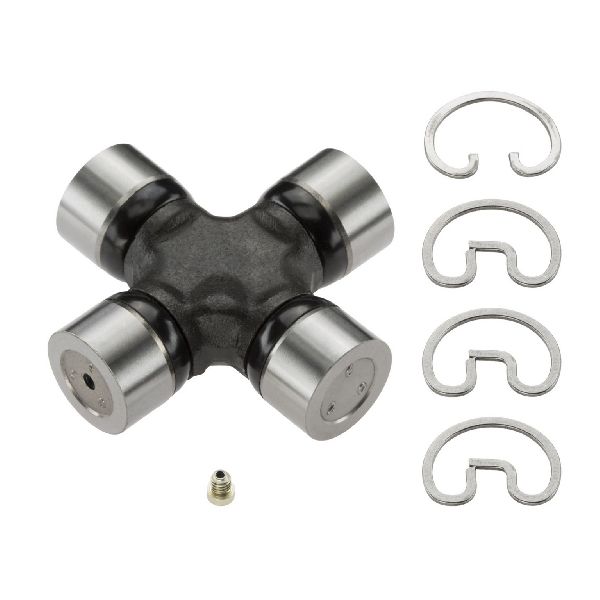
Greasable U-joints have a zerk fitting that allows you to add fresh grease periodically. This can extend their life if done regularly. However, it's another maintenance task, and the fittings can be hard to reach. Sealed, non-greasable U-joints from a top-tier brand like Spicer are often preferred for the XJS because they are stronger (the cross isn't drilled for a grease channel) and are considered "fit and forget." For the hard-to-reach half-shafts, a high-quality sealed joint is often the most reliable choice.
Common Ordering Mistakes & Installation Tips
- Check Dimensions: While most U-joints for the XJS are a standard size (often equivalent to a 1310 or similar series), it's always wise to confirm fitment. Some owners have reported issues with aftermarket parts being slightly too large to fit the circlips correctly.
- Don't Drop the Needles: During installation, it's very easy for one of the small needle bearings inside the cap to fall sideways. If this happens, the joint will be impossible to install correctly and will fail very quickly. Always check that all needles are standing vertically before pressing the caps on.
- Mark Everything: Before taking anything apart, use a paint marker to mark the orientation of the driveshaft and half-shafts to their yokes. They are balanced as an assembly and must be reinstalled in the same position to avoid vibrations.
Frequently Asked Questions (FAQ)
How many U-joints does my 1976-1990 XJS have?
Your Jaguar XJS has a total of six universal joints. There are two on the main driveshaft (one at the transmission, one at the differential) and four on the rear axle half-shafts (one inner and one outer on each side).
Why is replacing the rear U-joints so expensive and difficult?
The rear half-shafts on the XJS are part of the independent rear suspension and pass through a complex subframe or "cage." To replace the U-joints, the half-shafts must be removed. This is a very labor-intensive process that can involve disconnecting the shocks, lower control arms, and sometimes the exhaust. This is not a simple job like on a solid-axle vehicle.
Can I replace just the one bad U-joint?
While you can, it's highly recommended to replace them in pairs. For example, if one U-joint on a half-shaft fails, you should replace both on that shaft. Given the labor involved in removing the shaft, it makes sense to replace both joints at the same time. Many owners choose to replace all four half-shaft U-joints at once for peace of mind.
Were there any recalls for the Jaguar XJS universal joints?
No, searches of the National Highway Traffic Safety Administration (NHTSA) database did not show any recalls or specific Technical Service Bulletins (TSBs) for universal joint failure on the 1976-1990 Jaguar XJS. The issue is a well-documented common failure point among owners but was never addressed with a formal recall.
Technical Specifications
OEM Part Numbers: JLM1388 JLM9639
The Jaguar XJS uses U-joints that are dimensionally similar to the '1310 series' and '1410 series'. Driveshaft joints typically measure approximately 74.6mm (2.94 in) across with 27mm (1.06 in) caps. Always verify measurements before ordering, as variations can exist.
We Have This Part in Stock

The information in this article is provided for general reference and educational purposes only. Vehicle specifications, procedures, and part compatibility can vary by production date, trim level, and region. Always consult your vehicle's factory service manual and verify part numbers before purchasing or performing repairs. Safety-critical components such as airbags, seat belts, and braking systems should be installed by a qualified professional.
- 🛍️ Shop This Part
- Understanding Universal Joint Failure in Your XJS
- Signs of a Failing U-Joint
- Choosing the Right Aftermarket U-Joints
- Brand Quality Tiers for Jaguar XJS
- Greasable vs. Sealed (Non-Greasable) U-Joints
- Common Ordering Mistakes & Installation Tips
- Frequently Asked Questions (FAQ)
- 🎟️ Get 5% Off