

Distributor Ignition Pickup Guide for the 1978-1987 GMC Caballero
Diagnose and fix common no-start or stalling problems by understanding this critical ignition part in your Caballero.
- A no-start condition or sudden stalling are the primary symptoms of a failed pickup coil.
- Test the old part with a multimeter for resistance (500-1500 ohms) and wiggle the wires to check for intermittent breaks.
- Choose a quality aftermarket brand like Delphi or Standard Ignition to avoid premature failure and repeat labor.
- Consider replacing the ignition control module at the same time, as it is also prone to failure and easily accessible during the job.
Understanding the Heart of Your HEI System
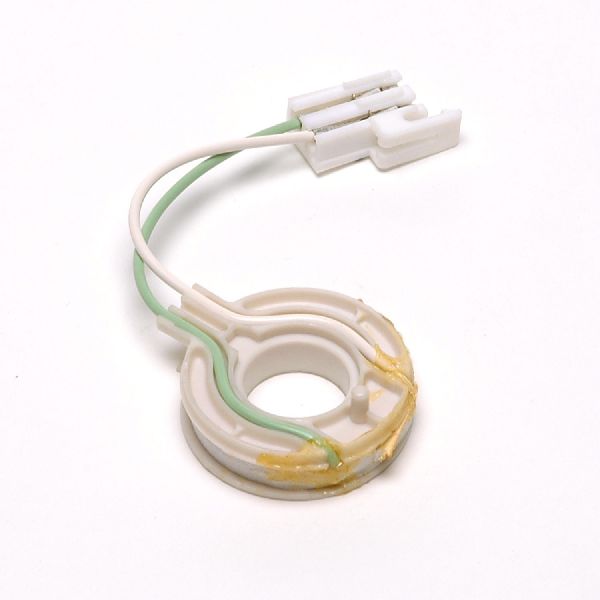
If your 1978-1987 GMC Caballero suddenly won't start or stalls for no reason, a faulty distributor ignition pickup could be the culprit. This small part plays a huge role in the High Energy Ignition (HEI) system that came standard on these vehicles. It lives deep inside the distributor, where heat and age can cause its delicate internal wires to fail. When it goes bad, it stops sending the timing signal to the ignition module, cutting off spark completely. This guide will help you understand the symptoms, choose the right replacement part, and get your Caballero running reliably again.
Symptoms of a Failing Distributor Ignition Pickup
A bad pickup coil often causes problems that can be mistaken for other ignition issues. The symptoms are typically severe and will prevent the engine from running.
- Engine Will Not Start: This is the most common symptom. The engine will crank over just fine, but it will never fire up because there is no spark being generated. This happens when the pickup coil has failed completely and sends no signal.
- Intermittent Stalling: The engine may run fine for a while and then suddenly shut off as if you turned the key. This is often caused by heat causing a temporary break in the coil's internal wiring. After the engine cools down, the vehicle might start and run again for a short time before the problem repeats.
- Engine Misfires or Runs Rough: While less common than a no-start or stalling, a pickup coil that is beginning to fail can cause an erratic signal, leading to misfires. This is often due to the wires inside breaking and making intermittent contact as the vacuum advance moves the pickup coil plate.
Pro Tip: Test Before You Replace
You can test the pickup coil with a multimeter. It should have a resistance between 500 and 1,500 ohms. While testing, be sure to wiggle the wires that come from the coil; a jump in the reading indicates a broken wire and a bad part. You can also test for a short to ground by checking for resistance between each wire and the distributor body; the reading should be infinite (no continuity).
Choosing the Right Aftermarket Pickup Coil
For a part that is labor-intensive to replace, choosing a quality brand is important to avoid doing the job twice. While original GM/ACDelco parts are often preferred by long-time owners for their durability, good aftermarket options are available.
Tier 1: OEM-Equivalent Quality
- Delphi: Delphi was originally a part of General Motors, and its parts are widely considered to be OEM-equivalent in quality. For a critical component like the pickup coil, choosing Delphi is a solid bet for reliability and proper function, closely matching the original part's performance.
Tier 2: Reputable Aftermarket
- Standard Ignition (SMP): Standard Motor Products is a well-known aftermarket manufacturer that produces a wide range of ignition components. Their parts are a reliable and widely available alternative to OEM. While generally good, some forum users have reported occasional out-of-the-box failures with various aftermarket brands, so testing the part before installation is always a good idea.
A Note on Quality
Owner experiences shared in forums suggest that original factory pickup coils often last for a very long time. Some cheaper, unbranded aftermarket replacements have been known to fail prematurely. Investing in a recognized brand like Delphi or Standard Ignition is recommended over a generic "white-box" part.
Typical Replacement Costs
The cost to replace a distributor ignition pickup includes the part itself and the labor to install it. Since the distributor often needs to be partially or fully disassembled, labor is a significant part of the total cost.
| Item | Estimated Cost |
|---|---|
| New Aftermarket Part (Delphi, Standard Ignition) | $28.95 - $77.02 |
| Shop Labor | $150 - $250 |
| Total Estimated Cost | $179 - $327 |
Frequently Asked Questions
Do I need to replace the ignition module at the same time?
It is a very common practice and highly recommended. The ignition module is another electronic part inside the distributor that fails from heat and age. Since you already have the distributor taken apart to access the pickup coil, replacing the module at the same time is cheap insurance against another breakdown.
What is the difference between an ignition coil and a pickup coil?
The pickup coil is the trigger; it tells the system *when* to fire. The ignition coil is the part that actually creates the high voltage for the spark plugs. The pickup coil is inside the distributor, while the main ignition coil on an HEI system is built into the distributor cap.
Why do these pickup coils fail?
The main causes of failure are heat and vibration. The pickup coil is made of extremely fine wire windings. Over many years and heat cycles, this wire can degrade and break. The wires leading from the coil can also break from the constant movement of the vacuum advance mechanism.
Are there any recalls for the GMC Caballero ignition pickup?
No. Searches of the National Highway Traffic Safety Administration (NHTSA) database show no recalls specifically for the distributor ignition pickup on the 1978-1987 GMC Caballero. The well-known GM ignition *switch* recalls from the 2010s applied to much newer vehicles and are for a different part.
Technical Specifications
OEM Part Numbers: 1977207 D1906
Fits General Motors HEI distributors with 4-pin ignition module. Triggers ignition module based on distributor rotation.
We Have This Part in Stock


The information in this article is provided for general reference and educational purposes only. Vehicle specifications, procedures, and part compatibility can vary by production date, trim level, and region. Always consult your vehicle's factory service manual and verify part numbers before purchasing or performing repairs. Safety-critical components such as airbags, seat belts, and braking systems should be installed by a qualified professional.