

A Guide to Replacing the Speedometer Cable on Your 1979-1991 Mercury Capri
If your speedometer needle is bouncing or not moving at all, it's likely time for a new speedometer cable.
- A bouncing speedometer needle is the most common sign of a failing cable on a 1979-1991 Mercury Capri.
- You must order the correct cable for your car's configuration, specifically whether it has cruise control or not.
- Aftermarket cables are your only option for new parts. Brands like ATP and Pioneer are budget-friendly but have mixed reviews, while Lokar is a more expensive but higher-quality 'cut-to-fit' option.
- Do not over-lubricate a new or old cable, as excess lubricant can destroy the speedometer gauge itself.
Is Your Speedometer Acting Up?
The speedometer cable on the Fox Body Mercury Capri is a common wear item. Because it is a mechanical part with a spinning inner core, it can wear out, break, or get gummed up over time. The good news is that the symptoms are usually very clear and it's a straightforward part to replace.
Common Failure Symptoms
When the speedometer cable starts to fail, you'll likely notice one or more of these signs:
- Bouncing Speedometer Needle: This is the most common symptom. The needle will jump around, especially at lower speeds. This happens when the inner cable binds and releases inside the outer housing.
- No Speed Reading: If the speedometer needle doesn't move at all, the inner cable has likely snapped or become disconnected from the transmission or the gauge cluster.
- Squeaking or Whining Noises: You might hear a noise from behind the dashboard that changes with vehicle speed. This is often caused by a dry or worn-out cable that needs lubrication or replacement.
- Odometer Stops Working: Since the cable also drives the odometer, a complete failure of the cable will cause your odometer and trip meter to stop counting miles.
A Note on Lubrication
Sometimes a bouncing needle can be temporarily fixed with lubrication. However, you must be careful. Use only a graphite-based lubricant and apply it only to the lower half of the inner cable. Using too much or using the wrong type of grease can cause the lubricant to travel up into the speedometer head, gumming up the delicate mechanism and ruining it permanently. Often, replacement is the more reliable, long-term fix.
Choosing the Right Aftermarket Cable
Finding a new old stock (NOS) Ford speedometer cable for your Capri is nearly impossible, as they have been discontinued for years. This means you will be buying an aftermarket part. Quality can vary, so it's important to know the brands.
Brand Quality Tiers
- Premium / Custom Fit (Lokar): Lokar is known for making high-quality, universal "cut-to-fit" cables. These often feature a durable stainless steel braided housing and are designed to work with both factory and aftermarket gauges. They are the most expensive option but offer excellent quality and a precise fit since you determine the final length.
- Standard Replacement (Pioneer, ATP): Pioneer and ATP are common aftermarket brands that offer direct-fit replacement cables. Reviews for these brands are often mixed. Some owners report they fit and work perfectly for years, while others have had issues with incorrect lengths or poor-quality fittings at the transmission end. These are more affordable and a good option if you get a good one, but inspect the part carefully before installation.
Check for Cruise Control
When ordering, you must know if your car has cruise control. Models with cruise control use a different, often shorter, speedometer cable setup. Always double-check the part description to ensure it matches your car's options.
Speedometer Cable Cost Comparison
| Part Type | Estimated Cost |
|---|---|
| New OEM | Not Available |
| New Aftermarket | $16.75 - $38.07 |
| Used OEM | $20 - $50 (Not Recommended) |
| Shop Labor | $100 - $200 |
Note: Prices are estimates and can vary based on location and supplier. Used OEM is not recommended due to the age and likelihood of the part failing soon.
Frequently Asked Questions
Is this a difficult part to replace myself?
Replacing the speedometer cable is possible for a DIYer with basic tools. The most difficult parts are accessing the back of the instrument cluster under the dash and feeding the new cable through the firewall. It can be a frustrating job in a tight space. Tying a string to the old cable before pulling it out can help guide the new one into place.
Are there any recalls for the Mercury Capri speedometer cable?
No. There have never been any recalls or technical service bulletins (TSBs) issued by Ford or the NHTSA for the speedometer cable on the 1979-1991 Mercury Capri.
My speedometer needle bounces. Does that mean the whole cable is bad?
A bouncing needle is the classic sign of a cable that is starting to fail. The inner cable is likely binding in the housing due to lack of lubrication or wear. While you could try lubricating it, the fix may be temporary. For the cost of a new cable, replacement is usually the best long-term solution.
What is the difference between a cable for a car with cruise control and one without?
On cars with cruise control, the speedometer cable is often split into two sections: one from the transmission to the cruise control module, and another from the module to the speedometer. Cars without cruise control have a single, longer cable that runs directly from the transmission to the speedometer. You must order the correct cable for your application.
Technical Specifications
OEM Part Numbers: E4ZZ-9A820-A
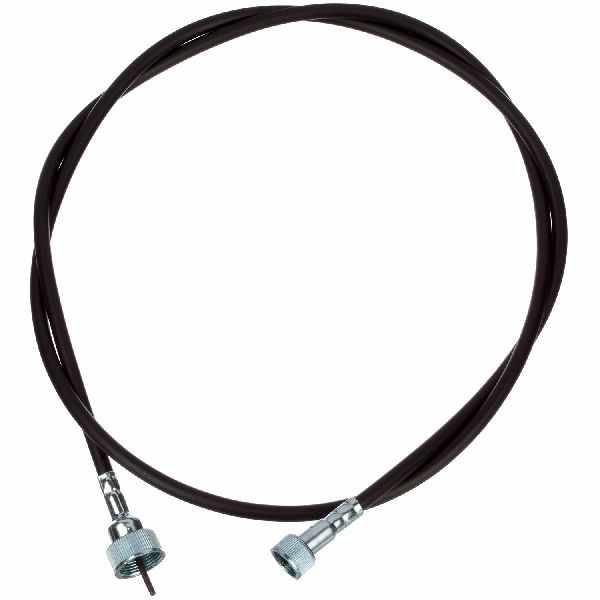
The 1979-1991 Mercury Capri uses a mechanical, cable-driven speedometer. The cable connects the transmission's drive gear to the instrument cluster. Different lengths and configurations are required for models with or without cruise control.
We Have This Part in Stock


The information in this article is provided for general reference and educational purposes only. Vehicle specifications, procedures, and part compatibility can vary by production date, trim level, and region. Always consult your vehicle's factory service manual and verify part numbers before purchasing or performing repairs. Safety-critical components such as airbags, seat belts, and braking systems should be installed by a qualified professional.