

Saab 900 Horn Replacement and Diagnosis Guide (1979-1998)
Is your Saab 900's horn silent or sounding weak? This guide covers common causes and how to choose the right new horn.
- Before buying a new horn, always check the fuse and horn relay first, as they are common and inexpensive failure points.
- On NG900 models (1994-98), a failed horn accompanied by non-working steering wheel controls often indicates a bad clock spring.
- The physical replacement of the horn unit is simple for a DIYer and is typically located behind the front grille.
- Aftermarket horns from brands like Standard Ignition or Replacement are cost-effective and widely available solutions.
Is Your Saab 900 Horn Not Working?
A non-functional horn on a 1979-1998 Saab 900 is a common issue, but the cause often depends on your model year. The 900 range covers two distinct generations: the Classic 900 (c900) from 1979-1993 and the New Generation 900 (NG900) from 1994-1998. The 1994 convertible is considered a Classic 900. Before buying a new horn, a little diagnosis can save you time and money.
Common Symptoms of Horn Failure
- No Sound: The most common symptom. When you press the horn button, nothing happens. This usually points to an electrical issue rather than the horn itself.
- Weak or Distorted Sound: If the horn sounds quiet, muffled, or like a "sick cow," it often means one of the two horns has failed or there's water inside the horn assembly.
- Intermittent Operation: The horn works sometimes but not others. This can be caused by a loose connection, a failing relay, or a problem in the steering column.
- Horn Stays On: A rare issue, but this points to a shorted circuit or a stuck horn relay.
First, Check the Easy Stuff
Before assuming the horn itself is broken, always check the fuse and the horn relay. On many Saabs, the relay is a common failure point. You can test the relay by swapping it with an identical one from a different circuit (like the fog lights) or by having a helper press the horn while you feel for a "click" from the relay in the fuse box. If the relay doesn't click, the problem is likely in the steering wheel or its wiring. If it does click but the horn is silent, the problem is likely the horn itself or its wiring.
🎬 Watch: A professional guide to diagnosing your horn's electrical circuit.Known Issues by Generation
For Classic 900 (1979-1993): Problems are frequently electrical and related to age. The issue is often a bad ground connection, a broken wire in the steering column, or a faulty horn button. Owners often trace the wiring from the horn back to find corroded connections.
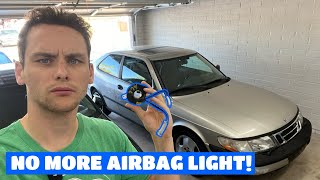
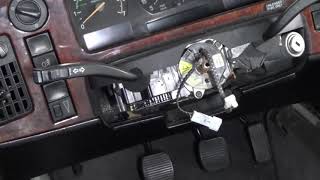
For New Generation 900 (1994-1998): The NG900 has a more complex system. A common point of failure is the clock spring (also called a contact ring) in the steering column. If your horn stopped working around the same time as your steering wheel radio controls or if an airbag warning light is on, a bad clock spring is the most likely culprit.
🎬 See how to replace the clock spring on an NG900.Choosing the Right Aftermarket Horn
Since original Saab horns are often discontinued or difficult to find, aftermarket options are the go-to solution. They are affordable and readily available. For a part like a horn, aftermarket quality is generally sufficient for most owners.
| Brand Tier | Available Brands | Quality & Performance Assessment |
|---|---|---|
| Premium Aftermarket | Standard Ignition (SMP) | Standard Motor Products is a well-known manufacturer with a long history. While their quality on parts for European cars can sometimes be inconsistent, they are generally considered a reliable choice and a step up from generic brands. This is a good option if you prioritize longevity. |
| Standard / Value | Replacement | This is a generic or store-brand option. These horns are designed to be a direct, functional replacement at a low cost. While they may not have the same robust construction as a premium brand, they will get the job done and are a perfectly valid choice for a budget-conscious repair. |
Pro Tip: Replacing in Pairs
Your Saab 900 likely has a high-tone and a low-tone horn. If one has failed, the other may not be far behind. For a balanced and correct sound, it's often best to replace both horns at the same time.
Frequently Asked Questions (FAQ)
Why did my horn suddenly stop working?
The most common reason for a sudden, complete failure is electrical. Check the horn fuse first, followed by the horn relay. If those are good, the issue could be the horn button or wiring inside the steering column.
Is it hard to replace a Saab 900 horn?
No, it is a relatively easy job. The horn is typically located just behind the front grille. The process involves removing the grille, unplugging the electrical connector, and removing a single bolt. 🎬 Watch: A quick walkthrough of swapping horns on a Classic 900. Most DIYers can complete this in under an hour.
Do I need a special horn for a Classic 900 vs. an NG900?
While the electrical systems that control them are different, the horns themselves are often universal 12-volt units. Most aftermarket horns are sold as compatible with the entire 1979-1998 range. The key is to ensure the mounting bracket and electrical connectors are compatible or can be easily adapted.
Are there any recalls on the Saab 900 horn?
No, searches of the National Highway Traffic Safety Administration (NHTSA) database and other records show no specific recalls or technical service bulletins (TSBs) for horn failure on the 1979-1998 Saab 900.
Helpful Videos
Technical Specifications
System Type: Dual Tone (High and Low Note) Voltage: 12V
We Have This Part in Stock


The information in this article is provided for general reference and educational purposes only. Vehicle specifications, procedures, and part compatibility can vary by production date, trim level, and region. Always consult your vehicle's factory service manual and verify part numbers before purchasing or performing repairs. Safety-critical components such as airbags, seat belts, and braking systems should be installed by a qualified professional.