

A Mechanic's Guide to Engine Head Bolts for the 1981-1991 Ford F-150
Ensure your classic Ford F-150's engine is sealed tight by choosing the right head bolts for your 4.9L or 5.0L engine.
- Always replace head bolts when changing a head gasket; it's cheap insurance against seal failure.
- Verify you are buying the correct bolt set for your specific engine: 4.9L Inline-6 or 5.0L V8.
- Properly cleaning the bolt holes in the block and following the correct torque sequence are critical for success.
- Symptoms like white smoke, milky oil, and overheating point to a failed head gasket seal, which necessitates bolt replacement.
Symptoms of Failing Head Bolts
Head bolts themselves don't usually fail on their own, but they are a critical part of the head gasket system. When a head gasket fails, it's often due to the engine overheating. This can cause the head bolts to lose their clamping force, leading to serious engine problems. Signs of a bad head gasket seal are often mistaken for failing bolts.
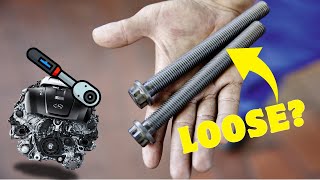
🎬 Watch this video to learn about loose head bolt symptoms.Common Symptoms:
- White Smoke from Exhaust: Coolant is leaking into the cylinders and being burned off as steam.
- Engine Overheating: Combustion gases can leak into the cooling system, or coolant can be lost, causing the engine to run hot.
- Milky or Foamy Oil: This is a classic sign of coolant mixing with your engine oil. You'll see a milky, light-brown substance on the dipstick or under the oil cap.
- Bubbling in the Radiator: With the engine running, bubbles in the radiator or coolant overflow tank can indicate that combustion gases are being forced into the cooling system.
- Unexplained Coolant Loss: If you constantly have to add coolant but can't find an external leak, it might be burning in the engine.
Choosing the Right Aftermarket Head Bolts
When you're replacing the head gasket on your F-150, you must replace the head bolts. While some old-timers might reuse the original bolts on these older engines, it's a huge risk. The original bolts are not the modern Torque-to-Yield (TTY) type that permanently stretch. However, they have been heat-cycled for decades and torqued at least once. For the small cost of a new set, you get peace of mind that your head gasket will seal properly.
Brand Tiers and Quality
For a classic truck like the '81-'91 F-150, you have several good aftermarket options.
- Edelbrock: Often made by ARP, Edelbrock bolts are a high-quality choice, typically made from strong chromoly steel. They are known for performance applications but are excellent for a stock rebuild to ensure reliability.
- Mr. Gasket: A long-standing brand in the restoration and performance world, Mr. Gasket provides reliable hardware that meets or exceeds original specifications. They are a solid, budget-friendly choice for a stock engine.
- Victor Gaskets (Victor Reinz): Known as an OEM supplier for many brands, Victor Reinz offers high-quality gaskets and bolts. They are a trusted choice for ensuring a proper, long-lasting seal, often considered equivalent or even superior to Fel-Pro by some mechanics.
Pro Tip: Always make sure you are buying the correct bolt set for your specific engine. The 4.9L inline-six and the 5.0L V8 use different head bolt kits. Trying to use the wrong set will lead to failure.
Estimated Costs for Head Bolt Replacement
Head bolts are almost always replaced as part of a larger head gasket job. The cost of the bolts themselves is minor compared to the labor involved.
| Part/Service | Estimated Cost |
|---|---|
| New Aftermarket Head Bolt Set | $52 - $69 |
| New OEM Head Bolt Set | $80 - $150+ (Often discontinued) |
| Shop Labor (Head Gasket Job) | $781 - $1,146 |
| Total Job Cost (Parts & Labor) | $1,653 - $2,018+ |
Frequently Asked Questions
Can I reuse my original head bolts?
While the original bolts on 1981-1991 F-150s are not Torque-to-Yield (TTY), it is highly recommended to always use new bolts. The old bolts have undergone countless heat cycles and a previous torquing, which can compromise their strength and ability to provide an even clamping force. For the low cost of new bolts, it is not worth risking a new head gasket.
Do I need to do anything to the engine block before installing new bolts?
Yes, this is a critical step. You must clean the bolt holes in the engine block thoroughly. Use a thread chaser (not a cutting tap) to clean out old sealant, rust, and debris. Then, use compressed air to blow out the holes. Any debris or liquid left in the hole can prevent the bolt from torquing correctly and may even crack the engine block.
Do these bolts fit both the 4.9L (300) I6 and 5.0L (302) V8?
No. The inline-six and V8 engines require different head bolt sets. They differ in length, and the V8 requires more bolts than the I6. Always verify you are purchasing the correct kit for your specific engine to avoid installation problems and potential engine damage.
What is the torque sequence and specification?
The torque specs and sequence are critical for a successful head gasket seal. For the 4.9L (300) engine, the final torque is typically around 70-85 ft-lbs, done in three progressive steps. The sequence involves starting from the center bolts and working your way outwards in a spiral pattern. Always refer to a reliable service manual for the exact specifications and sequence for your year and engine, as they can vary slightly.
Helpful Videos
Technical Specifications
Head bolts for the 1981-1991 F-150 are engine-specific. The 4.9L (300ci) I6 and 5.0L (302ci) V8 use different kits. Aftermarket bolts are typically made from high-strength alloy steel like 8740 chromoly and are not Torque-to-Yield (TTY) for this application. Kits for the V8 will contain bolts for two cylinder heads.
We Have This Part in Stock


The information in this article is provided for general reference and educational purposes only. Vehicle specifications, procedures, and part compatibility can vary by production date, trim level, and region. Always consult your vehicle's factory service manual and verify part numbers before purchasing or performing repairs. Safety-critical components such as airbags, seat belts, and braking systems should be installed by a qualified professional.
- Ford F-150: