

C4 Corvette Drivetrain Support: A Guide to the 1984-1988 C-Beam
Understanding the unique transmission and differential support system in your 1984-1988 Corvette.
- Your Corvette has a C-Beam, not a traditional transmission mount, connecting the transmission to the differential.
- Clunks when shifting and a sideways jerk during acceleration are key symptoms of a C-Beam issue.
- Aftermarket reinforcement plates are a recommended upgrade over the original design to prevent future issues.
- Replacement is a difficult job due to poor access to the top mounting nuts.
Understanding Your C4 Corvette's Drivetrain Support
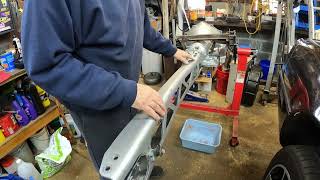
If you're searching for a typical rubber transmission mount for your 1984-1988 Corvette, you won't find one. These cars use a unique design where a large aluminum channel, known as the C-Beam, acts as the structural support between the 700R4 automatic transmission and the Dana 36 differential. This beam is the critical link that handles drivetrain forces. 🎬 Watch: A quick overview of what the C-Beam is. Over time, issues can develop not with the beam itself cracking, but at its connection points.
Common C-Beam Problems and Symptoms
The primary issue with the C-Beam system is wear and movement at the bolted joints. The bolt holes in the aluminum beam and on the transmission and differential housings can become elongated or worn over time. This allows for slight movement, which can lead to a number of noticeable problems.
- Drivetrain "Clunk": A distinct clunking or banging noise when shifting from Park into Drive or Reverse is a common symptom. This is the sound of the slack in the worn connections being taken up suddenly.
- Sideways Jerk on Acceleration: A well-known sign of C-Beam issues is the rear of the car "kicking out" or twitching to the side during hard acceleration or aggressive shifts. This happens because the flexing drivetrain momentarily alters the rear suspension geometry.
- Vibrations: A vibration that you can feel through the floor or shifter, especially under load, can be a sign of a loose C-Beam. This may be confused with a bad U-joint or an out-of-balance driveshaft.
Pro Tip: Check the Bolts First
Before assuming the worst, check the torque on the C-Beam bolts. Accessing the top nuts is notoriously difficult, and they can work themselves loose over time. Sometimes, simply re-torquing the hardware can significantly improve symptoms. However, the difficult access often leads to them not being properly tightened in the first place.
Choosing the Right Aftermarket Part
Since new OEM C-Beams are not readily available, the market has focused on solving the weak points of the original design. You will not find various "brands" of C-Beams, but rather upgrade kits.
Aftermarket C-Beam Reinforcement Plates
This is the most common and effective solution. Aftermarket companies offer kits with thick steel plates for both the top and bottom of the C-Beam at the transmission and differential ends. These plates serve several purposes:
- Increased Clamping Force: They spread the clamping load over a much wider area, preventing the bolt holes from elongating.
- Improved Rigidity: They significantly stiffen the joints, reducing the flex that causes the car to jerk sideways.
- Easier Installation: Many kits feature top plates with welded-on nuts, eliminating the frustrating task of trying to hold a wrench on the original nuts in the tight confines of the transmission tunnel.
When shopping for a new aftermarket solution, you will be looking for one of these reinforcement kits. They are a significant upgrade in strength and serviceability over the stock setup.
🎬 Watch: How to install C-Beam reinforcement torque plates.OEM vs. Aftermarket Quality
For this specific application, a high-quality aftermarket reinforcement kit is superior to the original OEM design. The factory setup is a known weak point, especially on cars that are driven hard. An aftermarket plate kit directly addresses the original design's shortcomings. A used OEM C-Beam is a viable replacement only if its mounting holes are in perfect condition, which is unlikely for a part of this age.
| Part | Estimated Cost |
|---|---|
| New OEM C-Beam | Not Generally Available |
| New Aftermarket Reinforcement Kit | $100 - $200 |
| Used OEM C-Beam | $50 - $150 |
| Shop Labor for Installation | $250 - $500 |
Frequently Asked Questions
Is it hard to replace a C-Beam or install a reinforcement kit?
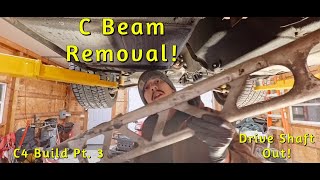
Yes, this job is known to be difficult for a DIY mechanic primarily due to the terrible access to the nuts on top of the C-Beam. It requires supporting the transmission and differential, and wiggling the beam out can be a challenge. 🎬 See this walkthrough for removing the C-Beam and driveshaft. Using a reinforcement kit with welded top nuts makes reinstallation much easier.
Do I need to get a special C-Beam for my automatic transmission?
Yes, the C-Beam for the automatic (Dana 36) is different from the one used on manual transmission cars with the Dana 44 rear end. Ensure you are buying a part that is listed as compatible with your automatic 1984-1988 Corvette.
Will a reinforcement kit make my car ride harsher?
No. Unlike polyurethane engine or transmission mounts that can increase vibration, a C-Beam reinforcement kit simply stiffens a structural connection that should not be flexing in the first place. It should not add any noticeable noise, vibration, or harshness to the car; it will only cure issues caused by the unwanted movement.
My car vibrates at high speed. Is it the C-Beam?
It could be, but it's important to rule out other causes first. High-speed vibrations are more commonly caused by out-of-balance tires, a bent wheel, or worn U-joints in the driveshaft or half-shafts. A C-Beam issue is more likely to cause clunking or jerking under torque load.
Helpful Videos


Technical Specifications
OEM Part Numbers: 14091265
Material: Aluminum. Function: Structural support between transmission tailshaft housing and differential.

The information in this article is provided for general reference and educational purposes only. Vehicle specifications, procedures, and part compatibility can vary by production date, trim level, and region. Always consult your vehicle's factory service manual and verify part numbers before purchasing or performing repairs. Safety-critical components such as airbags, seat belts, and braking systems should be installed by a qualified professional.
- Chevrolet Corvette: