

1984-1989 Dodge Lancer Speedometer Cable: A Mechanic's Guide
If your Lancer's speedometer is bouncing, noisy, or dead, the mechanical cable is the most likely cause.
- Symptoms like a bouncing needle or dash noise almost always point to a failing cable.
- Aftermarket is the only viable option; verify length and fittings before buying.
- Lubricating the new inner cable with grease before installation is crucial for longevity.
- This is a manageable DIY repair, with the main challenge being access behind the dashboard.
Is Your Speedometer Cable Failing?
A speedometer cable is a wear-and-tear item. After decades of spinning, the internal cable can bind, kink, or snap. The good news is that the symptoms are usually very clear. If you notice any of these signs in your Dodge Lancer, a bad cable is the probable culprit.
Common Failure Symptoms:
- Bouncing or Wavering Needle: The speedometer needle jumps around erratically instead of moving smoothly as you accelerate or decelerate. This often happens because the cable is binding and releasing as it turns.
- Squealing or Whining Noise: You may hear a squealing or grinding noise from behind the instrument cluster. This is caused by the dry or damaged inner cable spinning inside its housing.
- No Speed Reading: The speedometer needle doesn't move at all. This usually means the inner cable has snapped completely.
Diagnosing the Issue
Sometimes, the plastic drive gear inside the transmission fails, not the cable. A simple test is to disconnect the cable at the transmission, chuck the inner cable into a drill, and have a helper watch the speedometer. If the speedometer needle moves when you run the drill, the cable and gauge are likely fine, and the problem is the transmission gear.
Choosing the Right Aftermarket Cable
Finding a new original equipment (OEM) Mopar speedometer cable for a car from this era is nearly impossible, as they have been discontinued. The aftermarket is your only realistic source for a new part. Brands like ATP and Pioneer Cable are common, affordable options.
- Brand Quality: For a vehicle like the '84-'89 Lancer, brands such as ATP and Pioneer offer standard replacement quality that is perfectly adequate. Reviews across various car models show that these parts generally work well, but occasional fitment issues can occur.
- Check the Fit: The most common complaint with aftermarket cables is incorrect length or wrong end fittings. Before ordering, if possible, measure your old cable and check the fitting type at the transmission (e.g., 5/8" female fitting). An OEM part number for reference is 4437220.
Pro Tip: Before installing your new speedometer cable, pull the inner cable out of the housing and apply a thin coat of white lithium grease or specific cable lubricant along its length. This ensures smooth, quiet operation and can significantly extend its life.
Speedometer Cable Replacement Cost for 1984-1989 Dodge Lancer
The cost is very reasonable, especially if you do the work yourself. The part itself is inexpensive, with labor being the main cost driver at a repair shop.
| Item | Estimated Cost |
|---|---|
| New Aftermarket Cable (ATP, Pioneer) | $20 - $55 |
| Shop Labor | $100 - $225 |
| Total Professional Replacement | $120 - $280 |
Frequently Asked Questions
Can I replace the speedometer cable myself?
Yes, this is a very DIY-friendly job if you are comfortable working under your car and inside the dashboard. The process involves unscrewing the cable from the transmission, detaching it from the back of the instrument cluster (which may require removing some dash panels for access), and routing the new cable through the firewall. The hardest part is usually reaching the clip behind the speedometer gauge.
What happens if I don't replace a broken speedometer cable?
You will not be able to tell how fast you are going, which is a significant safety risk and makes you liable for speeding tickets. On these specific Lancer models, it does not typically affect other vehicle systems like the check engine light or transmission shifting, as it is a simple mechanical system.
How do I know if it's the cable or the speedometer gauge that's broken?
A noisy or bouncy needle almost always points to the cable. If the needle is stuck or doesn't move, the cable is still the most likely cause due to a snap. Gauge failure is much less common. The drill test mentioned earlier is the best way to confirm if the gauge itself is working.
Are there any recalls for the Dodge Lancer speedometer cable?
No, there have been no recalls or common Technical Service Bulletins (TSBs) issued by Dodge or the NHTSA for the speedometer cable on the 1984-1989 Dodge Lancer. Any failure is due to the age and wear of the part.
Technical Specifications
OEM Part Numbers: 4437220
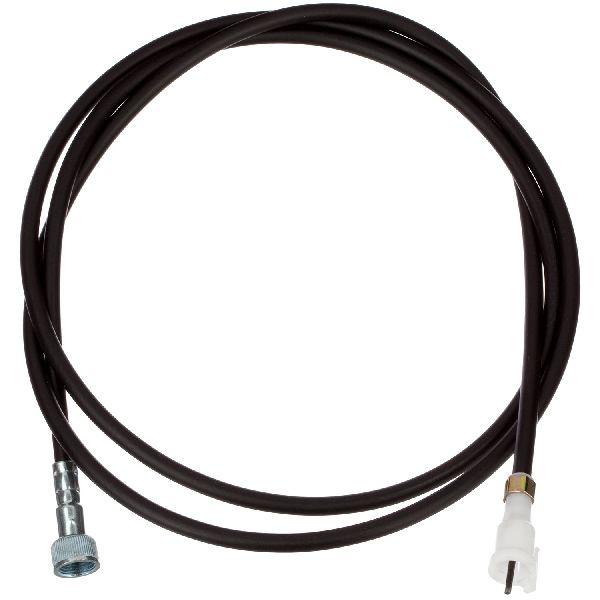
The cable connects the transmission to the back of the instrument cluster. Aftermarket lengths are typically around 60 inches with a 5/8-inch female threaded fitting at the transmission end.
We Have This Part in Stock


The information in this article is provided for general reference and educational purposes only. Vehicle specifications, procedures, and part compatibility can vary by production date, trim level, and region. Always consult your vehicle's factory service manual and verify part numbers before purchasing or performing repairs. Safety-critical components such as airbags, seat belts, and braking systems should be installed by a qualified professional.
- Dodge Lancer: