

Jeep Cherokee XJ (1984-1990) Windshield Washer Pump: A Complete Guide
If your washer fluid isn't spraying, the pump is a likely suspect. Here's how to diagnose and replace it on your XJ.
- For 1984-1990 models, the pump is easily accessed in the engine bay, making it a simple DIY repair.
- Always listen for the pump motor and check for clogged nozzles before assuming the pump is bad.
- Due to the vehicle's age, a quality aftermarket pump like Trico is the standard and most practical replacement option.
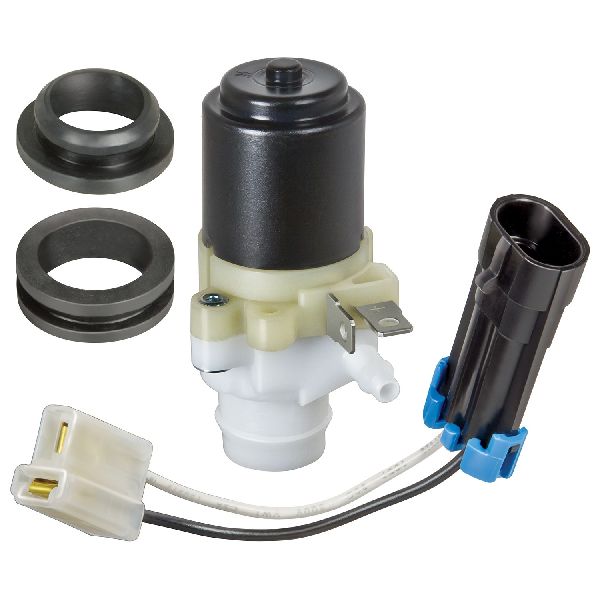
- Replacing the rubber grommet with the pump is recommended to prevent future leaks.
Is Your Washer Pump Failing?
A non-working windshield washer can be a safety hazard, especially in bad weather. The pump itself is the most common point of failure in the system. Before you buy a new part, it's important to make sure the pump is actually the problem. These simple diagnostic steps can save you time and money.
How to Diagnose the Problem
- Listen for the Pump: Have a friend stand near the front of the Jeep while you activate the washer switch. You should hear a distinct humming or buzzing sound from the pump motor. If you hear the hum but see no fluid, you might have clogged lines or nozzles. If you hear nothing at all, the pump is likely dead or not receiving power.
- Check for Clogs: If the pump runs but the spray is weak or non-existent, the nozzles on the hood or the lines themselves may be clogged with wax or debris. Use a small pin or needle to gently clean out the nozzle openings. You can also disconnect the hose from the pump to see if it sprays freely; if it does, the blockage is further down the line.
- Inspect Fuses and Wiring: Although less common, a blown fuse or a corroded electrical connector can stop the pump from working. Check your Jeep's fuse box for any issues. Also, visually inspect the wiring going to the pump for any obvious damage.
Choosing the Right Aftermarket Pump
For a vehicle as old as the 1984-1990 Cherokee XJ, finding a new original equipment (OEM) washer pump is nearly impossible. The few that exist are typically expensive "New Old Stock" parts. This makes a new aftermarket pump the most practical and affordable choice. Brands like Trico are widely available and designed for easy installation, often performing just as well as the original part for this application. Given the low cost and simplicity of the part, a quality aftermarket pump is a reliable repair solution.
Pro Tip: When you replace the pump, it's a good idea to also replace the small rubber grommet that seals it to the reservoir. This will prevent leaks. It's also wise to apply a small amount of dielectric grease to the electrical connector to protect it from future corrosion.
Installation Guide for 1984-1990 XJ
Replacing the washer pump on an early XJ is a straightforward job that can be done in under 30 minutes with basic tools. Unlike later models where the reservoir is hidden in the fender, the pump on your 1984-1990 Cherokee is easily accessible in the engine bay.
- Locate the washer fluid reservoir on the driver's side of the engine compartment.
- Identify the faulty pump (front or rear). The front pump is usually the lower of the two.
- Place a drain pan under the reservoir if it's full, as fluid will spill when the pump is removed.
- Disconnect the electrical connector and the fluid hose from the old pump.
- Firmly pull the old pump straight out of the rubber grommet on the reservoir.
- Press the new grommet (if included) into the reservoir, then press the new pump securely into the grommet.
- Reconnect the hose and electrical connector.
- Refill the reservoir and test the new pump.
Known Issues & Recalls
There are no known recalls or Technical Service Bulletins (TSBs) for the windshield washer pump on the 1984-1990 Jeep Cherokee XJ. Recalls found for Jeep Cherokee wiper systems relate to much newer models and different components, such as wiper arms or control modules.
| Part Type | Price Range |
|---|---|
| New Aftermarket | $24.64 - $43.56 |
| New OEM (NOS) | $75+ (If found) |
| Used OEM | $15 - $30 |
| Shop Labor | $50 - $100 |
Frequently Asked Questions
Are the front and rear washer pumps the same?
Physically, the pumps are often identical. However, from the factory, they sometimes used different electrical connectors to prevent mix-ups during assembly. Many aftermarket pumps are universal and may come with an adapter harness to fit either plug.
Why did my new aftermarket pump fail so quickly?
While it could be a defective part, recurring failures often point to another issue. An underlying electrical problem in the vehicle could be damaging the pumps. Also, using improper fluid, like plain water or some concentrates, can cause the pump to clog or burn out.
Do I have to drain the washer fluid reservoir to change the pump?
You don't have to, but be prepared for the fluid to drain out onto the ground when you pull the old pump out. If you want to avoid a mess, you can either run the working pump until the tank is empty or use a siphon to drain it first.
My new pump runs, but I still have no spray. What's wrong?
If you can hear the new pump working, the problem is a blockage somewhere else. Check for clogged nozzles on the hood, pinched or cracked hoses, or frozen fluid in the lines during cold weather.
Technical Specifications
OEM Part Numbers: 4778347 4778348 4334806
The 1984-1990 Jeep Cherokee XJ uses two separate, 12-volt electric washer pumps that press-fit into rubber grommets on the washer fluid reservoir. One pump services the front windshield and the other services the rear window. While OEM part numbers may differ for front and rear (often due to the wiring connector), the physical pump bodies are generally interchangeable in aftermarket applications.
We Have This Part in Stock

The information in this article is provided for general reference and educational purposes only. Vehicle specifications, procedures, and part compatibility can vary by production date, trim level, and region. Always consult your vehicle's factory service manual and verify part numbers before purchasing or performing repairs. Safety-critical components such as airbags, seat belts, and braking systems should be installed by a qualified professional.
- Jeep Cherokee: