

Dodge Caravan Horn Not Working? A Guide for 1984-2007 Models
Don't get stuck with a silent horn; here’s how to diagnose and fix the issue on your Caravan.
- The most common cause of horn failure is a bad clockspring; test this by using the panic button on your key fob.
- For 1996-2000 models, check for the clockspring safety recall, which provides a lifetime warranty on the part.
- Before replacing the horn, check for simple fixes like a blown fuse, a bad relay, or a corroded ground wire.
- On 2001-2007 models, be aware that corrosion in the under-hood fuse box (IPM/TIPM) can cause horn failure and other electrical issues.
Is Your Caravan's Horn Silent? Here's What to Check First
When your Dodge Caravan's horn stops working, the cause can range from a simple fuse to a more complex electrical issue. Before you buy any parts, a few simple checks can help you find the real problem.
Common Symptoms of Horn Failure
- Completely Silent: When you press the horn pad, nothing happens at all. This could be anything from the horn switch to the horn itself.
- Clicking Sound, No Horn: You hear a 'click' from the fuse box under the hood, but the horn doesn't sound. This usually means the steering wheel controls and relay are working, but the problem is with the horn assembly, its wiring, or its ground connection.
- Horn Works with Key Fob Only: The horn sounds when you use the panic button on your key fob, but not when you press the steering wheel. This is a classic sign of a failed clockspring.
Known Issue: Clockspring Recall (1996-2000 Models)
DaimlerChrysler issued a safety recall for a defective clockspring in 1996-2000 Dodge Caravans. A failed clockspring can make the driver's airbag, horn, and cruise control inoperative. An airbag warning light on the dashboard is a strong indicator of a failed clockspring. For these models, the clockspring assembly has a lifetime warranty, and a dealer will replace it free of charge if it fails, regardless of mileage. If you own a van from this era and the horn doesn't work from the steering wheel, contact a dealership with your VIN to check for recall status.
How to Diagnose the Problem
- Check the Panic Button: Press the panic button on your key fob. If the horn works, you know the relay, fuse, and horn assembly are good. The problem is almost certainly the clockspring or the horn switch itself.
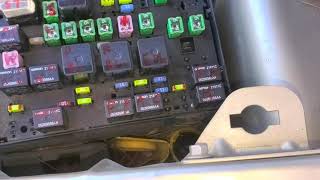
- Check the Fuse and Relay: Locate the fuse box (Integrated Power Module or IPM) under the hood. Check your owner's manual for the horn 🎬 See this video for locating and testing the horn relay fuse and relay location. Inspect the fuse for a broken strip. You can try swapping the horn relay with an identical one from a non-essential system (like the A/C) to see if the horn starts working.
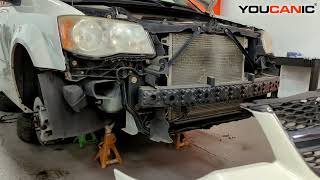
- Check for a Bad Ground: The horns are usually located behind the front bumper, ahead of the driver's side front wheel. 🎬 Watch: Step-by-step guide to replacing the horn assembly They need a solid ground connection to the vehicle's chassis to work. Corrosion or a broken wire at the ground point is a very common failure. You can test this by running a temporary jumper wire from the horn's ground terminal to a clean metal spot on the chassis.
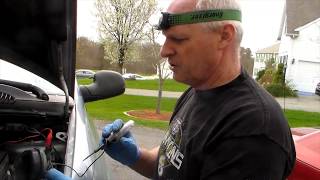
- Test the Horn Directly: If other tests fail, you can disconnect the horn's electrical connector and use jumper wires to apply 12V power directly from the battery. If the horn sounds, it works. If not, the horn assembly itself has failed.
Choosing the Right Aftermarket Horn
If you've determined the horn assembly is faulty, you have several aftermarket options. OEM parts can be expensive, and for a simple part like a horn, an aftermarket unit is often a cost-effective and reliable choice.
- Standard Ignition: This brand is known for making quality OE-replacement parts that focus on correct fit and function. They use high-grade materials and are considered a premium aftermarket choice, offering reliability that meets or exceeds original specifications.
- Replacement: This is a budget-friendly option. These horns are designed to be a direct-fit replacement and will get the job done. While they may not have the same robust construction or longevity as a premium brand, they are an affordable solution to restore your horn's function and pass a safety inspection.
| Part Type | Estimated Cost |
|---|---|
| New Aftermarket Horn | $36.29 - $58.21 |
| New OEM Horn | $75 - $150+ |
| Shop Labor for Horn Replacement | $100 - $180 |
Note: Costs are estimates and can vary based on location and specific vehicle model year. The most significant cost is often diagnosing the issue, not replacing the part itself.
Frequently Asked Questions (FAQ)
Why does my horn work with the panic button but not the steering wheel?
This is the most common symptom of a failed clockspring. The panic alarm circuit activates the horn relay directly, bypassing the steering wheel controls. This test confirms that your horn, relay, and fuse are all working, isolating the fault to the clockspring 🎬 Watch: How to replace the clockspring and remove the airbag or the horn switch in the steering wheel.
Is it legal to drive with a broken horn?
In most states and provinces, a working horn is a legal requirement for a vehicle to be considered roadworthy. Driving without one can result in a ticket and will cause your vehicle to fail a safety inspection. It is a critical safety feature, and should be repaired promptly.
My Caravan has two horns. Do I need to replace both?
Many Caravans use a high-tone and a low-tone horn together. Usually, only one fails, resulting in a weaker, different-sounding horn. You only need to replace the one that has failed, but they are often sold in pairs and replacing both at the same time is good practice, as the other is likely of the same age and condition.
What is the Integrated Power Module (IPM) and could it be the problem?
On 2001-2007 Caravans, the under-hood fuse box is called the Integrated Power Module (IPM) or Totally Integrated Power Module (TIPM). These modules are known to fail due to water getting inside and corroding the internal circuit boards. This can cause many strange electrical issues, including horn failure. If you've ruled out other causes, a faulty IPM could be the culprit, which is a more expensive repair.
Helpful Videos
Technical Specifications
System typically uses a dual horn setup with one high-tone and one low-tone horn. The electrical system is 12V. The control circuit runs through the clockspring in the steering column to a relay in the Integrated Power Module (IPM).
We Have This Part in Stock


The information in this article is provided for general reference and educational purposes only. Vehicle specifications, procedures, and part compatibility can vary by production date, trim level, and region. Always consult your vehicle's factory service manual and verify part numbers before purchasing or performing repairs. Safety-critical components such as airbags, seat belts, and braking systems should be installed by a qualified professional.
- Dodge Caravan: