

1985-1986 Chevrolet K5 Blazer Coolant Temperature Sensor & Sender Guide
Is your temperature gauge acting up or is your engine running rough? Here’s how to identify and fix the problem.
- Distinguish between the single-wire 'sender' for the gauge and the two-wire 'sensor' for TBI computers.
- A faulty gauge sender is a common, inexpensive, and easy part to replace yourself in under 30 minutes.
- Symptoms are typically limited to a non-working dashboard gauge; engine performance issues point to the TBI sensor.
- Driving without a working temperature gauge is risky as you will not be warned of an overheating engine.
Is It a Sensor or a Sender? What Your K5 Blazer Has
Before buying a part, it's critical to know what you need. Your 1985-1986 K5 Blazer can have one or both of these components:
- Coolant Temperature Sender (For the Gauge): This is a simple part with a single wire. It is usually screwed into the driver's side cylinder head between the spark plugs. Its only job is to make the needle on your dashboard temperature gauge move. If your problem is a dead or incorrect gauge, this is almost always the part you need.
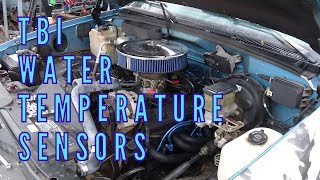
- Engine Coolant Temperature Sensor (For the Computer): This part has a two-wire connector and is found on K5 Blazers with Throttle Body Injection (TBI). It's typically located on the intake manifold near the thermostat housing. It sends crucial data to the engine computer. 🎬 Watch: See the difference between the TBI sensor and sender. A failure here causes engine performance problems, not just a bad gauge reading.
Check Your Engine First
Look at your engine to see if you have a carburetor or a TBI unit. If you have a carburetor, you only have the single-wire gauge sender. If you have TBI, you have both the two-wire sensor for the computer and the single-wire sender for the gauge.
Symptoms of a Failing Temperature Sender (Gauge)
When the single-wire sender fails, you lose the ability to monitor your engine's temperature. This can be dangerous, as you won't know if the engine is starting to overheat. Symptoms are usually straightforward:
- Inaccurate Gauge Reading: The gauge shows a temperature that is clearly wrong, like reading hot the moment you start the truck or never moving from cold.
- Dead Gauge: The temperature needle doesn't move at all, no matter how long the engine runs.
- Fluctuating Gauge: The needle jumps around randomly, not reflecting a true temperature change.
Choosing the Right Aftermarket Part
Original OEM senders for a 1985-1986 K5 Blazer are difficult to find. The market is well-served by aftermarket brands that offer reliable replacements. For a simple component like a temperature sender, a standard aftermarket part is a cost-effective and dependable solution. The key is to ensure you are buying the correct part for your needs—the single-wire sender for a gauge issue or the two-wire sensor for a TBI engine issue. Since this is a common part, quality aftermarket versions are readily available and perform well.
Estimated Part & Labor Costs
| Option | Cost Range | Notes |
|---|---|---|
| New Aftermarket Sender | $15 - $30 | This is the most common and recommended option. The price from our inventory is $18.79. |
| New OEM / NOS | $40 - $80+ | New Old Stock (NOS) parts are very rare and not necessary for this component. |
| Shop Labor | $50 - $100 | A repair shop will typically charge for a minimum of 30-60 minutes of labor. |
Pro Tip: A Quick Diagnosis
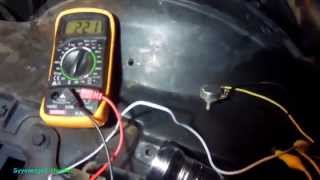
If your gauge is dead, you can test if the sender is the problem. Disconnect the wire from the sender and touch it to a clean metal part of the engine block (a ground). Turn the key to the 'on' position without starting the engine. If the gauge needle swings all the way to hot, the gauge and wiring are likely good, and the sender is the culprit. Do not hold the wire to the ground for more than a few seconds.
🎬 Watch: A step-by-step guide to testing your gauge and sender.Frequently Asked Questions
Where is the temperature sender located on my K5 Blazer?
The sender for the dashboard gauge is typically located on the driver's side cylinder head, between two of the spark plugs. It will have a single dark green wire connected to it.
Is this a difficult part to replace myself?
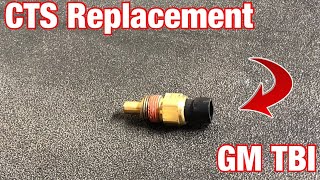
No, this is a very easy job for a DIY mechanic. It requires basic hand tools, primarily a deep socket wrench. The entire process can be completed in under 30 minutes. 🎬 See this walkthrough for replacing the sensor on TBI engines. The engine must be cool before you begin.
Do I need to drain the coolant to replace the sender?
You don't need to drain all the coolant. Some coolant will leak out when you remove the old sender. To minimize the mess, have the new sender ready to screw in immediately after you remove the old one. You can then top off the coolant level in the radiator if needed.
Should I use thread sealant on the new sender?
Yes, it is highly recommended to apply a small amount of automotive thread sealant or Teflon tape to the threads of the new sender. This will prevent coolant from leaking around the threads. Some replacement parts may come with sealant already applied.
Are there any recalls for this part?
No, there are no recalls or widespread technical service bulletins (TSBs) from Chevrolet or the NHTSA for the engine coolant temperature sender on the 1985-1986 K5 Blazer.
Helpful Videos

Technical Specifications
Part Type: Coolant Temperature Sender (for gauge) Connector: Single wire/post Location: Driver's side cylinder head

The information in this article is provided for general reference and educational purposes only. Vehicle specifications, procedures, and part compatibility can vary by production date, trim level, and region. Always consult your vehicle's factory service manual and verify part numbers before purchasing or performing repairs. Safety-critical components such as airbags, seat belts, and braking systems should be installed by a qualified professional.
- Chevrolet K5 Blazer: