

A Guide to the Throttle Position Sensor for the 1985-1995 Toyota MR2
If your MR2 hesitates, idles poorly, or stalls, the throttle position sensor could be the reason.
- A new Throttle Position Sensor MUST be calibrated with a multimeter and feeler gauges; it is not a plug-and-play part.
- Experienced MR2 owners strongly recommend using a genuine OEM Toyota sensor for reliability, as many aftermarket options fail quickly.
- Verify you are buying the correct part for your MR2's generation (AW11 vs. SW20), as the sensors and connectors are different.
- Symptoms like hesitation, rough idle, and stalling are classic signs of a failing TPS on an MR2.
Symptoms of a Failing MR2 Throttle Position Sensor
A failing TPS can make your MR2 difficult and frustrating to drive. Because the sensor's signal is critical for engine calculations, a bad sensor can cause a wide range of problems. You might notice one or more of these signs:
- Hesitation or Bogging: The car may stumble or feel like it's losing power when you press the accelerator.
- Rough or Unstable Idle: The engine might idle too high or too low, or the RPM may bounce up and down.
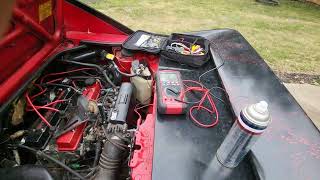
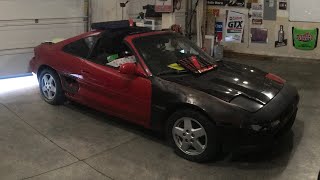
- Sudden Stalling: The engine could die when you come to a stop or even while driving. Some owners report the car will only start if the TPS is unplugged. 🎬 Watch: Real-world symptoms and fix for a failing MR2 sensor
- Poor Acceleration: The car feels sluggish and unresponsive, no matter how hard you press the gas pedal.
- Jerking or Surging: The vehicle may buck or accelerate unexpectedly without warning.
- Check Engine Light: A faulty TPS will often trigger a Check Engine Light, with common trouble codes being P0120, P0121, P0122, P0123, or P0124.
Choosing the Right Aftermarket TPS: Quality Matters
When it comes to the throttle position sensor on a first or second-generation MR2, there is a strong consensus among experienced owners: use a genuine OEM Toyota part if possible. Forum discussions are filled with stories of aftermarket sensors that were faulty right out of the box or failed within a few months, leading to wasted time and frustration. For a sensitive, calibration-dependent part on these specific cars, the reliability of an OEM sensor is often worth the higher cost.
If an OEM part isn't an option, you can consider aftermarket brands. They are separated here by general reputation, but be aware that for this specific part, quality can be inconsistent.
- Tier 1 (OEM-Level Quality): For many Toyota parts, Aisin is the original manufacturer. If you can find an Aisin-branded TPS, it is often identical to the genuine Toyota part. NGK (under their NTK sensor line) is also a well-respected brand known for producing quality electronic components that meet or exceed OE standards.
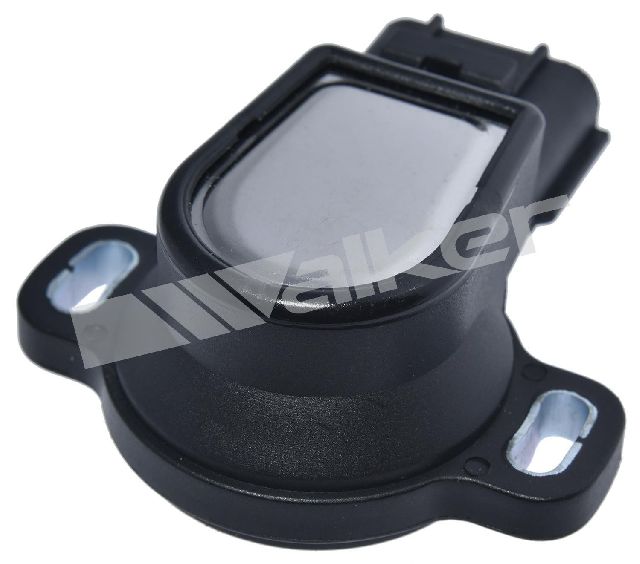
- Tier 2 (Reputable Aftermarket): Brands like Standard Motor Products (SMP) and Walker Products have a long history in the aftermarket and produce a wide range of sensors. They are generally considered reliable mid-grade options.
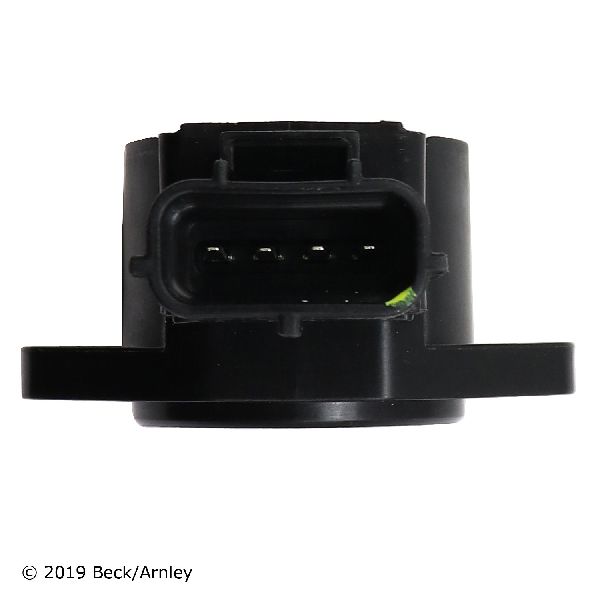
- Tier 3 (Budget-Friendly): Brands like Beck Arnley, Facet, Global Parts, and Replacement often fall into the budget category. While they offer a low-cost alternative, the risk of premature failure or inconsistent performance is higher, especially for a part as sensitive as the MR2's TPS.
Cost of a New Toyota MR2 Throttle Position Sensor
| Part Type | Expected Price Range |
|---|---|
| New Aftermarket TPS | $34.46 - $252.99 |
| New OEM Toyota TPS | $160 - $230+ |
| Shop Labor for Installation & Calibration | $100 - $200 |
Frequently Asked Questions (FAQ)
What's the difference between the AW11 and SW20 MR2 TPS?
The sensors for the first-gen (AW11, 1985-89) and second-gen (SW20, 1990-95) MR2 are different. They use different connectors (early AW11s often have a square connector, while later models use an oval one) and have different OEM part numbers. It is critical to order the correct part for your specific year and model. Common AW11 part numbers include 89452-12040 and 89452-12050, 🎬 See this step-by-step guide to setting the AW11 TPS while the SW20 often uses 89452-20130.
Do I really need to calibrate the new sensor?
Yes, absolutely. The sensor's position is adjustable, and it must be set perfectly so the ECU receives the correct voltage at idle. Skipping this step will make the new part perform just as poorly as the old one. The process involves using feeler gauges and a multimeter to measure resistance at specific throttle openings.
🎬 Watch: How to perform a professional TPS adjustment on a TurboIs an OEM sensor really worth the extra cost?
For this specific part on the MR2, many long-time owners say yes. The original sensors are robust, but the electronics are sensitive. Aftermarket versions have a reputation for failing quickly or being dead on arrival, which can lead you to believe another part is the problem. Paying more for an OEM sensor can save you from future headaches and repeated repairs.
Were there any recalls or TSBs for the MR2 TPS?
There were no major recalls for the TPS. However, Toyota did issue a Technical Service Bulletin (TSB) in 1987 titled "Throttle Position Sensor Check," suggesting it was a known issue. Another TSB notes that a dirty throttle body can cause idle problems similar to a bad TPS, so cleaning it during replacement is a good idea.
Helpful Videos

Technical Specifications
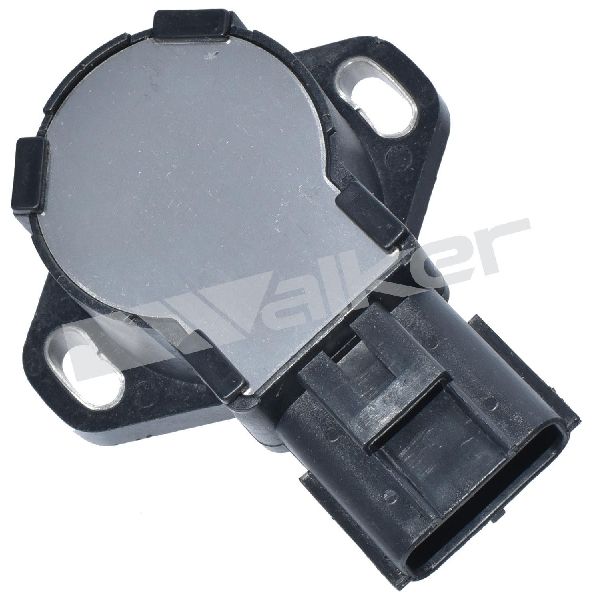
OEM Part Numbers: 89452-12050 89452-12040 89452-20130 89452-32060
A 3- or 4-pin variable resistor sensor mounted to the throttle body. Requires calibration via multimeter to set resistance values at specific throttle openings per the factory service manual.
We Have This Part in Stock


The information in this article is provided for general reference and educational purposes only. Vehicle specifications, procedures, and part compatibility can vary by production date, trim level, and region. Always consult your vehicle's factory service manual and verify part numbers before purchasing or performing repairs. Safety-critical components such as airbags, seat belts, and braking systems should be installed by a qualified professional.
- Toyota MR2: