

1987 GMC R1500 Engine Oil Pressure Switch & Sender Guide
Solving common oil gauge problems in your classic 1987 GMC R1500 truck.
- The most common symptom of failure is an erratic oil pressure gauge, but always verify actual oil pressure with a mechanical gauge before assuming the sensor is bad.
- The primary sending unit is located at the top rear of the engine, behind the distributor, and can be difficult to reach without the correct socket.
- Be aware that your truck may have two different oil pressure units: a sender for the gauge and a switch for the fuel pump circuit.
- This is an affordable and straightforward DIY repair that can be completed in under an hour.
Is it a Switch or a Sending Unit?
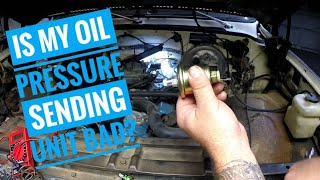
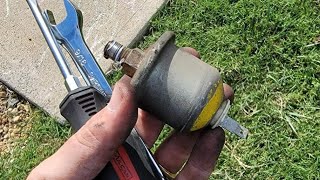
For the 1987 GMC R1500, the terms "oil pressure switch" and "oil pressure sending unit" are often used for the same part. Your truck has a gauge, so the primary part you'll be replacing is the sending unit. It's typically a canister-shaped part with a single wire connector that drives the gauge. Some fuel-injected models have an additional, smaller switch with a two-wire connector that serves as a backup for the fuel pump. It's important to identify which part has failed. This guide focuses on the main sending unit for the oil pressure gauge.
Symptoms of a Failing Oil Pressure Sender
A bad oil pressure sender can be alarming, but the problem is often the sensor itself and not a dangerous loss of oil pressure. However, you should always treat a low-pressure warning seriously until you can prove otherwise.
- Erratic Gauge Readings: This is the most common symptom. The gauge needle may flicker, swing wildly from low to high, or be completely maxed out or bottomed out at zero.
- Oil Pressure Light Stays On: If your truck has a warning light, it may stay on constantly or flash intermittently, even if you've checked the oil level and it's correct.
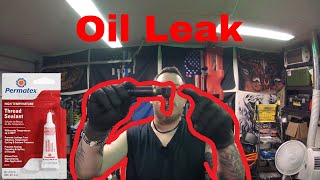
- Oil Leaks: The sensor itself can fail, causing oil to leak from its body or the seal where it threads into the engine. You might see oily residue on the sensor or drips on the ground. 🎬 See what a leaking TBI oil pressure sensor looks like
- Rough Idle or Stalling (TBI Models): On models where the switch is tied to the fuel pump circuit, a faulty switch can cause the fuel pump to run erratically, leading to rough idling or stalling.
Warning: Verify Pressure First
Never assume an oil pressure warning is just a bad sensor. Before replacing the part, verify the actual engine oil pressure using a mechanical gauge. Driving with low oil pressure can destroy your engine in minutes.
🎬 Watch: How to test your oil pressure and switchChoosing the Right Aftermarket Oil Pressure Switch
For a vehicle like the 1987 R1500, aftermarket parts are widely available and are often the only option. Quality can vary, so it's important to choose a reputable brand.
Brand Tiers
Tier 1 / OE-Quality Brands (Rostra, Standard Ignition): Brands like Rostra Powertrain and Standard Ignition (Standard Motor Products) have a reputation for producing quality electronic components that meet or exceed original equipment specifications. Rostra highlights its quality certifications, while Standard has been a trusted name for technicians for decades. While quality is generally high, isolated reports of early failure can occur with any brand.
Tier 2 / Economy Brands (Global Parts): Global Parts Distributors (GPD) is another brand you might find. It is often perceived as a budget-friendly option. While many users may have success with economy parts, reviews are sometimes mixed, with some reporting a higher chance of issues out of the box or a shorter service life compared to premium brands. This could be a viable choice if budget is the primary concern.
Pro Tip: Location, Location, Location
On the small block V8 engines common in these trucks, the main oil pressure sending unit is almost always located at the top rear of the engine block, right behind the distributor, against the firewall. Access is tight, and a special oil pressure switch socket is highly recommended for removal and installation.
🎬 Watch this walkthrough for replacing the sending unitCost of Replacing the Engine Oil Pressure Switch
Replacing the oil pressure switch is an affordable repair, especially if you do it yourself.
| Part Type | Estimated Cost |
|---|---|
| New Aftermarket | $14 - $73 |
| Shop Labor | $50 - $100 |
| Total (DIY) | $14 - $73 |
| Total (Shop) | $64 - $173 |
(Cost estimates are for the part only and do not include taxes or shipping. Labor costs are estimates and will vary by location and shop.)
Frequently Asked Questions (FAQ)
Can I replace the oil pressure switch myself on my 1987 GMC R1500?
Yes, this is a very DIY-friendly job for most owners. The main challenge is the tight access at the back of the engine. With basic hand tools and a special oil pressure sender socket, the job can usually be completed in under an hour.
Where is the oil pressure switch located?
On most V8 engines in this truck, the primary oil pressure sending unit is at the top of the engine block, at the rear, just behind the distributor cap. On some engine configurations, a secondary switch might be found on the side of the block near the oil filter.
Are there any recalls for the oil pressure switch on a 1987 GMC R1500?
A search of the National Highway Traffic Safety Administration (NHTSA) database shows no specific recalls for the engine oil pressure switch on this vehicle. Recalls for a simple sensor on a vehicle of this age are highly unlikely.
Why does my gauge read differently after installing a new switch?
It's common for a new sending unit to provide a slightly different reading than the old one you replaced. Aftermarket sensors may have slightly different internal calibrations. As long as the pressure reading is stable and reacts normally to changes in engine RPM (rises with RPM, drops at idle), it is likely working correctly.
Helpful Videos
Technical Specifications
OEM Part Numbers: 25036378
The primary sending unit for the gauge typically has a single-wire, spade-style connector and is canister-shaped. The fuel pump backup switch, if equipped, usually has a two-wire plug. The standard gauge reads up to 60 PSI.
We Have This Part in Stock


The information in this article is provided for general reference and educational purposes only. Vehicle specifications, procedures, and part compatibility can vary by production date, trim level, and region. Always consult your vehicle's factory service manual and verify part numbers before purchasing or performing repairs. Safety-critical components such as airbags, seat belts, and braking systems should be installed by a qualified professional.
- GMC R1500:
- 🎬 Helpful Videos
- 🛍️ Shop This Part
- Is it a Switch or a Sending Unit?
- Symptoms of a Failing Oil Pressure Sender
- Warning: Verify Pressure First
- Choosing the Right Aftermarket Oil Pressure Switch
- Brand Tiers
- Pro Tip: Location, Location, Location
- Cost of Replacing the Engine Oil Pressure Switch
- Frequently Asked Questions (FAQ)
- 🎟️ Get 5% Off