

Ignition Module Guide for the 1987-1992 Buick Century
Sudden stalling or a no-start condition in your Buick Century could point to a failing ignition module.
- A common symptom is the engine stalling when hot and not restarting until it cools down.
- This is a very DIY-friendly repair that can be done in about an hour with basic tools.
- Using the included thermal paste during installation is critical to prevent the new module from failing.
- Aftermarket modules are a practical choice, but repeated failures may point to a bad ignition coil.
Symptoms of a Failing Ignition Module
The ignition module in this generation of GM vehicles is a known weak point that often fails due to heat and age. When it starts to go bad, the symptoms can be frustrating and may come and go. The most common sign is the engine stalling after it has warmed up, then refusing to restart until it has cooled down. Other times, it may fail completely, leaving you stranded.
- Engine Stalls When Hot: The car runs fine when cool, but suddenly dies after 15-30 minutes of driving and won't restart until it cools off. This is a classic symptom of a heat-related failure inside the module.
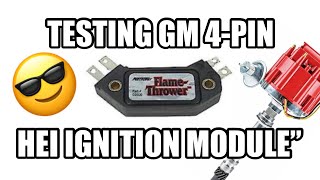
- No-Start Condition: The engine cranks over normally but will not fire up. You may notice there is no spark at the spark plugs. 🎬 Watch: How to test a GM ignition module for spark
- Engine Misfires or Rough Idle: A failing module can disrupt spark timing, leading to incomplete combustion. This can feel like a stumble, hesitation, or rough running.
- Loss of Power: During acceleration, the car may hesitate or feel sluggish because the spark plugs aren't firing correctly.
- Backfiring: Irregular spark timing can cause unburnt fuel to ignite in the exhaust system.
Is It the Module or Something Else?
Symptoms of a bad ignition module can overlap with other failing parts, like a bad crankshaft position sensor, a faulty ignition coil, or even a fuel delivery problem. In some cases, a bad ignition coil can repeatedly damage a new module. If you have replaced the module and the problem returns, it is wise to inspect the ignition coils and wiring connectors.
Choosing the Right Aftermarket Part
For a vehicle of this age, finding a genuine GM or ACDelco OEM part can be difficult and expensive. Aftermarket ignition modules are widely available and are a cost-effective solution. While some mechanics express concern about the longevity of cheaper aftermarket electronics compared to original parts, they are often the only practical option. When choosing a standard aftermarket brand, success often depends on proper installation.
CRITICAL STEP: The ignition module generates significant heat. It must be installed with the special thermal paste (dielectric grease) that comes with the new part. This paste helps transfer heat away from the module to its mounting bracket, preventing it from overheating and failing prematurely. Always clean the old paste off the mounting surface before applying a thin, even layer of the new paste.
Cost of Replacing a 1987-1992 Buick Century Ignition Module
| Part Type | Estimated Cost |
|---|---|
| New Aftermarket Module | $75 - $130 |
| New OEM (GM/ACDelco) | $220+ (if available) |
| Shop Labor | $95 - $125 |
Frequently Asked Questions (FAQ)
Where is the ignition module located on the 1987-1992 Buick Century?
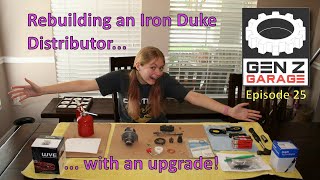
The location depends on your engine. For models with a distributor (like the 2.5L 4-cylinder), the module is typically located inside the distributor itself. 🎬 See this guide on rebuilding a 2.5L GM distributor For models with a distributorless ignition system (DIS), like the 3.3L V6, the module is part of a coil pack assembly mounted directly to the engine. You will need to remove the ignition coils to access it.
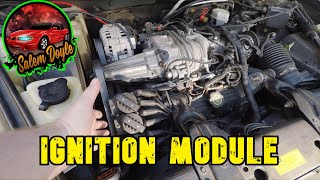
🎬 Watch: Step-by-step ignition module replacement for GM V6 enginesIs replacing the ignition module a DIY job?
Yes, for a person with basic mechanical skills, this is a very feasible DIY job. It requires common hand tools like a socket set and screwdrivers. The key is to disconnect the battery first, carefully label any wires you disconnect, and remember to use the thermal paste. The entire job can usually be done in under an hour.
Do I have to use the thermal paste that comes with the new module?
Yes, this step is absolutely critical. The thermal paste is not regular grease; it's a special compound designed to transfer heat. Without it, the new module will quickly overheat and fail, sometimes within minutes of starting the engine.
Were there any recalls for the ignition module on this Buick Century?
No specific recalls were found for the ignition control module on the 1987-1992 Buick Century. While GM had major recalls for ignition switches in the 2010s, those involved different components on much newer vehicles and related to the key cylinder, not the electronic module.
Helpful Videos

Technical Specifications
OEM Part Numbers: 19245557 24503624 10489422 19435469 10456478 1987744
Varies by engine (2.5L 4-Cylinder or 3.3L V6). The module is either located inside the distributor or is part of an external coil pack assembly.

The information in this article is provided for general reference and educational purposes only. Vehicle specifications, procedures, and part compatibility can vary by production date, trim level, and region. Always consult your vehicle's factory service manual and verify part numbers before purchasing or performing repairs. Safety-critical components such as airbags, seat belts, and braking systems should be installed by a qualified professional.
- Buick Century: