

Choosing the Right Spark Plug Wire Set for Your 1987-1993 Dodge Dakota
Restore your first-generation Dakota's ignition performance and solve frustrating misfires by selecting the correct new spark plug wires.
- Always replace spark plug wires one at a time to avoid mixing up the engine's firing order.
- For V6 and V8 models, pay close attention to wire routing to prevent contact with hot exhaust parts and to avoid cross-firing between adjacent wires.
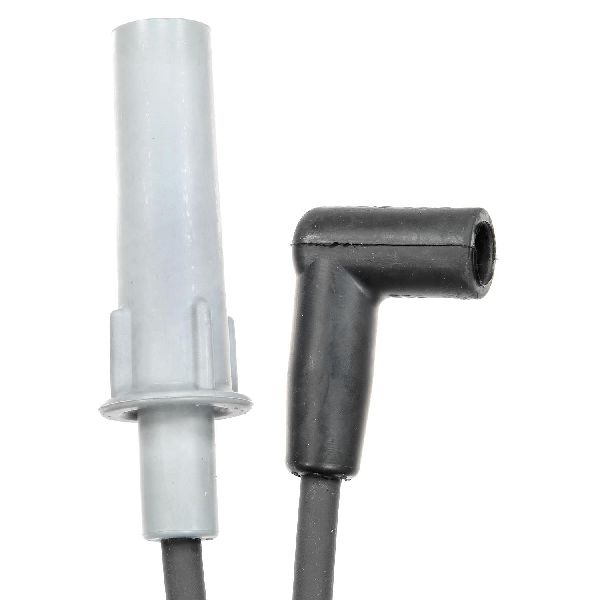
- Upgrading from standard 7mm wires to premium 8mm or 8.5mm wires can provide better heat resistance and insulation.
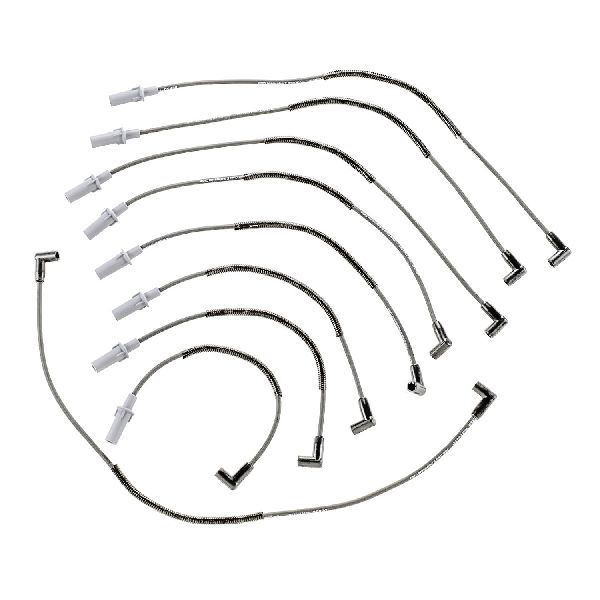
- Confirm your specific engine (4-Cyl, V6, or V8) before purchasing, as each requires a different wire set.
Signs of a Failing Spark Plug Wire Set
When spark plug wires start to wear out, the symptoms are often noticeable. The insulation breaks down from age, heat, and oil exposure, allowing the spark energy to escape before it reaches the plug. This can lead to a variety of driveability problems.
- Rough Idling: An unstable idle is a classic sign of an engine misfire caused by bad wires.
- Poor Acceleration: If the engine hesitates or stumbles when you press the gas pedal, it may not be getting consistent spark.
- Reduced Fuel Economy: When a cylinder misfires, unburnt fuel is wasted, causing your MPG to drop.
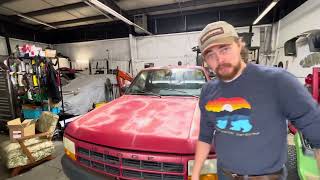
- Engine Misfires: You might feel a shaking or shuddering from the engine, especially under load 🎬 Watch: Diagnosing a 3.9L engine misfire and bucking, like when climbing a hill. This can sometimes trigger a check engine light on later models.
- Visible Damage: A visual inspection may reveal cracks, burns, or brittle insulation on the wires themselves. You might even see arcing in the dark with the engine running.
A Note on Wire Routing for V6 & V8 Engines
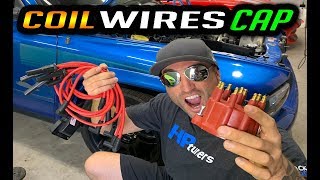
For 3.9L V6 and 5.2L V8 engines, incorrect wire routing can cause cylinders to fire at the wrong time due to electrical interference (induction cross-firing). A Technical Service Bulletin (TSB) was issued for later models that also applies here, emphasizing that wires should not run parallel to each other for long distances and must cross at right angles if they must cross at all. 🎬 See this V8 Magnum tune-up and wire routing guide Proper routing away from hot exhaust manifolds is also critical to prevent melting and premature failure.
Choosing the Right Aftermarket Wires
For a vehicle from this era, original Mopar parts can be difficult to find or expensive. The aftermarket offers a wide range of quality options that often meet or exceed the original specifications. They generally fall into three categories.
| Tier | Description | Example Brands |
|---|---|---|
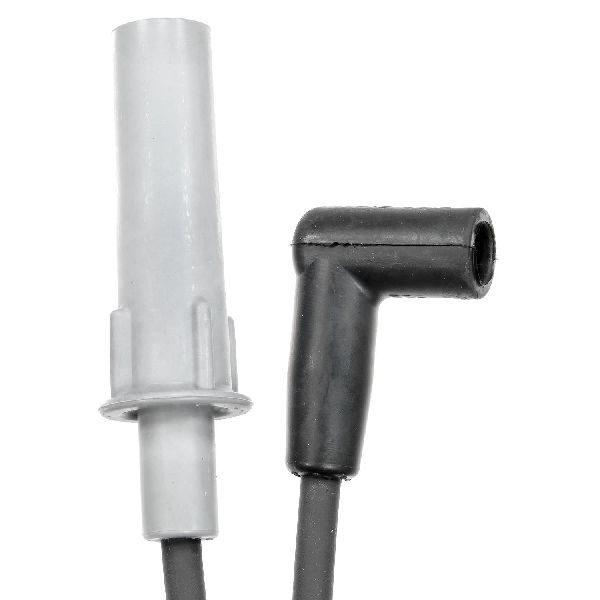
| Standard Replacement | These wires are designed to be a direct, budget-friendly replacement for the original parts. They are a good choice for a daily driver under normal conditions. They typically feature a 7mm diameter and standard silicone jackets. | Standard, Prenco, Walker Products, Karlyn STI |
| Premium / OE-Quality | These brands offer enhanced durability and performance, often with better insulation materials and construction than standard wires. They are an excellent all-around choice for reliability and longevity. Forum users often recommend brands like NGK and Denso. | NGK, Denso, ACDelco, Crown Automotive |
| High-Performance | Built for enthusiasts, these wires feature thicker 8mm, 8.5mm, or even larger diameters, lower electrical resistance, and superior heat protection. Brands like MSD, Taylor, and Accel are popular for modified engines or for owners seeking maximum durability and spark energy. Some users have noted Accel coils failing, but their wires are generally considered reliable. | MSD, Taylor Cable, Accel, Granatelli, JBA, Pertronix |
Pro Tip: Check Your Engine
The 1987-1993 Dakota was available with a 2.2L 4-cylinder, 2.5L 4-cylinder, 3.9L V6, or a 5.2L V8. Each engine requires a different spark plug wire set with a specific number of wires and lengths. Always confirm your engine size before ordering to ensure a perfect fit.
Frequently Asked Questions
How often should I replace my spark plug wires?
There is no universal replacement interval, but a good rule of thumb is to inspect them with every spark plug change. Many owners replace them as a set with the plugs, cap, and rotor every 30,000 to 50,000 miles, or sooner if symptoms appear. Given the age of the vehicle, if the wires are more than 10 years old, replacement is a good preventative measure.
What's the difference between 7mm and 8mm (or 8.5mm) wires?
The measurement refers to the outer diameter of the wire. Thicker wires, like 8mm or 8.5mm, generally have more insulation. This provides better protection against heat and helps prevent voltage leaks and cross-firing, making them a good upgrade, especially for the V6 and V8 engines that have crowded engine bays.
Do I need special tools to replace spark plug wires?
No special tools are required. A spark plug wire puller can be helpful to safely remove the boots from the plugs without damaging the wires, but it's not essential. The most important technique is to replace the wires one at a time to avoid mixing up the firing order.
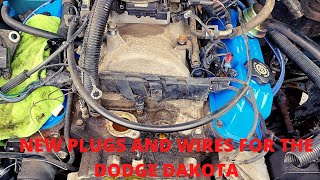
🎬 Watch: Step-by-step spark plug and wire replacement walkthroughShould I use dielectric grease?
Yes. Applying a small amount of dielectric grease to the inside of the spark plug boots and the distributor cap terminals is highly recommended. It helps seal out moisture, prevents corrosion, and makes it easier to remove the wires in the future.
Helpful Videos

Technical Specifications
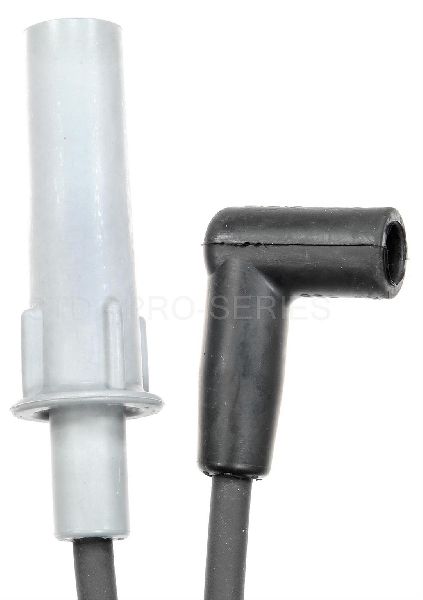
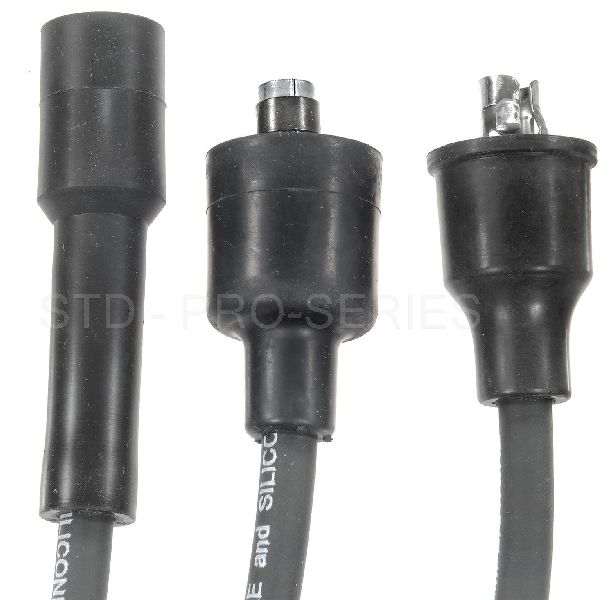
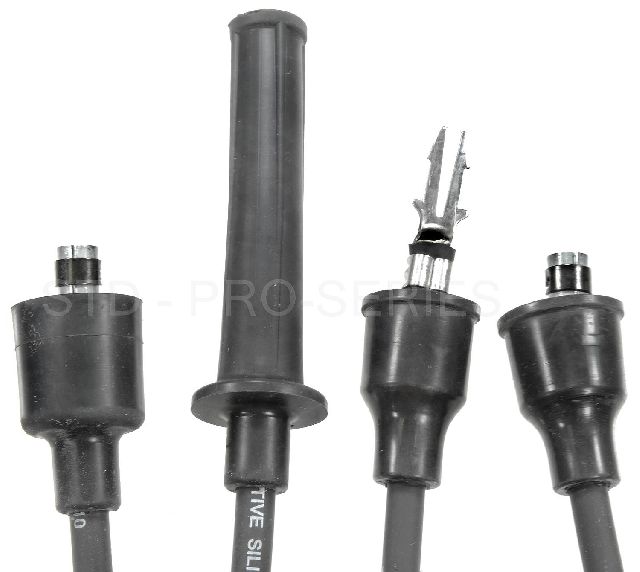
Vehicle-specific fitment for 1987-1993 Dodge Dakota. Available for 2.2L I4, 2.5L I4, 3.9L V6, and 5.2L V8 engines. Wire diameters typically range from 7mm (OE style) to 8.5mm+ (performance). Core materials are typically spiral-wound for radio frequency interference (RFI) suppression.
We Have This Part in Stock

The information in this article is provided for general reference and educational purposes only. Vehicle specifications, procedures, and part compatibility can vary by production date, trim level, and region. Always consult your vehicle's factory service manual and verify part numbers before purchasing or performing repairs. Safety-critical components such as airbags, seat belts, and braking systems should be installed by a qualified professional.
- Dodge Dakota: