

1988-1993 GMC C2500 Speedometer Cable & Sensor Diagnostic Guide
Is your speedometer dead or bouncing? Here's how to figure out if you need a cable or a sensor for your classic GMC truck.
- First, confirm if your truck has a mechanical cable or an electronic VSS; symptoms like bad shifting point to a VSS.
- Aftermarket cables from brands like B&M and Lokar are high-quality but are universal 'cut-to-fit' kits that require custom installation.
- For most 1988-1993 C2500s, the more likely fix for a dead speedometer is replacing the Vehicle Speed Sensor (VSS), not a cable.
- On trucks from 1988-1994, a faulty DRAC module behind the glove box can cause the same issues as a bad VSS.
Is It a Cable or a Sensor?
Before buying any parts for your 1988-1993 GMC C2500, you need to know which system you have. These trucks were built during a transition from mechanical to electronic speedometers. While a true mechanical cable is possible, most speedometer problems on these trucks are related to the electronic Vehicle Speed Sensor (VSS). A dead speedometer is often accompanied by poor automatic transmission shifting and a cruise control that doesn't work; if you have these symptoms, you almost certainly have a VSS system, not a mechanical cable.
Symptoms of a Failing Part
How your speedometer fails is the best clue to what's wrong. Pay attention to the specific symptoms you're experiencing.
Mechanical Cable Failure:
- Bouncing Needle: The speedometer needle jumps around, especially at lower speeds.
- Grinding or Whining Noise: You hear a distinct noise from behind the instrument panel that changes with vehicle speed.
- Completely Dead Needle: The speedometer reads 0 MPH at all times. This usually happens when the inner cable snaps.
Electronic VSS Failure:
- Erratic or No Speed Reading: The speedometer may drop to zero, get stuck, or read incorrectly.
- Harsh or Delayed Shifting: The automatic transmission slams into gear or shifts at the wrong times because it doesn't know how fast the truck is moving.
- Cruise Control Not Working: The cruise control system relies on the VSS signal to maintain speed.
- ABS Light On: In some cases, a faulty VSS can trigger the Anti-lock Brake System warning light.
Check the DRAC Module on 1988-1994 Models
If you have an earlier truck (approx. 1988-1994) and a new VSS doesn't fix your problem, the issue could be the DRAC (Digital Ratio Adapter Controller) module. This small computer box, usually located behind the glove compartment, processes the VSS signal. They are a known failure point and can cause the exact same symptoms as a bad sensor.
Choosing an Aftermarket Speedometer Cable
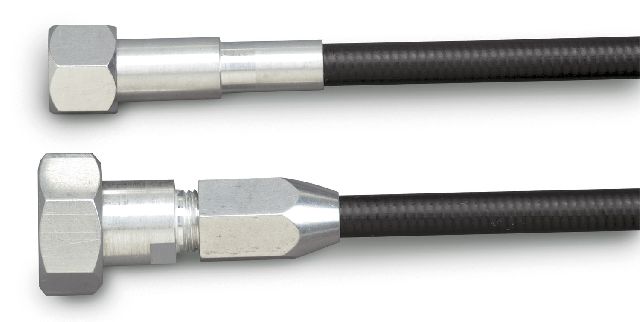
If you've confirmed you have a rare mechanical cable system, finding a direct-fit replacement is difficult as original parts are long discontinued. The available aftermarket options from brands like Lokar and B&M are high-quality but require extra work.
These are not plug-and-play parts. They are "cut-to-fit" kits designed for custom cars and restorations. You will need to measure the required length, cut the outer housing with a fine-toothed hacksaw, and then cut and crimp the inner cable to size. This requires careful work and the right tools.
Brand Focus: Lokar and B&M
Lokar: Known for high-quality, braided stainless steel or black universal cable kits. Their instructions are detailed, guiding you through the cut-to-fit process.
B&M: This brand also offers universal cables. Their products are often sold as service parts for their transmission accessories, like torque converter lock-up kits, and may come with extra components you don't need for a simple cable replacement.
| Part Type | Estimated Cost |
|---|---|
| New Aftermarket (Cut-to-Fit Cable Kit) | $151.57 |
| New Aftermarket (Vehicle Speed Sensor) | $30 - $50 |
| New OEM | Not Available |
| Shop Labor | $150 - $300 |
Frequently Asked Questions (FAQ)
What does "cut-to-fit" mean for a speedometer cable?
It means the cable is sold in a universal length that is longer than you need. You must precisely measure the path from your transmission to the speedometer, cut the outer housing to that length, and then trim the inner cable and attach a new end piece. This allows the part to fit many different vehicles but makes installation more complex than a direct-fit part.
My speedometer doesn't work and my truck shifts hard. Is it the cable?
No, this combination of symptoms almost certainly means you have an electronic speedometer and a faulty Vehicle Speed Sensor (VSS) or DRAC module, not a mechanical cable. The transmission computer needs the speed signal to shift correctly.
Can I replace a speedometer cable myself?
Yes, it is a feasible DIY project. For a mechanical cable, it involves accessing the back of the instrument cluster and the side of the transmission. If you are using a cut-to-fit kit from Lokar or B&M, the difficulty is higher due to the need for accurate measuring and cutting. Replacing a VSS is much easier and typically takes less than an hour.
Does a new mechanical speedometer cable need to be lubricated?
Yes, proper lubrication is critical for a long life and smooth operation. Use a dedicated speedometer cable lubricant or white lithium grease. Apply a light coat along the entire length of the inner cable before sliding it into the housing.
Are there any recalls for the speedometer on the 1988-1993 GMC C2500?
No, a search of the National Highway Traffic Safety Administration (NHTSA) database did not find any recalls for the speedometer cable or vehicle speed sensor on these trucks. Any failures are typically due to normal age and wear.
Technical Specifications
Varies by brand. Aftermarket kits are universal and 'cut-to-fit.' Housing and inner core must be cut to length during installation. Common GM gauge-side fitting is a 5/8-18 nut, and the transmission side is a 7/8-18 nut.
We Have This Part in Stock

The information in this article is provided for general reference and educational purposes only. Vehicle specifications, procedures, and part compatibility can vary by production date, trim level, and region. Always consult your vehicle's factory service manual and verify part numbers before purchasing or performing repairs. Safety-critical components such as airbags, seat belts, and braking systems should be installed by a qualified professional.
- GMC C2500: